What links the Caribbean, ancient Rome, Enid Blyton’s Land of Spells, the south of France and the Bay of Pentos from Game of Thrones? They are all places that have been portrayed in recent and forthcoming films by a sunny archipelago in the Mediterranean Sea, no bigger in size than Sheffield.
Malta has over the last decade risen to become one of the most popular places in Europe for American and British film-makers to set their works in, taking a lead in what has been described as an “arms race” to lure big movie productions with tax incentives.
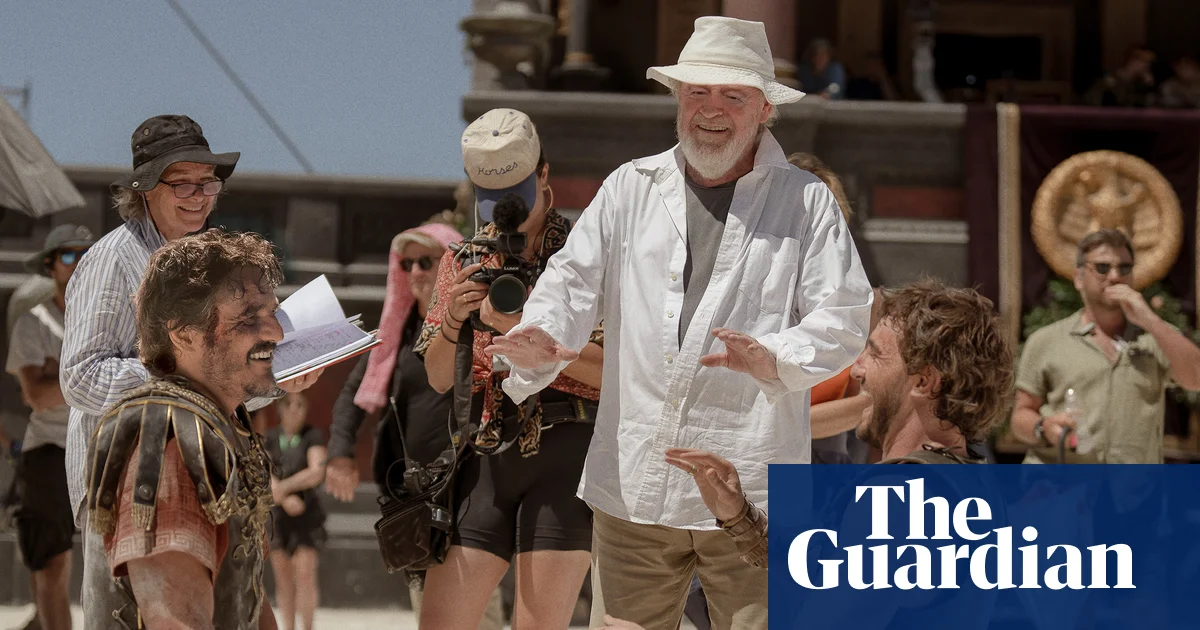
The EU’s smallest country has hosted more than 30 film and TV productions each year in each of the last three years, including a record 36 in 2023 and 2025. They include Jurassic World Rebirthand Gladiator II, this spring’s Blyton adaptation The Magic Faraway Tree and the new Jason Statham action thriller Mutiny, out at the end of this month.
On the screen, Malta has stood in for Greece (in the BBC’s recent Two Weeks in August), 1980s Sicily (Heidi Ewing’s forthcoming British feature The Travel Writer), rural southern France (Channel 5’s cosy crime drama The Madame Blanc Mysteries) and the Caribbean (Guy Ritchie’s forthcoming Layer Cake follow-up Viva la Madness).
The island is even starting to represent itself: the third season of Netflix’s detective drama Enola Holmes decamps from Victorian London to the then British-occupied island, and principal photography is due to start next year for TV auteur Stephen Poliakoff’s The Order, set on the eve of the 1565 siege of Malta by Ottoman forces.
“For such a small European country, Malta is really punching above its weight,” said Adrian Wootton, the chief executive of the British Film Commission. “It’s been very aggressive, in a positive way, about diversifying its industry.”
The microstate’s history of hosting cinematic productions dates back to 1925’s silent maritime drama Sons of the Sea, and since the 1970s it has hosted two of the world’s largest water tanks designed to allow film-makers to shoot maritime scenes in a controllable environment.
But in the past its film industry was essentially seasonal, said Johann Grech, Malta’s film commissioner. “Now, we have an industry that is working every day, all year round.”
Its success is largely due to the broader global upheaval of how film-making is financed. Until the early 2000s, audiovisual productions in Europe were mostly funded by direct funding, such as film funds or selective grants.
Over the last few decades, however, films are increasingly made possible by tax incentives, such as cash rebates that production companies are reimbursed after filming if they hire local crews or rent facilities.
Such financial incentives now make up almost half of European fiction films’ budgets, and mean that “films and series no longer simply occupy locations, they are engineered around them”, as a recent report by the European Audiovisual Observatory noted.
Malta, which introduced a cash rebate mechanism in 2005, has aggressively ratcheted up its offering over the last decade, to what the Napoleon and Gladiator II producer described as “probably the most generous cash rebate in the world”.
All of the 36 major productions that filmed in Malta in 2025 qualified for a 40% cash rebate, which, unlike in some competing states, can also be applied to crew and equipment coming in from abroad if it can’t be sourced locally.
At the Mediterrane film festival on the island in June, Grech announced his intention to further improve the rebate model, which runs out in 2028, and to find private investment to build an €80m (£70m) studio complex. “Every euro that we invest in the rebate, the industry generates back four,” he said in an interview. “The film industry is becoming an economic pillar for our country.”
Some critics in Malta say the country’s rise as a filming location has come at the cost of neglecting local cinematic talent. Examples of Maltese films engaging audiences outside its borders are few and far between: Alex Camilleri’s 2021 film Luzzu, which contended for the grand jury prize at Sundance, is a rare exception.
after newsletter promotion
With local crews in demand from international production companies, Maltese directors often find themselves being outbid by Hollywood, said Teodor Reljić, a Malta-based screenwriter and former film critic. “There’s a bit of a parallel universe: people in servicing are thriving, but local film-makers can’t pay a DOP [director of photography] because they are expecting Jurassic World fees.”
The Malta Film Commission is focused on courting international productions, while nurturing domestic film is left to the arts council, which operates on a smaller budget. Malta does not match funding for financial incentives to its homegrown film funding, which is something that countries such as Estonia have done.
“Without incentives, smaller European countries would simply be excluded from the global production market,” said Edith Sepp, the head of the Estonian Film Institute. “They can be gamechangers.”
“At the same time, we need to ensure our own films are seen, exported and remembered. Otherwise, we risk becoming a place to shoot the films, but our own stories struggle to find their funding.”
There are also signs that Malta’s infrastructure is being tested to the limits as its cities, towns and villages regularly turn into film sets. Road closures and parking restrictions have become a bugbear for local people. “What are Valletta residents supposed to do – stay confined in their homes?”, one resident of Malta’s capital asked news outlet MaltaToday recently.
Last month, equipment linked to a film being shot in Valletta knocked over and damaged a 100-year-old statue and a historic pedestal in St George’s Square, causing anger among Malta’s religious community.
“There are signs of a pushback against overtourism, like in Barcelona or Venice,” said Reljić. “But in Malta we have online gambling, construction and tourism – for now, film-making is the least toxic of our big industries.”