Even as partisan divisions on the state Board of Elections deepen, a majority of voters want an elections board that operates outside of party politics, according to a new poll sponsored by Common Cause North Carolina.
Eighty percent of likely voters said the elections board should operate independent of party politics, while 9% said it should be led by the winning party. The rest were unsure.
Common Cause North Carolina itself believes election administration should be concerned about what is best for the state and not what is best for party politics, said spokesman Bryan Warner.
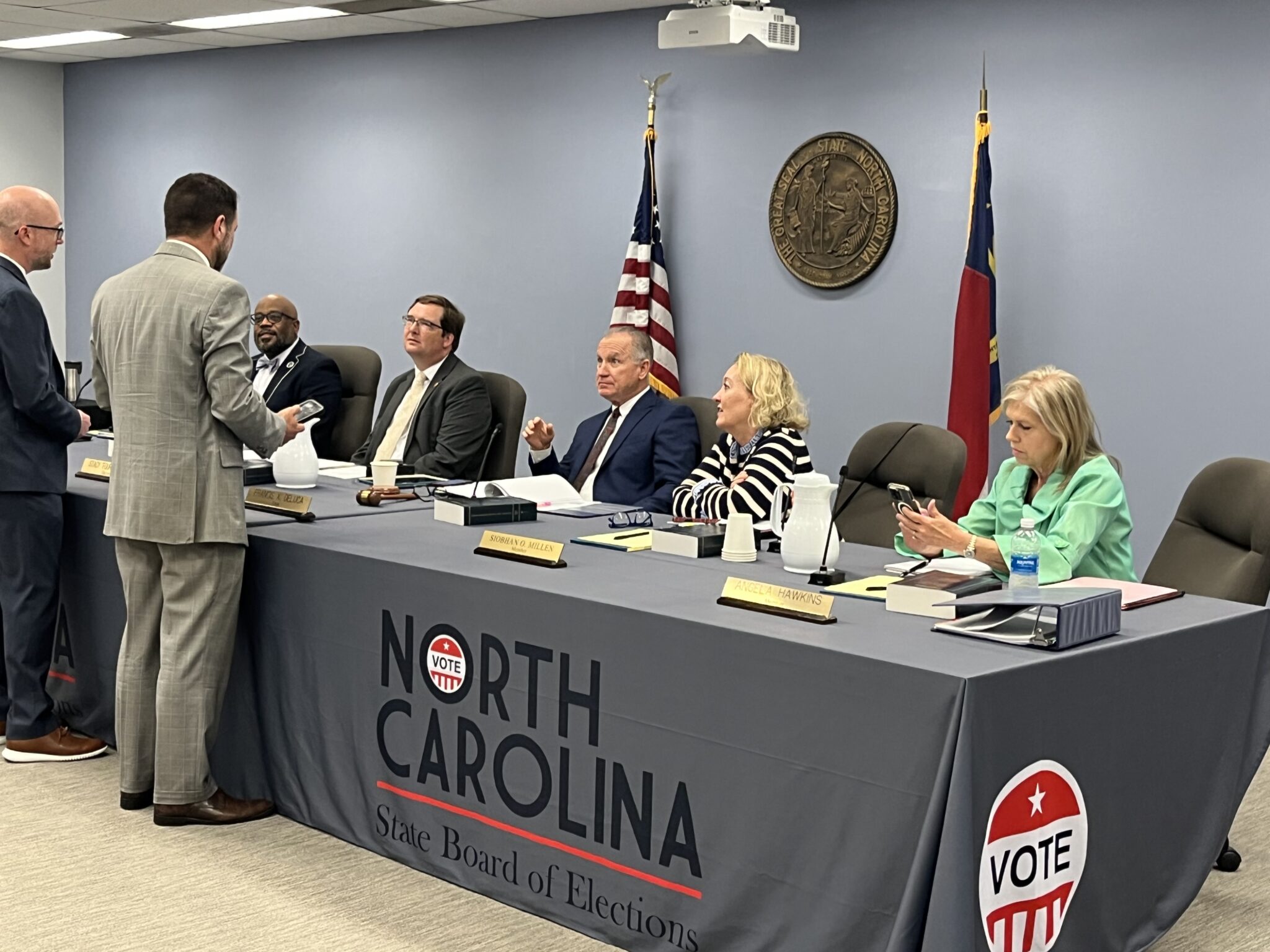
For most of its existence, the state Board of Elections has had five members, with the governor appointing all of them. Under both Democrats and Republican governors, the governor’s party had held 3-2 majorities on the state and county elections boards.
That changed with a controversial 2024 law that stripped Democratic Governor-elect Josh Stein of that power and gave it to newly elected Republican Auditor Dave Boliek. Republicans now hold 3-2 majorities on both the state and county elections boards.
Stein sued over the law. In a 2-1 decision, the state Appeals Court approved the power shift. Stein said he is appealing.
A new bill that Stein has vetoed would, among other changes, require Boliek to audit county elections procedures. The counties and the state already audit election results.
Boliek defended his role in post-election audits in an Aug. 17 statement.
“Post-election audits are a commonsense, objective way to boost public confidence in our elections. These examinations of election systems and controls are an additional layer of accountability that should be welcomed,” he said.
The state board has been riven by recent disagreements over early voting schedules, absentee ballot rules, and in presidential years, which third-party candidates should appear on the ballot.
NC auditor’s office liaison invoked state GOP wishes in some county early voting plans
Boliek has taken a more active role in election oversight than governors have in the past. Last year, he hired a Republican political operative, Dallas Woodhouse, as his elections liaison.
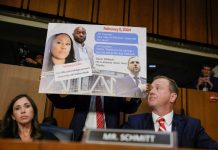
Woodhouse exchanged texts with Republican county board chairs complaining about Democrats as he worked to shape county early voting plans in accordance with GOP wishes. Woodhouse left the auditor’s office a few months ago after NC Newsline and other outlets reported on his role.
Few people know much about Boliek or about his role in elections, according to the poll results. More than half said they’d heard “nothing at all” about Boliek taking over the job. Only 17% said they’d heard “a great deal” or “a fair amount” about it.
Twenty percent approved of the job he’s doing, while 67% had no opinion.
But a majority said the auditor should not campaign for candidates in an election he oversees. Seventy-two percent said it was inappropriate, while 11% said it was okay.
Boliek made waves when he campaigned for Senate Leader Phil Berger, an Eden Republican, in last spring’s primary.
NC elections administrators used to steer clear of backing candidates. No more.
When results showed Berger narrowly trailing challenger Sam Page with votes to be recounted, Boliek rejected calls for him to recuse himself, saying he had nothing to recuse himself from.
The poll also showed majority support for campus voting sites, Sunday voting, and Election Day registration.
Republicans on the state elections board voted this year to cut back on Sunday voting hours. The Guilford County Board of Elections refused calls to put early voting sites on the campuses of N.C. A&T State University and UNC-Greensboro.
State law allows people to register and vote the same day during the early voting period, but does not allow registration on Election Day.
Opinion Diagnostics conducted the poll of 857 likely November 2026 voters from Sept. 12-20. The poll has a 3.3 percentage point margin of error.