Physical music is entering a new phase.
Alongside streaming’s maturity and overall dominance, physical music has found its place in the overall market. It follows 18 consecutive years of vinyl growth, while there’s even anecdotal evidence of Gen-Z discovering CDs as well as vinyl.
In the latest annual figures, published by the BPI earlier this year, album sales across all physical formats grew for a second consecutive year in 2025 rising 12.8% to £278 million. Vinyl revenue jumped 19.9% to £174.7m.
2026 has already delivered major physical milestones, with Harry Styles achieving the biggest opening week on vinyl of the year so far, selling 66,391 copies.
As we revealed in our Q3 report, CDs are still the dominant format (6,183,312 units) although vinyl is catching up.
Key Production CEO & founder Karen Emanuel and Neil Gibbons, chief operating officer, have decades of experience across physical music manufacturing and the wider industry. The company provides end-to-end manufacturing solutions in vinyl, CD, DVD, Blu-ray, cassettes, print and bespoke packaging, working with major and independent record labels as well as individual artists.
As physical music continues to evolve, 2027 looks set to be less about one dominant format and more about how artists use these products to create deeper connections with fans – from the resurgence of the CD and independent releases to tour exclusives, gaming soundtracks, direct-to-fan products and sustainable manufacturing.
Here, Karen Emanuel and Neil Gibbons share physical music predictions for the year ahead….
1 Direct-to-fan platforms will see a bigger uptake in physical music sold
Neil Gibbons: “The really interesting shift is that direct-to-fan platforms are becoming much more than an alternative sales channel. Artists are starting to build their own ecosystems where physical music, merchandise, tickets, exclusive content and community all sit together. Social media will play an increasingly important role in this. Artists have more insight than ever into who their audiences are and what they respond to, so we’re likely to see physical products becoming much more targeted.
“I also think the next phase of growth will come from thousands of artists selling smaller quantities to highly engaged fanbases, rather than a handful of superstars selling hundreds of thousands of units. If an independent artist can sell 100 or 200 records directly to their fans, that can be commercially meaningful. Physical music is becoming a genuine revenue stream for artists at every level.”
Karen Emanuel: “Direct-to-fan platforms such as Bandcamp, give artists much better visibility of their audiences, allowing them to manufacture smaller, more bespoke runs. Tailored higher value releases, limited editions and dedicated artist stores allow artists to create products specifically for their audiences.”
Artists have the opportunity to create an array of physical music products around the specific relationship they have with their fans
Karen Emanuel
2 Gaming, TV and film soundtracks will open up new audiences
KE: “The past year has seen a major rise in gaming soundtracks being released on vinyl, alongside some unprecedented chart moments. These soundtracks have become a really exciting area of growth for physical music. We’re seeing major titles, such as the newest Zelda and the latest GTA VI, make the move onto vinyl, and some are achieving chart success that would have been difficult to imagine a few years ago.”
NG: “I think we’ll see that continue in 2027, with more gaming IP exploring physical releases and reaching audiences who may not traditionally have bought records. It’s not just gaming. Film, TV and anime are opening the door to completely new audiences for physical music. These fans don’t necessarily think of themselves as traditional record buyers, but they have a strong connection to the worlds, characters and stories they love. That creates a huge opportunity for independent manufacturing, because physical music becomes another way for people to own a piece of that experience.”
3 New formats will continue to emerge and broaden the physical music market
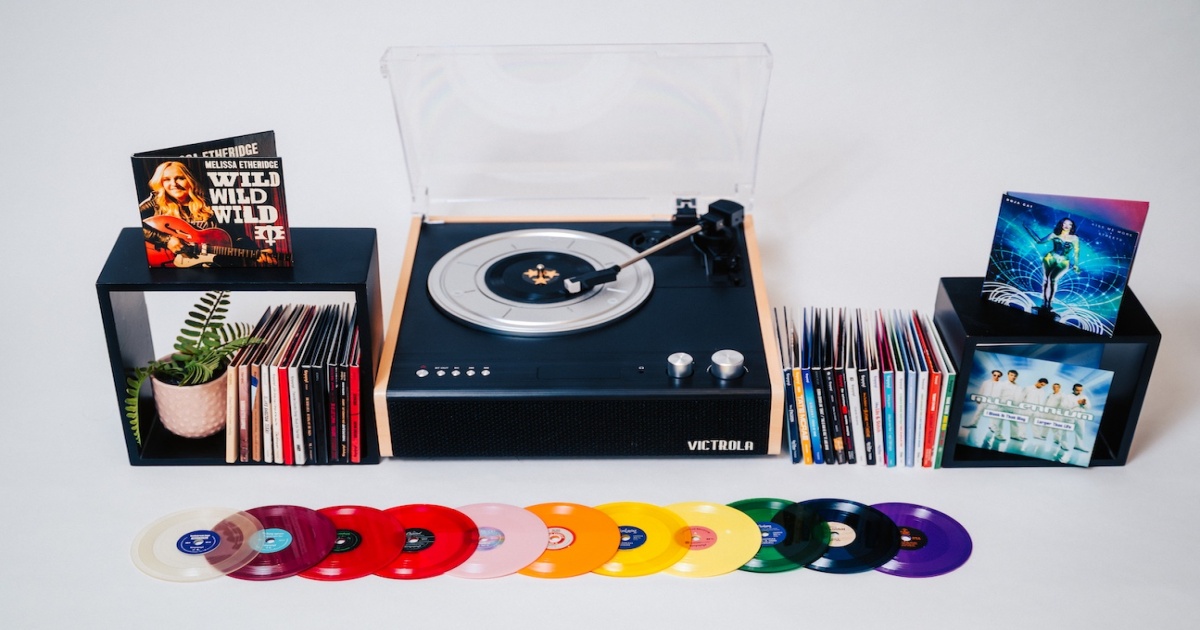
KE: “We’re seeing an interesting range of new formats, from smart formats and Tiny Vinyl (pictured) to pico players and Korean-style KiT products. This demonstrates that fans, particularly, younger consumers are interested in affordable physical keepsakes. These new formats act as an entry point for people, before investing in something like a full-size vinyl record. In the coming year, we will continue to see Gen A and younger consumers embracing alternative formats prior to investing in vinyl. Artists have the opportunity to create an array of physical music products around the specific relationship they have with their fans.”
NG: “Some of these formats may ultimately remain niche rather than becoming mass-market products. The more important trend is the experimentation itself: physical music is no longer limited to the traditional LP or CD. The successful physical products of the future will be collectible, exclusive or connected to an experience. It could be a vinyl record, a CD, a soundtrack or something completely new. What matters is that it gives the fan something tangible to hold, something physical as a keepsake or memorabilia tailored to their needs as consumers.”

4 Adapting to new EU regulations will create new considerations for artists
NG: “European regulation is getting more complicated and it will affect the ability of the independent labels to sell within the EU. The people who feel it most are independent artists pressing small runs. For an indie, every extra compliance, packaging and shipping cost comes straight out of what the artist and label earns. Brussels is already discussing relief for EU businesses, but the UK industry will need to push the government to make sure British sellers aren’t left carrying costs their European competitors don’t.”
KE: “The growing number of EU regulations around product safety, packaging and producer responsibility is creating significant additional complexity for independent artists and labels. When you’re working with smaller production runs, those costs can have a disproportionate impact on the viability of a release. Unless the industry can find ways to simplify these requirements, there is a risk this could impact some independent artists and labels. While we are also learning what impact these regulations will have, we’re keeping a close eye on it and to provide relevant information for artists, labels and manufacturers.”
5 Greater credibility needed within the sustainability guidelines
NG: “We’re already seeing growing interest in alternatives to traditional PVC, such as PET vinyl, alongside recycling and take-back schemes, but the challenge is getting customers comfortable with any additional cost. As environmental requirements become more stringent, manufacturers will need to provide credible evidence behind sustainability claims.
“I believe that the industry will increasingly move away from broad statements about being ‘green’ and towards measurable, transparent environmental credentials. Manufacturers will need to demonstrate exactly what has changed, how materials have been sourced and what the environmental impact actually is. That could ultimately be positive for the industry because it creates a clearer distinction between genuine innovation and greenwashing.”
We expect the UK to follow the growth we’re already seeing in the US, with CDs becoming increasingly relevant to younger audiences in 2027
Neil Gibbons
6 The (unwanted) increase of vinyl bootleggers
KE: “As demand for limited and collectible vinyl grows, so does the incentive for bootlegging. The more valuable and collectible physical releases become, the greater the incentive for criminals to reproduce them. This is particularly concerning for independent artists and labels, who can lose revenue while also having their work reproduced without their permission. Fans are increasingly willing to pay premium prices for scarce records, which makes it more important that they know where their physical music is coming from.
“The industry needs to make sure consumers are aware of the risks and have clear routes to legitimate releases. As the value of collectible physical music increases, protecting artists and fans from unauthorised products will become increasingly important. We hope to raise awareness from our conversations with our clients and partners as this continues to develop.”
7 CDs will gather pace
KE: “CDs are increasingly finding a new audience among younger consumers, particularly as vinyl prices continue to rise. They are buying CDs as part of a wider appetite for physical, screen-free experiences. The fact that searches for CD players have risen by 96% at John Lewis this year suggests we’re not just seeing people buying discs and we’re seeing interest in the hardware and ritual around them returning too. For fans who want something tangible and collectible without the higher price point of vinyl, the CD provides a much more accessible entry point into physical music. Its ease of storage, durability and clean digital sound are also helping it appeal to a new generation of buyers.”
NG: “We expect the UK to follow the growth we’re already seeing in the US, with CDs becoming increasingly relevant to younger audiences in 2027. The affordability is clearly part of the appeal, but there’s also something about the ownership and experience of having an album as an object. CDs are compact, easy to store and don’t require the same investment in equipment as vinyl, which makes them a natural entryway for younger fans. We’re likely to see artists become more creative with CD singles, colour variants and packaging as a result. We’re also seeing evidence that the resurgence is about more than simply listening. We’re seeing this particularly in K-pop, where multiple CD editions are already a key part of how artists engage their fanbases.
“For younger fans, buying physical music is a way to show their support for an artist, own something tangible and feel more connected to the music and the person behind it. There’s also a social element to collecting, sharing and displaying these items. As artists look for new ways to engage their fanbases beyond streaming, I think we’ll see CDs evolve further as both a music format and a piece of merchandise.”
PHOTO: Nathan Zucker