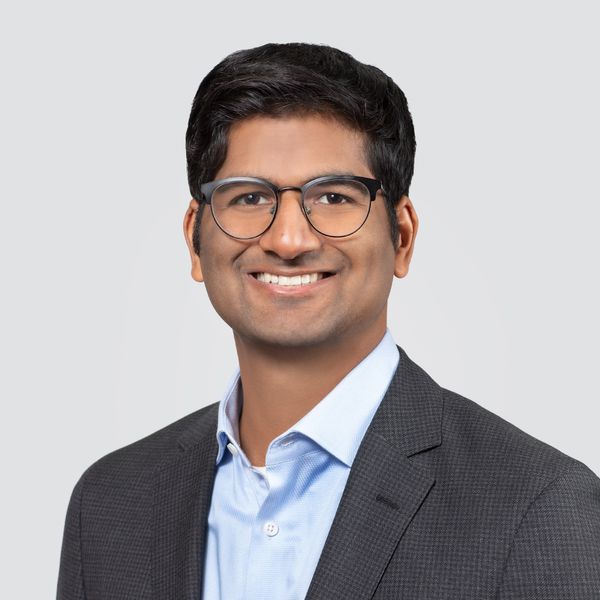

Arjun Vishwanath is an assistant professor in the Department of Political Science. He received his Ph.D. from Harvard University in Government in 2023 and his BA from Swarthmore College in Political Science and Mathematics in 2016. His research focuses on representation, public opinion, and legislative politics in American politics. He is working on a book manuscript on how American citizens’ values are represented by their members of Congress. His other research explores the role of values and ideology in public opinion along with the effects of electoral institutions on representation. His work has been published in the American Journal of Political Science and Studies in American Political Development. He teaches classes relating to elections, representation, public opinion, and Congress.
What made you decide to be a social scientist/ why does social science matter to you?
I have had an interest in American politics since high school. What drew me to social science was a framework to understand why politics operates as it does. Why do voters behave in certain ways? Why do we see parties playing such a central role in Congress? These types of questions are best answered with social scientific tools. Although I didn’t realize it at the time, double majoring in political science and math provided me with a great toolkit to consider these questions.
I am workCan you tell us about a recent research project that you’re excited about?
I am working on a paper on accountability for crime in the US. I had an intern (through CISS) help me work on it last academic year too. The exciting thing about it is the sheer scope of the data; we have sixty years of data from a majority of police agencies in the US at a monthly level. Altogether, that’s millions of observations. But the reporting is quite messy, and so the cleaning process was quite extensive—the most rigorous data cleaning I have ever done. The results are quite interesting and counterintuitive—I find that officials, from the president down to local sheriffs—are not punished for rising crime rates.
What is the best piece of professional advice you ever received?
I’m not sure anyone ever told me this, but it’s something I’ve learned along the way. Academia is a pretty independent profession. You largely work on your own, and there’s no boss hovering over your shoulder to make sure you get your work done every day. It can be really nice because it gives you flexibility if you need to take more time on your personal life in a given week. But in the long run, you have to get a lot of work done. And so keeping both long-term and short-term to-do lists is essential. I set goals for all my projects and teaching each week, and then I build out specific daily task lists. It helps me stay the course and remain productive.
What is your favorite course you’ve taught at BU?
I really enjoyed the public seminar I taught last spring. We learned a lot about the theory of how the public develops beliefs. We also learned about the scientific approaches to measuring the public’s beliefs. And then we were able to put that into practice by administering a survey to Americans across the country on the Trump administration’s actions.
Tell us a surprising fact about yourself.
I am trying to drive every mile of the interstate highway system (I have completed about 45% so far).