17 July, 2026
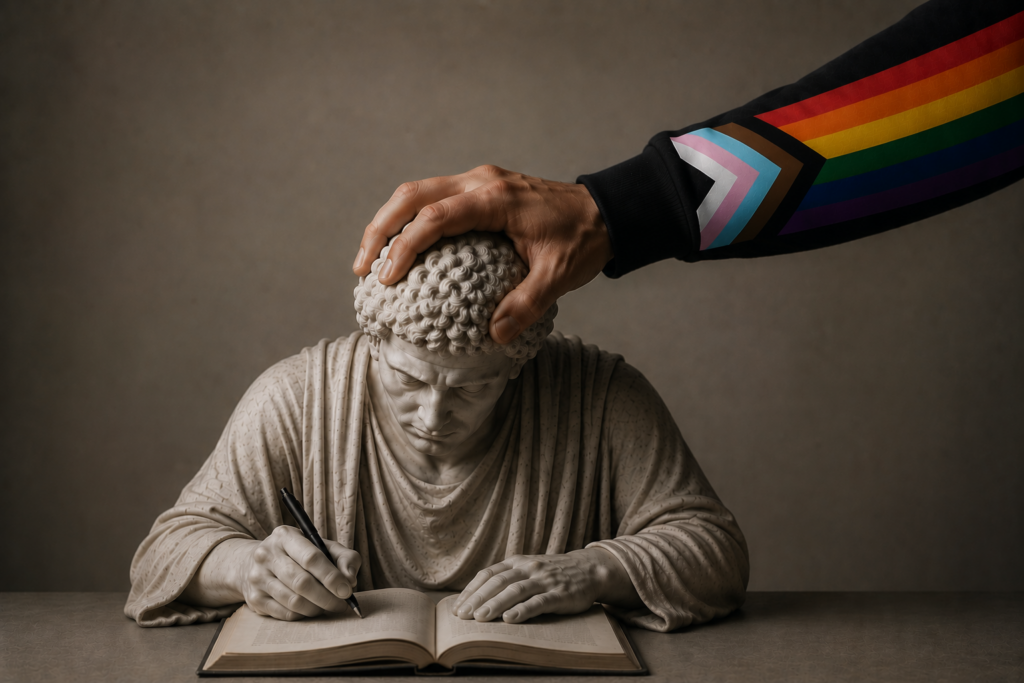
Recently, a committee I chaired released a report entitled “Report on the State of Scholarship in the Humanities and the Humanistic Social Sciences.” Commissioned by the chancellors of Vanderbilt University and Washington University in St. Louis, the committee’s charge was to investigate the complaint, increasingly heard not only from those within academia but also from parties outside it, that the standards of scholarship being upheld within the humanities (broadly construed to include the qualitative social sciences) had eroded. More specifically, the complaint was that the relevant standards of scholarship in these areas had become increasingly subordinated to political agendas.
The committee that was assembled to investigate this worrisome charge was a distinguished one (the membership can be found on the front page of the report). Partly reflecting my role in assembling the group, it included, in addition to me, three philosophers (one of whom also ranges widely over literary and African American studies), two historians, one linguist, one sociologist, one anthropologist and one literary scholar.
The committee proceeded by having appropriate subsets of its members look closely at the following fields (often in consultation with outside experts and with the help of two research assistants): philosophy, anthropology, sociology, history, literary studies and music studies. The subject-specific teams generated reports which were then reviewed by the entire committee to inform its findings, which it summarized thus:
This report aims to assess the state of scholarship in the humanities and the humanistic social sciences in light of this [politicization] complaint, and the first thing to say is that we reject the complaint in this bald form. As we will emphasize, there is serious scholarship in every field we have studied, and at their best, the humanities and the social sciences are as rigorous and as fruitful as they have ever been. Taken as a whole, however, our review of the disciplines paints a mixed picture. Every field we have studied shows some signs of the pathologies sketched above: a deterioration in scholarly standards fueled by the substitution of political criteria for properly scholarly criteria in the assessment of research and a more general repudiation of long-standing ideals of rigor and objectivity.
A Solomonic verdict, then: not as bad as some conservative voices have claimed, but not problem-free either. What problem did we uncover?
To my mind, one of the most valuable aspects of the report is its careful delineation of what the problem is not, a delineation that runs counter to much received wisdom these days (more on this later). The problem is not that scholars in these areas are more progressive or liberal than the general public. For reasons that are not entirely clear, the professoriat as a whole these days skews to the left (it wasn’t always so). But this has no direct bearing on the quality of scholarship: no one thinks that the quality of work in mathematics is affected by the political orientation of mathematicians, who also skew well to the left of the general public.1
The problem is not that many scholars are politically active or that they see their work as contributing to their political objectives. Scholars at universities are citizens and are perfectly entitled to be politically engaged and even to hope that their scholarly work will contribute to their political causes. No one should think it a problem that someone may be motivated to study sociology or economics because they want to contribute to eliminating poverty or racism.
Nor is the problem that political considerations have broadened the focus of scholarship away from the Western canon towards work by and about historically marginalized groups. To a considerable extent, such a shift in focus has been a good corrective to the neglect that such groups have suffered (although there is a good question about whether the pendulum has occasionally swung too far in the other direction, with manifestly valuable works being ignored or denigrated for being the product of dead white males).
The problem arises, rather, when the scholarly enterprise itself is subordinated to political or social values, when certain important questions are not asked, or certain plausible answers disallowed, because they would be politically inconvenient. In each of the fields that we studied we saw instances of such subordination, often involving scholars who enjoy a lofty standing in their disciplines, although we were in no position to rigorously establish exactly how pervasive these problems are. The subordination can assume a variety of forms.
At its most extreme, there are calls within some disciplines – anthropology and sociology stand out – to abandon, or anyhow downgrade, the idea of trying to understand the world in favor of changing it. Thus, the President of the American Anthropological Association said in his 2021 Presidential address: “…anthropology is an outlier among the social sciences … because its political project is to challenge the culturally dominant commonsense of capitalist consumerism.”2 Our report cites several other prominent anthropologists writing in basic agreement with this approach. For example, in a discussion of this address published in American Anthropologist, Fernando Villanea emphasizes the point that “the core academic value of anthropology is not the pursuit of truth, because all truth is subjective,” but that its “core value should instead be to serve [the] interests” of people who have been harmed by anthropologists in the past.3
A less extreme but nevertheless disturbing phenomenon arises when the aim of understanding is not explicitly abandoned but when it is subordinated to political goals. For example, considerable effort is expended in the philosophy of sex and gender to close off discussion about whether trans women count as women in every sense of the word. When Holly Lawford-Smith’s book Gender-Critical Feminism4 was under contract at Oxford University Press, the press received two open letters, one signed by hundreds of scholars expressing “profound disappointment” with OUP’s decision to publish the book, and another from OUP employees and authors urging the management to reconsider publication on the ground that the book would harm trans people. OUP initially informed Lawford-Smith that the press would not publish the book despite a signed contract and positive reports, though the book was eventually published after reconsideration.
Another disturbing case is that of the then-untenured assistant professor Rebecca Tuvel. In 2015, Caitlyn Jenner had come out as a trans woman, while Rachel Dolezal had been revealed to be a white woman who felt herself to be, and had been passing as, Black. Tuvel was struck by the very different ways in which Jenner and Dolezal had been treated. Jenner was featured on the cover of Vanity Fair while Dolezal lost her job as president of the Spokane chapter of the NAACP and became, by her own account, unemployable. Tuvel argued, in the pages of the leading journal in feminist philosophy, Hypatia, that if someone’s gender is determined by her inner gender identity, then her race should also be thought of as determined by her inner racial identity.5 Whatever you end up thinking about this claim, it certainly seems worth discussing. Instead, her article unleashed an angry firestorm on social media followed by an open letter with 800 signatories calling for the article’s retraction, partly on the ground that the article “fails to seek out and sufficiently engage with scholarly work by those who are most vulnerable to the intersection of racial and gender oppressions (women of color) in its discussion of ‘transracialism.’” In response, a majority of Hypatia’s Board of Associate Editors, composed of leading figures in the field, offered a “profound apology to our friends and colleagues in feminist philosophy, … for the harms that the publication of the article on transracialism has caused.”
These are just two examples of attempts to suppress intellectually respectable questions and claims in the name of a political or moral cause. There are many more. One can only imagine the harmful effects that such a pile-on would have had on a junior, untenured academic, and the message that would send to other academics thinking about floating unpopular questions or views. (One of the critics of our report, Michael Bérubé, argued that the Tuvel case could not be used to illustrate the harms of politicized scholarship because Tuvel has since earned tenure and now chairs her department at Rhodes College. Tuvel responded in a recent profile: “That’s like saying the arsonist tried to burn down your house but your neighbors put out the fire.”)
Given how egregious some of these examples are, we asked ourselves: How could smart, highly educated, self-respecting humanists, working in America’s most prestigious institutions, think it’s legitimate to approach their scholarly work in this way?
With regard to the calls to abandon the goal of understanding, we could think of no conceivable justification. The point isn’t, of course, that there is nothing to worry about when it comes to issues of social justice within contemporary society; quite the contrary. But to think that this could justify proposing that the academic discipline of, say, anthropology abandon its traditional goal of understanding the human world in favor of ‘serving people’ is simply not a coherent option: academic disciplines are constitutively about understanding and knowledge. If your main aim is to serve a community’s interests, rather than advance our understanding of the world, there are lots of other occupations for you, from community activism to politics, all presumably guided by knowledge and understanding derived from other sources.
Is there, however, anything to be said in favor of maintaining the goal of understanding but subjugating it to political criteria? Here we can detect two types of justification that seem to have appealed to activist-minded scholars.
The first and milder of the two acknowledges the value of understanding but maintains that that value can occasionally be overridden, or otherwise affected, by other values, for example that of not hurting an already oppressed minority. It’s possible to see this kind of reasoning at work in the Lawford-Smith and Tuvel cases described above.
How we understand this type of justification depends on what we are concerned to justify. If the question is whether we can sometimes have political reasons for publicly asserting claims that are not supported by ordinary evidence and argument, or for suppressing scholarly results that are so supported, then the answer is of course: Yes, this could in principle happen. As we discuss in a footnote to the report (27), a physicist may have reason to suppress nuclear secrets and even, in an extreme case, distort them, if lives are at stake. (Regina Rini overlooks this distinction when she writes: “The fatal footnote accepts the postmodern premise that there is some political line beyond which scholarship may be suppressed. It just disagrees with the postmodernists about where that line should be drawn.” Postmodernism, as we will see further below, is not just about what it is legitimate to say, but about what it is legitimate to believe.)
It is important to stress that when scholars distort or suppress the truth on these grounds, this represents a real departure from scholarship as we normally conceive it, a departure that is justifiable only in a grave emergency. We may disagree with some of our critics about whether the present situation amounts to such an emergency. But we also note that no scholar could openly admit that her project had this character – that she was undertaking to suppress or distort the truth because lives are at stake. This would be self-defeating in an obvious way. Scholarship of this kind would therefore be under decisive practical pressure to misrepresent what it is up to. We suspect our critics will agree that scholarship of this sort would be a very different beast from the sort of scholarship we defend when we defend the research university.
Alternatively, the claim might be that non-epistemic, political values are relevant to determining, not just what scholars should say in public, but what they should believe, and what they should invite others to believe. And as I hinted at above, there are two ways in which such non-epistemic considerations have been thought to enter into determining what it would be rational to believe, both tricky.
On one view, you may think that there can be direct non-epistemic reasons for belief and that those reasons can occasionally override the epistemic reasons provided by the evidence. On the other hand, you may believe in ‘pragmatic encroachment’: non-epistemic considerations can affect how strong your evidence has to be for it to justify you in believing a given proposition. I will discuss the former idea first and only come to the latter following the discussion of postmodernism below.
According to the first idea, there can be both purely epistemic considerations for believing something and non-epistemic considerations for believing it. A purely epistemic consideration for a claim is a consideration that bears directly on the truth or likelihood of that claim. My perception that my cat is sleeping on my reading chair is a purely epistemic reason for believing that he is; but so, too, are the reasons a philosopher gives when she defends the right to abortion by appeal to a general account of moral rights, or the reasons a literary historian gives when she defends her account of the rise of the novel. By contrast, a non-epistemic reason, such as a prudential reason, or a moral reason, would not make the belief more likely to be true, but might serve another purpose.
Could you have non-epistemic reasons for belief? Some have certainly thought so (most famously, perhaps, the seventeenth-century French philosopher, Blaise Pascal). If your friend has been accused of a crime on the basis of evidence that would persuade a rational stranger of his guilt, the fact that he is your friend may give you moral reason to resist the force of that evidence, and even to believe that he is innocent out of loyalty, despite the evidence. But however significant these non-epistemic considerations may be in our personal lives and even in our social lives, when it comes to scholarship there is a strong case for resisting them. When it comes to your friend you can freely admit that your belief goes against the evidence: “My friend is innocent. I have no reason to believe this, and I certainly don’t expect you to believe it; but I believe it anyway, out of loyalty.” But no scholar should think this way about her scholarly conclusions. So again, any scholarly practice in which belief is guided by non-epistemic considerations in this way must obscure its nature when it speaks out loud.
A more radical justification for politicizing scholarship than this line of thought, one that has had great appeal in the humanities since the 1960s, is the postmodernist denial that there could be any such thing as a purely epistemic, non-political reason for believing something, or a purely objective, non-political fact. Largely under the influence of French philosophers, especially Michel Foucault, such a view about knowledge and truth became orthodoxy in vast swaths of the humanities. We quote several scholars professing their allegiance to such a doctrine and we could have cited dozens more. Here, for example, is critical race theorist Khiara Bridges explaining (though not explicitly endorsing) the centrality of subjective conceptions of truth and political conceptions of knowledge to Critical Race Theory (CRT):6
CRT, like its Critical Legal Studies predecessor, has been heavily influenced by postmodernist and poststructuralist philosophy and literary criticism — which has been identified with thinkers like Michel Foucault, Jacques Derrida, Judith Butler, Julia Kristeva, and Jacques Lacan. One of the many ideas that postmodernism introduced was the possibility that there is no such thing as objective truth. Postmodernism proposes that truth is not a unitary thing that is “out there” and is entirely independent of context. Instead, it proposes that truth is contingent; it depends on the frameworks and the systems of knowledge that society has created to ascertain what “truth” is. According to postmodernism, the truth is that there are many truths, all of which are dependent on the perspective that the truth seeker brings to the quest to know it. Truth, then, is profoundly subjective. (p. 66)
CRT believes that all knowledge is political. (p. 13)
Or listen to Stanley Fish:
But facts are known as facts only within a particular point of view in relation to which they are obvious and perspicuous; to those who are ignorant of, or have rejected, that point of view, they will not be facts or even be visible. Knowledge is irremediably perspectival, and perspectives are irremediably political.
There is, of course, a boring sense in which it is true that all knowledge claims are made in a political context: my claim that my cat is on my reading chair is made in the United States in 2026, which is, in a sense, a political context. We can also all agree that sometimes (though presumably not in the case of the claim about my cat) that political context might be relevant to explaining why people study the questions they study or make the claims that they make. But it is one thing to say this, and another to maintain that the truth itself is dependent on political context, or that all justification for what to believe is dependent on the political values of those claiming that justification.
It’s easy to see how such a radical postmodernist view of truth and justification would explain and rationalize adopting a politicized approach to scholarship if it were accepted, which it certainly seems to be within vast stretches of the humanities. If all knowledge is irredeemably political, there can be nothing illegitimate about subordinating scholarship to political criteria. On the contrary, and as is also often stated, it’s those who claim to be establishing truths purely epistemically who are acting wrongly, pretending to a kind of objectivity that is illusory. Given how widespread allegiance to such views is, it’s a reasonable conjecture that many scholars may feel comfortable subordinating scholarship to politics because they think of that approach as vindicated by the best epistemological thinking of the day.
Unfortunately, postmodernist views of truth and justification not only don’t represent the best epistemological thinking of our time – they are barely coherent. The reasons were already articulated by Plato in his Theaetetus. If all truth and justification depend on background political values, then so does the justification for the postmodernist thesis itself. It follows, though, that someone who didn’t share those political values should be free to reject the postmodernist thesis – indeed, should be free to do so by postmodernism’s own lights. But, of course, no postmodernist can live with that.
The only way to avoid this outcome would be to make an exception of postmodernism itself from the general postmodernist thesis that all justification depends on background political values. But that is really not an intellectually viable option: no one can take seriously that the complex, highly counter-intuitive, meta-epistemological proposition that constitutes postmodernism (all epistemic reasons depend on political values) is a good candidate for objective (non-political) truth and justification, while the much more straightforward propositions of biology or chemistry are not.
This helps explain why, in practice, no one applies postmodernist ideas consistently: it can’t be done. No postmodernist allows that climate change might not be real, or that postmodernism itself might be false, given the right background political values.
When our report first came out, some scholars (Brian Leiter and Nicholas Dirks, for example) read us as rejecting all forms of relativism, or anyhow a broad swath of them. That was not our intention at all. There are many true propositions that are instances of a relativistic view (Einstein’s special theory of relativity is one of them, but there are plenty of philosophical examples as well). Our criticism was directed only at the very strong form of relativism about epistemic justification and truth characteristic of postmodernism that is repeatedly invoked by humanist scholars and that would be adequate to justify a politicized approach to scholarship, if it were true. According to this very strong thesis, whether a claim is credible, given the evidence, always depends on the contingent political values of the person making the claim, or his society, or perhaps on the values of those of us who are assessing the claim for credibility. On this view it just makes no sense to ask whether a scholarly claim is well-supported by the evidence without specifying a political standpoint relative to which the claim is to be assessed, much as it makes no sense to ask whether the knife is to the left of the fork without saying how the relevant observer is related to the objects he’s observing. It is this thesis that is routinely invoked by humanist scholars influenced by postmodernism and poststructuralism and that is subject to the Plato-inspired self-refutation thesis.
Speaking specifically about our discussion of postmodernism, Jason Stanley has protested that he in fact sees his own work on ‘pragmatic encroachment’ as supporting such a view of justification.
According to the authors, it is settled science in analytic philosophy that “what the evidence supports” is “not irredeemably constituted” by political values. This was news to me. In 2005, I published a book called Knowledge and Practical Interests. In it, I argued that what the evidence supports is irredeemably constituted by interests, including political interests (the specific case of political interests I defend in a subsequent 2015 book, but it is an obvious part of the earlier claim). My conclusions have certainly not been universally accepted. But since the book did win the 2007 American Philosophical Book Prize for the best book in the field of philosophy by a scholar within a decade of their PhD, I assume it is at least not “settled science” that what the evidence supports is independent of interests…
In a later post, Stanley has emphasized explicitly that he takes his defense of pragmatic encroachment to straightforwardly entail that all knowledge is irredeemably constituted by political values:
Pragmatic encroachment has very clear political consequences, ones that affect in straightforward ways the very examples the report uses. The belief that woman is a biological concept is a “serious practical question” in the sense of my 2005 book. After all, if the belief is true, it has real practical consequences for people’s lives. So, there are higher evidentiary standards for such claims, and work arguing for these conclusions has to meet these higher evidentiary standards for publication. Mutatis Mutandis for other claims with high stakes consequences. Given the practical consequences of its conclusions, you need a ton of especially good evidence to argue for scientific racism (and of course we just get the same terrible and ignorant arguments about how the environment couldn’t possibly be bad enough to explain disparities, so extent [sic] published arguments clearly do not reach these higher evidentiary standards).
Pragmatic encroachment vindicates the sense that when stakes are higher, publication standards should be as well. I’m not defending these conclusions about inquiry. I’m just pointing out that it straightforwardly follows from the thesis of pragmatic encroachment that there are political considerations you need to weigh in scholarly inquiry, and they are political considerations of the very sort the report argues are illegitimate…I’m not here endorsing these consequences, I’m just pointing out that they follow.
I’m not sure what ‘not here endorsing these consequences’ means in the present context. Stanley believes in pragmatic encroachment, and he maintains that it entails that all knowledge is constituted by political values. I don’t see that there is a lot of wiggle room here but never mind. In any case, I believe that Stanley either misunderstands his own view, or the postmodernist thesis about justification, or both.
Here is the classic type of example by which Stanley defended the idea of pragmatic encroachment. Suppose someone asks you whether the bank is open on Saturday morning. You’re confident that it is, and you have good reasons for your confidence. (You remember its being open on Saturday a few months back.) But do you know the bank is open? If it’s clear in context that nothing much hangs on your answer, then you may be fully entitled to say what you think: “Yes, the bank is open”. But this sort of outright assertion is appropriate only if you know what you’re talking about. So, in this “low stakes” context, your belief amounts to knowledge. But now suppose that it’s clear in context that your friend will miss a rent payment if he shows up on Saturday and the bank is closed. In that context it could be inappropriate for you to say outright, “The bank is open”. And that suggests that whether your belief amounts to knowledge depends on the practical values at stake in the conversation.
Philosophers disagree about this conclusion: a perfectly plausible alternative explanation is available, namely, that you know just as well in both the low and the high stakes scenarios, but need a higher level of confidence in your belief before acting on your belief in the high stakes situation.
However, even if Stanley’s thesis were granted, that would not come close to vindicating the postmodernist thesis that is our target. As Yu Guo has pointed out, pragmatic encroachment says that how much evidence a belief needs in order to count as knowledge can rise or fall with the practical stakes of being wrong. That is a claim about where the bar sits, and it is non-directional: it doesn’t allow practical/political interests to favor one conclusion over its rival. It would not be absurd to hold, as the pragmatic encroachment thesis seems to imply, that a sociologist’s claims about a vulnerable living community should clear a higher evidential bar than a historian’s claims about the dead, given how much more rides on getting the former claim wrong. That would be a stricter methodology, but not necessarily a politicized one, and it is compatible with everything the report says. What the report condemns is a phenomenon that is different in kind, namely, letting political considerations shape what conclusions are drawn.
Moreover, the examples the report cites are not examples of a higher bar under high stakes but of a lower one under high stakes. If a particular claim is believed to protect a community one is anxious to protect (e.g. transgender individuals, indigenous tribes or racial minorities), it is accepted on thin evidence, and the question whether it is true is declared closed. That does produce directional bias and is exactly the substitution of political for scholarly criteria the report objects to. Pragmatic encroachment cannot be used to give it cover because if pragmatic encroachment were true, raising the stakes should raise the evidential bar, not lower it.
For these reasons, then, pragmatic encroachment and postmodernism are not at all the same thing.
But suppose that Stanley was able to convince us that his thesis does support the strong postmodernist thesis that all epistemic justification rests on contingent political values. He would then have the unenviable task of explaining to us how he can believe that himself, for he surely doesn’t hold that his philosophical arguments support his theoretical conclusions about the relation between knowledge and practical interests only given his own political commitments.
To reiterate, we identified two different forms of problematic politicization in the academy: calls within some disciplines to forgo understanding in favor of political activism, and the subjection of scholarly work to political criteria. We could see no possible justification for the first kind of politicization, which is simply incompatible with what academic disciplines are about. But it is possible to identify two types of justification that are invoked by humanistic scholars for the second kind of politicization – one that respects the distinction between epistemic and political reasons but maintains that the latter can sometimes override the former, and another that, under the influence of postmodernism, denies that the distinction between the two can be made out in the first place. It seemed worth pointing out that, if anyone was tempted to defend a politicized approach on the basis of these philosophical views, the defense would fail.
Richard Moran also did not like our report. In his piece, and elsewhere, he seems surprisingly fond of ad hominem arguments: the committee consisted of this not that, the chancellor who commissioned it knows Peter Thiel, etc. (see his Boston Review piece and post on Leiter’s site). That’s ironic since one might read the report as complaining that humanist scholars too often argue in these objectionable identitarian ways. I guess bad habits die hard.
Of course, Professor Moran also has objections to the substance of what we said. He writes:
[I]t betrays a simplistic and superficial understanding of the development of intellectual trends in history to suggest that the degeneration of scholarly standards or even the rise of obscurantism in certain domains could possibly be explained by the failure to understand some basic philosophical points about epistemological relativism. Even the most excellent philosophical critique of forms of relativism will not substitute for a social, historical, institutional, intellectual account of the evolution of the humanities over the last fifty years. Pointing to “relativism” (and an avowedly very narrow definition of it) is no better than explaining contemporary social disorder by saying that kids have too much freedom nowadays. The philosopher has a hammer which enables him to criticize different forms of relativism, so the problem he sees has the shape of a relativistic nail.
It’s interesting that Moran writes as though he’s conceding the existence of the problems we identified but simply disagrees with us about their proper diagnosis. However that may be, it betrays a simplistic and superficial understanding of what we were saying to construe us as tracing all the problems we identified to the acceptance of the type of relativism about knowledge that we criticized.
First, relativism need have nothing to do with the calls to replace understanding with activism. Second, relativism has nothing to do with the kinds of justification that some scholars invoked in the Tuvel and Lawford-Smith cases, which involved appealing to the greater value of not hurting people over the value of getting at the truth. That is not a relativistic thesis at all; if anything, it is anti-relativist.
Finally, while it seems to us a reasonable conjecture that the widespread acceptance of relativistic views of truth and justification in the humanities might have something to do with why self-respecting scholars at America’s elite universities feel comfortable with a politicized approach to scholarship, since the former does actually entail the legitimacy of the latter, this was far from the only factor we mentioned. We also noted that humanist scholars were motivated by the need to undermine the justification sometimes given to colonialist projects (they brought superior knowledge) and by the unquestionably sordid history of the abuse of such notions as ‘objectively true,’ ‘objectively justified,’ and ‘established by the evidence.’ That a concept has been abused, however, can’t be held against the concept itself: the notion of freedom is not suspect because the Nazis inscribed ‘Arbeit Macht Frei’ on the gate at Auschwitz.
And, anyway, hypotheses about the intellectual root of the problem matter less than the problem itself.
This report comes at a very difficult time for universities in general and for the humanities in particular. Under attack from powerful political forces and facing a noticeable loss of trust from the public, the report has seemed to many to be contributing to making a bad situation worse. All the members of the committee struggled with the question whether this was the right time at which to release a report of this kind. We were ultimately persuaded to proceed because we firmly believe that the current discussion about what ails the humanities, which was of course already vigorously underway prior to our report, seriously misdiagnoses the problem. According to the standard diagnosis, the humanities have been captured by the ideological left leading to an unacceptable viewpoint homogeneity that needs to be remedied by appointments, to be enforced from above, of faculty who represent the ideological right. ‘Viewpoint diversity’ and ‘ideological balance’ are the buzzwords of this way of framing the issue.
We believe that this constitutes a catastrophic misdiagnosis of what ails universities nowadays. The last thing we should want to do is try to balance the political distortion of scholarship from the left by political distortion from the right. What we need to do is to restore a conception of the justification of scholarly claims that is as unabashedly about following the evidence wherever it may lead as it is possible to get. This should not, of course, be heard as a plea to revert to an outdated positivist conception of scientific inquiry. There are many respects in which inquiry is legitimately shaped by non-epistemic values: which projects we engage in, which words we use, how we refine the meanings of vague words, what standards we bring to bear in designing institutions and so on.
Our preoccupation in the report is exclusively with the standards for assessing scholarly claims and not with any of these other matters. And a desire to promote our alternative view of the problems universities face motivated our difficult decision to release the report at this time.
Paul Boghossian is Silver Professor of Philosophy at NYU and the author of Fear of Knowledge: Against Relativism and Constructivism (OUP, 2006) and most recently of Debating the A Priori (with Timothy Williamson, OUP, 2020). He’s at work on a book about the nature of norms and another on the epistemology of logic (with Crispin Wright).