Morgan McLellan is co-founder and managing partner of Sovereign, a strategic, financial and crisis communications advisory firm.
Canadian leaders should pay close attention to the turmoil engulfing British politics.
Over the past decade, Britain has cycled through prime ministers even as headline economic indicators periodically suggested conditions were improving. Yet many voters never felt those gains in their own lives.
Rising housing costs, weak wage growth, stagnant living standards and growing financial pressure ultimately proved more politically powerful than favourable economic data.
Canada increasingly faces the same conditions. Housing affordability has deteriorated, productivity growth remains weak, household costs continue to rise, and many younger Canadians doubt they will achieve the standard of living enjoyed by their parents.
The lesson from Britain is not that Canada is destined for the same political instability. It is that economic statistics offer limited political protection when voters believe they are falling behind.
While British MPs have grown accustomed to replacing prime ministers when economic frustration overrides party loyalty, Canadian politicians have been far more reluctant to show sitting leaders the door. In recent history, only two Liberal prime ministers have been forced out by their own party rather than by voters.
That does not mean Canada is immune. What appears to be a uniquely British problem may instead be an early warning for countries like Canada, where the gap between economic statistics and lived experience continues to widen.
The revolving door at Number 10
Britain has gone through six prime ministers in a decade. The casualty list is bipartisan and ideologically incoherent: David Cameron, Theresa May, Boris Johnson, Liz Truss, Rishi Sunak and now Keir Starmer.
These were not leaders undone by a single scandal, though Johnson had a few, or by a shared philosophy. They were undone by the same verdict: if the economy does not feel like it is working, someone must pay for it.
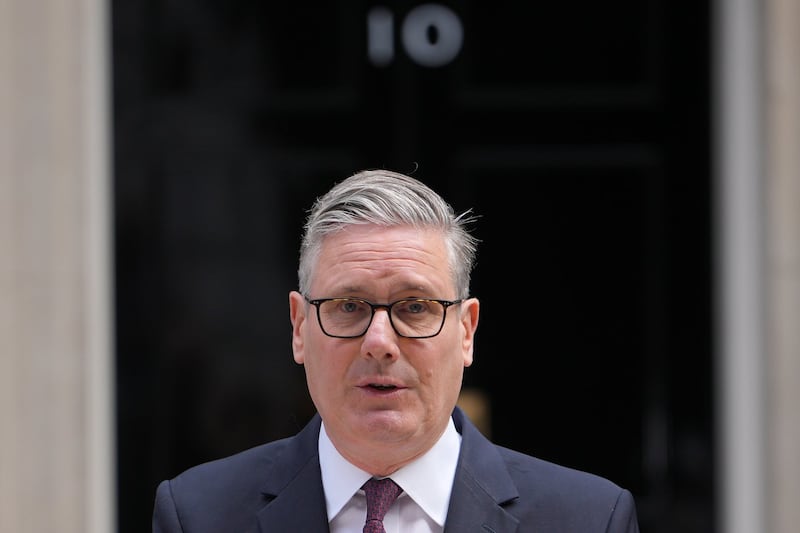
Starmer’s exit is the starkest version of that pattern yet. He won a landslide in 2024, one of the largest majorities in modern British history. It bought him votes in Parliament. It did not buy him patience from the electorate. Less than two years later, he’s packing his bags.
Canada’s affordability problem
Canada has already lived a version of this dynamic.
Cost-of-living pressures and housing affordability ultimately ended Justin Trudeau’s political runway after nearly a decade in office. The issue was not one policy failure, but a growing sense that the economic bargain had broken down for younger and middle-class Canadians.
The lesson on both sides of the Atlantic is the same: voters care less about economic statistics than about their own financial reality.
Governments point to GDP growth, employment gains or investment announcements. Voters look instead at rent, mortgage renewals, grocery bills and whether their paycheques still stretch as far as they once did.
Will Carney’s credentials be enough?
Unlike his predecessor, or his counterparts across Europe, Prime Minister Mark Carney came into office with a battle-tested resume for navigating financial crises.
Carney built his reputation before entering politics: helping guide Canada through the 2008 financial crisis, then leading the Bank of England through Brexit. Those credentials have earned him political goodwill and more patience than Canadians extended his predecessor.
But that patience is being tested.
Statistics Canada recently confirmed the economy contracted for a second straight quarter, meeting the technical definition of a recession.
The data arrived a day after Carney promoted Canada in New York as a safe place to invest, handing Conservative Leader Pierre Poilievre an opening to argue the government was failing on the economy at home.
Economists may debate the significance of a technical recession, but the politics are far simpler and presents a communications challenge for a government that spent a year emphasizing strong fiscal fundamentals and must now explain why a downturn occurred on its watch.
When economic reality overtakes political branding
This is the trap awaiting leaders who govern on the strength of their credentials. A resume is ultimately a story about competence. But when economic reality contradicts that story, voters tend to trust their own experience over any CV.
Carney’s economic pedigree has earned him the benefit of the doubt that Trudeau had long since exhausted. But credentials alone do not lower housing costs, improve affordability or alter disappointing data. Expertise can buy time. It cannot indefinitely outrun economic frustration.
Economic anxiety has become indifferent to ideology. Britain has gone through half a dozen prime ministers in a decade, each judged less by political philosophy than by whether voters believed the economy was improving.
Canada has not reached that point. But if economic frustration continues to define politics, Canadian leaders may soon confront the same question facing their British counterparts: when voters stop believing the economy works for them, how long do they keep believing in the people entrusted to run it?