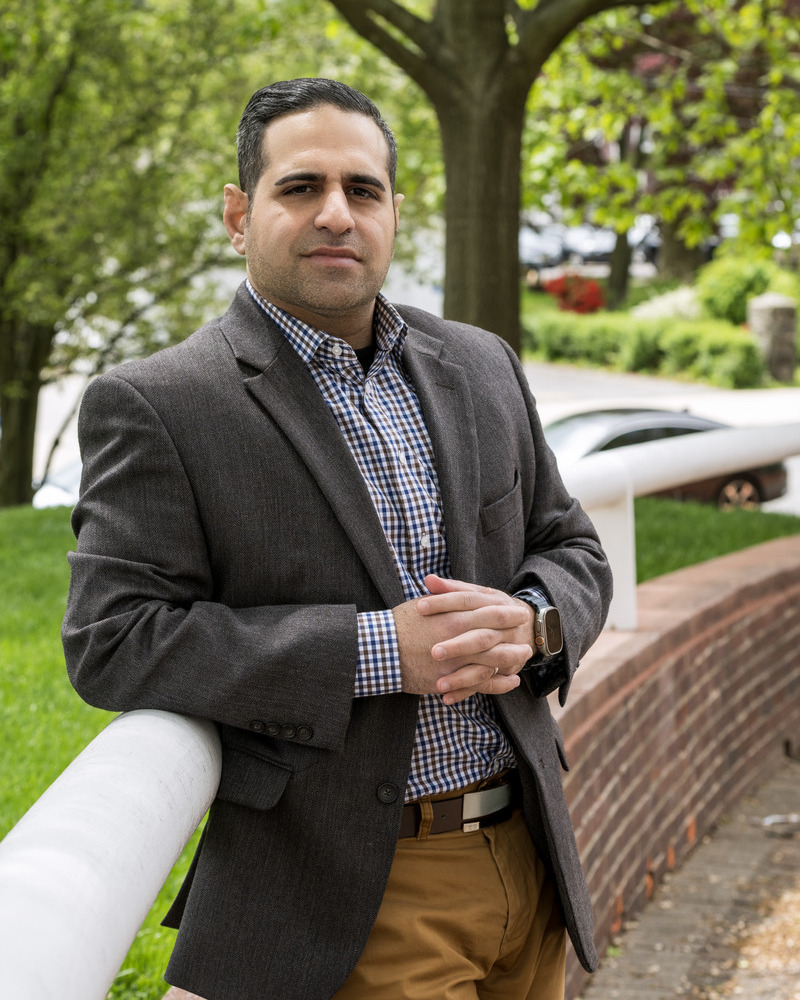
UD political science professor Kassra Oskooii is an expert in voting rights and the principles of redistricting. He said people should remember the World Cup is incredible soccer but to remember that the feeling of unity and nationalism is only temporary.
It’s also what led Oskooii to a sideline career as a referee. Here, the faculty member in the Department of Political Science and International Relations, and expert on voting rights and redistricting, discusses his experiences as a referee, the pressure World Cup officials face and the unifying (albeit fleeting) impact of the global tournament underway.
Q: Being a referee can be rough because it’s a position fans love to hate. What keeps you coming back after all these years?
Oskooii: I love the pressure. That may sound strange, but refereeing is about solving puzzles in real time. You’re managing 22 players, coaches and countless personalities. You have to make decisions instantly, with only one look at a play. People watching from the stands or on television don’t realize how difficult it is. Referees get one angle, one moment. There’s no pause button. The challenge is what makes it rewarding.
Q: Many fans think refereeing is just about enforcing rules. Is that accurate?
Oskooii: Not only. It’s also about managing people. You have to identify the leaders on the field, the players who can help keep teammates calm when emotions rise. Sometimes those leaders aren’t even the captains. If players trust you, the game flows better. If they don’t trust you, the game can fall apart quickly. Making correct decisions is essential, but communication is just as important. Players and coaches can get emotional. They don’t always see what you see. Part of the job is getting them to accept the decisions that they don’t always agree with.
Q: How does what you do on the pitch compare with what World Cup referees experience?
Oskooii: The stakes are much higher, but the fundamentals are the same. World Cup referees still have to manage personalities and make very difficult decisions under immense pressure. One difference is that they have much more support.
In addition to having assistant referees and a fourth official on the field, they have a team of video review officials helping them. They also have access to technologies that don’t exist at lower levels of the game. It’s harder for them to make a mistake, but it still doesn’t stop people from disagreeing.