Powering Canada Strong: A National Strategy for an Electrified Canadian Economy.
Details
- Publication date:
May 2026 - Author(s):
Natural Resources Canada - ISBN:
978-0-660-98304-2 - Cat. No.:
M4-287/2026E-PDF (Online)
Table of contents
1. Introduction
The world is changing rapidly: geopolitical conflict, shifting trade relationships, rapid technological change, and resulting volatility are placing strain on global energy systems and intensifying competition for resources, investment, and supply chains. More recently, consumers are being buffeted by energy pressures, exacerbating the affordability squeeze.
Major economies are moving decisively to strengthen their electricity systems, which are critical to economic growth, energy security, and long-term competitiveness. China is investing in clean technology and grid expansion at an unprecedented scale and now leads globally in manufacturing electricity technologies. Europe is making substantial investments in electricity systems, including new generation and major upgrades to its transmission and distribution networks. Traditional energy exporters like the United Arab Emirates and Saudi Arabia are also diversifying, investing heavily in clean electricity.
Access to abundant, affordable, and reliable electricity is – more than ever – fundamental to competitiveness, energy security, and economic sovereignty. It shapes where investment flows and influences where industries decide to locate. It defines how productive economies can be.
It also drives critical progress towards climate goals. Mass electrification, advanced in a way that balances reliability, sustainability, and affordability, will enable countries to drive down economy-wide emissions in the most cost-effective way. In Canada, it will be a key element of our climate approach which, in addition to reducing emissions, will generate billions in total energy cost savings for Canadian households over coming decades.
Canada must act now to seize our window of opportunity. Electricity systems must be strengthened to reduce exposure to external shocks and help protect affordability for Canadian households and businesses at a time when price pressures are significant. Given the increasingly uncertain global environment, we must bolster reliable domestic energy supply to strengthen Canada’s sovereignty and economic stability.
We must also keep pace with Canada’s increasing power needs. Domestically, industrial growth is accelerating, buildings and transportation are electrifying, and demand is rising from emerging sectors such as critical minerals development, artificial intelligence (AI) data centres, and advanced manufacturing. These shifts are driving a sharp increase in electricity demand, which is expected to double by 2050, placing unprecedented demands on our electricity systems.Footnote 1
Affordable, clean power
- Canada has the lowest-cost residential power in the G7, and 4th lowest-cost in the Organisation for Economic Co-operation and Development (OECD) (2024)
- Canada has the 2nd lowest-cost industrial power, in both the G7 and OECD (2024)
- Canada has the 2nd highest share of non-emitting electricity generation in the G7, and the 3rd highest in the G20 (2023)
Canada is entering this critical moment with a strong competitive advantage: a reliable, low-cost, low-emission electricity system that ranks among the most affordable in the world, with abundant, affordable natural resources to help generate additional power. This achievement, built over decades, reflects the leadership and sustained investment of provinces and territories, utilities, generators, system operators, and ratepayers. This foundation must now be both protected and strengthened in the face of rising demand and a more complex global environment. Recognizing that a stronger, more resilient grid will, in turn, strengthen Canada’s overall energy security, the task facing Canadians will be to carry these advantages forward. This means scaling the electricity system to meet the country’s growing needs, while preserving affordability for businesses and households.
Given the scale of the system build-out required, all levels of government will need to work together, and the approaches adopted will need to reflect varied regional realities. In Canada, jurisdiction over electricity rests primarily with the provinces and territories, and the evolution of provincial and territorial electricity systems reflects the different resources that they can access (for example, hydro in British Columbia, Quebec, and Manitoba, nuclear energy in Ontario, and low-cost natural gas in Saskatchewan and Alberta). The federal government also has a role to play, centred on its responsibilities for international and inter-provincial trade, nuclear energy, and its shared responsibility for environmental protection.
Now more than ever, a coordinated effort is critical to sustaining the strong foundation that underpins Canada’s economy and its climate ambitions.
A national strategy
This paper launches a national strategy to enable Canada to meet two initial challenges:
- Building new infrastructure to double Canada’s electricity supply by 2050 and meet growing demand; and,
- Accelerating electrification across the economy to support competitiveness and address climate change.
This is a nation-building exercise not seen for generations – one that can sustain Canada’s enormous natural advantages and enhance economic sovereignty and energy security, while helping meet our climate goals.
The Government of Canada has already made significant commitments, with more needed to facilitate the historic build required. In building electricity systems to promote growth and prosperity and help lower emissions across the economy, the Government seeks to determine how it can best work with provinces, territories, and other partners to expand efforts in the following areas:
- Building the electricity system: Constructing a better-connected, modernized system to deliver twice as much affordable, reliable power.
- Financing the build: Ensuring the right long-term funding mechanisms are in place to build out electricity systems while supporting affordability.
- Increasing regional integration: Establishing a coordinated federal-provincial-territorial framework to advance inter-provincial interties and to encourage greater regional collaboration and coordination.
- Improving regulatory certainty and speed: Ensuring clear and predictable federal direction on emissions that enables cost-effective mass electrification, along with streamlined approvals/permitting related to the electricity sector.
- Managing demand and modernizing the system: Advancing demand-side solutions and grid modernization, working with large energy users to improve energy efficiency and energy management, accelerating energy retrofits, and deploying research and development, and planning tools to lower costs and enhance reliability.
- Building capacity across the value chain: Providing support to expand domestic capabilities to manufacture electricity system components and to accelerate clean technology commercialization, smart grid digitalization, and secure energy systems.
- Ensuring the skills and labour needed: Providing support to bolster training and incentives for employer-led upskilling and foster domestic manufacturing clusters that multiply high-wage jobs. As jurisdictions plan for rapid infrastructure growth, strengthening pathways into skilled trades will be essential.
- Securing the North: Examining existing and new federal supports, including targeted investments for infrastructure, energy planning, and deployment of made-in-Canada technologies (e.g., advanced grid controls and digitalization) that contribute to reliability and affordability in the North.
2. Context
2.1 A growing grid to enable economic growth
Globally, investment patterns are demonstrating the central role of electricity in modern economies. About CAD $3.1 trillion is invested annually in electricity grids, efficiency, and electrification – twice as much as the CAD $1.5 trillion for conventional fuels.Footnote 2 The International Energy Agency (IEA) projects that by 2050, global electricity consumption will increase between 78-102% across a range of potential future scenarios.Footnote 3 Other analysis shows that by 2050, electricity consumption could more than double in a slower energy transition scenario and nearly triple in faster scenarios; either way, electricity is forecast to become the largest source of energy by 2050 across all scenarios.Footnote 4
The electricity systems of tomorrow will be increasingly supported by low-emitting generation,Footnote 5 such as hydro, nuclear, solar, wind, geothermal, and energy storage optimized for peak, reliable performance. The International Renewable Energy Agency (IRENA) reports that, globally, renewable share of total installed power capacity rose by more than three percentage points to 49% in 2025, and represented almost 86% of electricity additions, almost entirely due to new solar and wind installations.Footnote 6 This has been enabled by dramatic cost reductions for renewable technologiesFootnote 7 and expanding use of battery storage.Footnote 8
In Canada, this global momentum underscores the urgency of infrastructure expansion. Estimates indicate that emerging electricity demand will require at least a doubling – if not more – of electricity system infrastructure between now and 2050. This expansion and modernization of Canada’s electricity systems is forecast to cost over $1 trillion from now to 2050.Footnote 9, Footnote 10
This investment is needed to address rapidly growing electricity demand, including from:
- industrial growth (e.g., critical minerals, battery manufacturing, and other rapidly emerging drivers such as AI data centres);
- electrification of transportation, industry and buildings (e.g., electric vehicles (EVs) and heat pumps); and,
- building the new homes that Canadians need over the next decade.Footnote 11
This growing demand will not be uniform across the country and will occur differently across each province and territory, reflecting variations in industrial structure, proximity to resources and markets, policy and regulatory environments, and trends in population growth. Provinces and territories will need to respond in ways that reflect their circumstances, including through region-specific approaches to generation, transmission, and system planning.
Competing for the future economy
Canada’s economic growth and long-term competitiveness will depend on its ability to attract and retain investment in high-growth, electricity-intensive sectors, including artificial intelligence (AI) and sovereign AI data centres, liquid natural gas (LNG) export facilities, mining and critical minerals, and advanced manufacturing.
High-growth sectors such as AI data centres will serve as the digital backbone of the modern economy, enabling productivity gains and enhancing business competitiveness. They will also drive significant new electricity demand.
Globally, jurisdictions are competing to secure these investments. Access to reliable, affordable electricity is increasingly the binding constraint to the growth of these electricity-intensive sectors, including for AI and data centre growth. Countries that can deliver dependable power at competitive prices, with the ability to bring new capacity online quickly, will be best positioned to attract this emerging economic activity.
In this regard, Canada has a comparative advantage in its diverse electricity mix and domestic energy resources. Along with hydro, solar, wind and biomass, natural gas-fired generation can play a useful role as a part of this diverse portfolio.
At the same time, Canada’s electricity systems are evolving from a 20th century approach with one-way power flows to a new model that leverages smarter, more decentralized systems enabled by new technologies and digital tools. This includes EVs, rooftop solar and home batteries, which allow owners to store energy and, in some cases, send it back to the grid when it is most needed. These changes are reshaping how electricity systems are planned and expanded.
Our systems are faced with a broad array of planning challenges and are already showing signs of stress. Aging infrastructure across the country requires refurbishment and replacement. As adoption of heat pumps grows, winter peak demand is rising. EV charging presents both a planning challenge and an opportunity for local distribution systems. While the investment required to meet future demand is significant, and Canada’s systems will be expanded and modernized over many years, governments, system operators, utilities, industry, and communities must begin now to enhance collaboration and coordination to plan and deliver effectively.
Given the scale and public interest involved, governments will play an important role in supporting this build-out. At the same time, expanding the electricity system represents a tremendous opportunity and source of economic activity in its own right, by supporting tens of thousands of skilled jobs while helping to attract new businesses and industries. With a coordinated, national approach to planning and system expansion, this cycle of investment, electrification, and growth can help to support affordability.
2.2 Electrification as a climate solution
Canada already has one of the cleanest grids in the world, with approximately 80 percent of electricity powered by non-emitting sources.
This positions Canada well to take advantage of its non-emitting electricity to pave a path to competitiveness that will be powered by electrification. Given Canada’s strong starting point, the greatest opportunity for emissions reductions lies in expanding the role of electricity across the broader economy. By switching end-uses like transport, space heating, and industrial processes from fuels to electricity, Canada can leverage its electricity infrastructure to lower costs and emissions, improve productivity, and drive investments.
Canada’s electricity system is already largely non-emitting; importantly, electrification can deliver immediate and significant emissions reductions in the broader economy. Canada has the ambition to aggressively pursue electrification with the potential to reduce emissions by as much as five times current electricity sector emissions, and even more as technology improves and costs come down. This reflects the fact that emissions from end-uses like transport remain far higher than those from electricity generation and represent the largest opportunity for cost-effective reductions.
Pursuing this strategic electrification is a key element of Canada’s climate solution. It will allow Canada to maximize the value of its existing low-emitting grids while maintaining flexibility in how new generation is added, balancing affordability, reliability, and emissions reductions.
Through the right electrification measures, Canadians could save billions in total energy costs and most Canadian households could actually pay less by 2050Footnote 12 because of efficiency gains associated with electrification. Taking maximum advantage of this opportunity will require optimizing the federal approach to regulations that guide this sector’s future trajectory, ultimately positioning it to play an even larger role in driving emissions reductions than it does today.
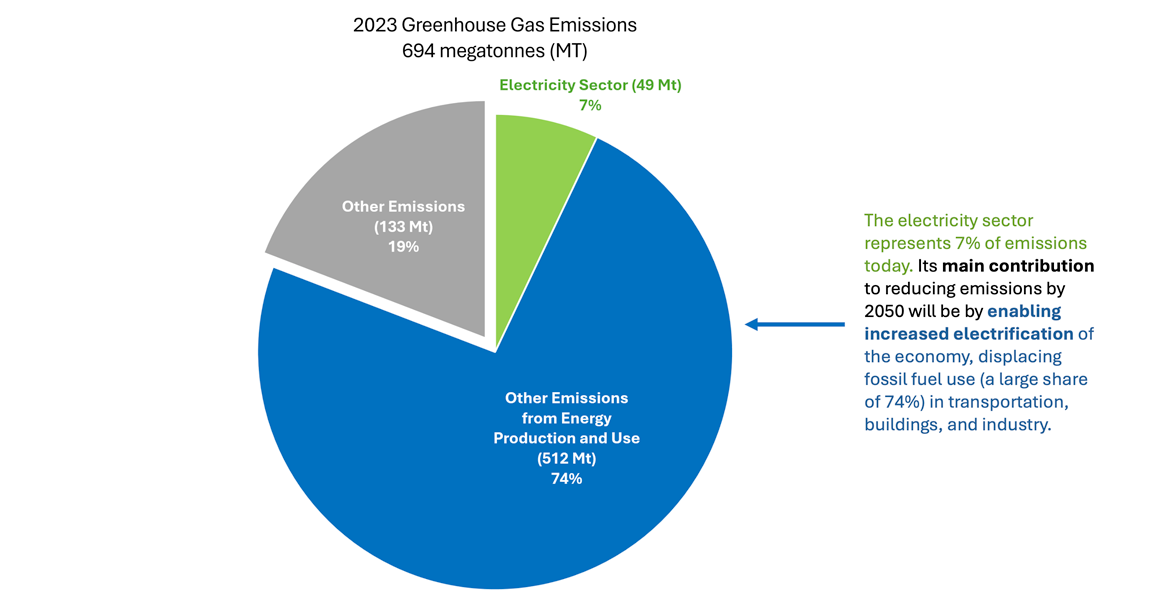
Figure 1. Canadian greenhouse gas emissions from energy and other sources (%)Footnote 13
Text description
A pie chart showing Canada’s greenhouse gas emissions in 2023 of 694 mégatonnes (Mt), split between the electricity sector (7%), other energy production and use (74%) and other sources (19%).
A blue arrow is pointing to the pie chart and says “The electricity sector represents 7% of emissions today. Its main contribution to reducing emissions by 2050 will be by enabling increased electrification of the economy, displacing fossil fuel use (a large share of 74%) in transportation, buildings, and industry.”
Through significant federal-provincial collaboration and efforts to phase-out unabated coal-fired power, electricity systems across Canada have already cut emissions by over 50% since 2005. Today, electricity sector emissions in Canada are below 50 megatonnes (Mt), representing roughly 7% of Canada’s total emissions.Footnote 14 This was accomplished while also increasing total generating capacity, and despite regional differences in resource endowment (for example, access to hydro resources in some provinces and fossil fuels elsewhere).
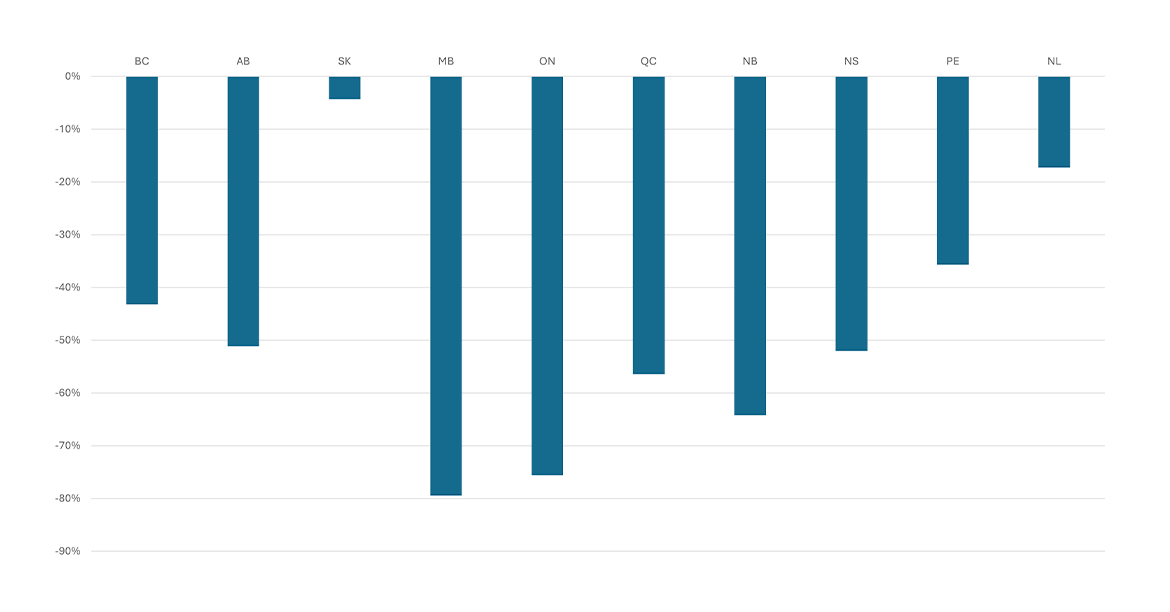
Figure 2. Electricity generation emissions reductions over time (2005-2023) Footnote 14
Text description
2005-2023 Electricity Generation Total Emissions % Change by province
BC: -43%
AB: -51%
SK: -4%
MB: -79%
ON: -76%
NB: -64%
NS: -52%
PE: -36%
NL: -17%
Electrifying Canada’s economy while continuing to reduce emissions will require enhanced collaboration with high-emitting provinces in particular. Nuclear power, renewable energy, and storage technologies can provide reliable, non-emitting power. Natural gas will also continue to play an essential role in maintaining affordability, reliability, and system flexibility.
Natural gas’ strategic role
Natural gas-fired generation plays an important role in supporting reliable, affordable, and secure electricity systems in Canada, especially as demand quickly grows and the system becomes more complex.
In many parts of the country, particularly in Western Canada, natural gas provides baseload and operational flexibility that complements intermittent renewables like wind and solar. As such, some jurisdictions have concluded that natural gas would be the preferred option for providing affordable baseload power. Gas-fired plants can start quickly, ramp output up or down, and respond in real time to changes in demand or renewable generation. This allows natural gas to play multiple roles, including supporting peak demand, bolstering system reliability during periods of stress or low renewable output, and meeting baseload generation needs.
Canadian natural gas has one of the lowest emissions intensities in the world. With the introduction of new technologies for methane abatement, we will be capable of further reducing emissions intensity.
Canada’s abundant and dependably low-cost natural gas resources help enhance energy security and system resilience, while limiting exposure to global supply disruptions in many regions. In doing so, natural gas can contribute to system stability and affordability, while also contributing to cost-effective emissions reductions.

Figure 3. Comparative natural gas prices from key global hubsFootnote 15
Text description
A line chart showing the monthly average natural gas spot price in $CAD/MMBtu across four key hubs from March 2023 through early March 2026.
The price in Canada (AECO) stays below $5 for the entire period.
The price in Europe (Dutch Title Transfer Facility) fluctuates between $11 and $25 from 2023-2026, rising sharply in March 2026.
The price in Northeast Asian markets (JKM) fluctuates between $12 and $25 from 2023-2026, rising sharply in March 2026.
The price at the United States based Henry Hub stays below $10 for the entire period.
2.3 Managing the build-out while protecting affordability
Provinces and territories (and their system operators and utilities) have already been responding to growing electricity demand and decarbonizing their systems. Since 2000, provincial and territorial ratepayers have supported investments of almost $450 billion in electricity infrastructure.Footnote 16 These investments reflect diverse regional needs and differences in resource endowments, geography, and demand profiles in provinces and territories across the country.
This momentum is continuing. Provinces and territories are planning investments worth hundreds of billions of dollars combined over the coming decades, with approaches that will continue to vary based on jurisdictional circumstances.
Hydro-Québec’s Action Plan 2035 signals total investments of up to $185 billion by 2035 to expand generation (including hydro), reinforce transmission and distribution infrastructure, and meet forecast demand growth.Footnote 17
BC Hydro’s 2024 10-year capital investment plan indicates approximately $36 billion is needed to expand, reinforce, and modernize its electricity infrastructure.Footnote 18
In Ontario, the cost of nuclear refurbishment and small modular reactor (SMR) development alone is expected to be over $40 billion.Footnote 19
The scale of investment required in this context demands consideration of the appropriate balance between ratepayer and taxpayer contributions — both today and over the decades ahead — and how to best protect affordability for Canadians.
At the same time, because the cheapest electricity is the power never used, energy efficiency and grid modernisation are some of the most effective ways to address affordability. They also give consumers more choice and reduce the need for costly new infrastructure. For example, Hydro-Québec noted that its recent $10 billion investment in efficient technologies would be three times less expensive than building an equivalent amount of new supply.
In 2023, energy efficiency measures across the economy saved enough energy (not just electricity) to power over 20 million homes (~ 29 GW of continuous power).Footnote 20
A steady investment environment
As a cornerstone of Canada’s financial landscape, institutional investors such as pension funds are increasingly gravitating toward infrastructure projects that offer long-term stability and predictable yields. These institutions are well-equipped to bring significant private financing to the table, filling a critical capital gap and providing a source of lower-cost capital to fund the infrastructure build out. By investing in the electricity grid buildout, these investors can achieve the consistent returns their beneficiaries depend on while driving the development of essential energy projects.
The federal government is also using its resources to support electricity systems, including tens of billions in Investment Tax Credits; strategic financing (loans/equity) via the Canada Infrastructure Bank; the Canada Growth Fund; the Indigenous Loan Guarantee Program; and targeted programming (see Section 3 for detail).
Many of the investments required for this historic buildout will be for assets that will benefit multiple generations.
Even with some of the lowest electricity rates in the OECD, over half of Canadians already say they are concerned about energy affordability.Footnote 21 Large rate increases affect everyone, but particularly energy-poor households, where even modest rate hikes exacerbate vulnerability. In this context, the scale of investment required demands consideration of the appropriate balance between ratepayer and taxpayer contributions— both today and over the decades ahead — and how to best protect affordability for Canadians.
Managing the affordability challenge also means that the current generation should not have to bear an unfair burden in shouldering the upfront investments for electricity system costs that will deliver energy to future generations. Appropriately structured financing can help ensure that the benefits of electrification and its costs are fairly distributed across the generations.
Building the electricity system is a shared responsibility. Government support can be provided through targeted investment, financial supports, and enabling regulatory frameworks and policies. Striking the right balance can help ensure that the investment proceeds in a way that reduces risk and total cost, spreads costs over time and maximizes economic benefits across the country.
Electrification and your ‘Energy Wallet’
Over the coming decades, Canadians will use more electricity and fewer fuels. This is because many things we use every day—like our vehicles, the heaters in our homes, and machines in big factories—are switching to electric power.
With the right investments and electrification measures, Canadians could save $15 billion in total energy costs, with 7 out of 10 Canadian households paying less by 2050 (based on analysis completed for the Canada Electricity Advisory Council (CEAC); cited in the CEAC Final Report). This is because electricity is much better at doing its job than fuel (less “lost heat”). Electric machines are 2 to 4 times more efficient than those that run on fuel and, because they are more efficient, the average Canadian can save money on their total energy needs over time.
A household’s “energy wallet” can be thought of as combined payments for gasoline, natural gas, and electricity. In the future, the “electricity” slice of the pie will get much bigger, but for most, the entire pie will get smaller because households will be relying on more efficient forms of energy (conceptual depiction below).
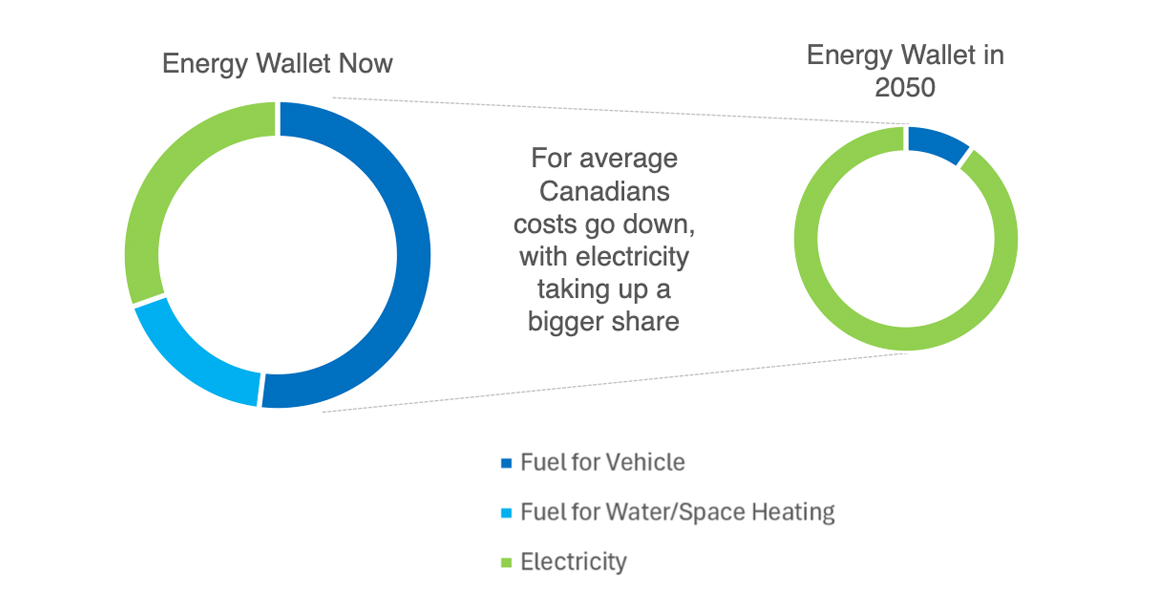
Figure 4. Conceptual depiction of changes to the ‘Energy Wallet’ of a typical Canadian household, adapted from 2024 Canada Electricity Advisory Council: Final report
Text description
The figure has two doughnut charts showing the share of spending of an average Canadian on energy. Expenses include:
- Fuel for car (dark blue)
- Fuel for Water/Space Heating (light blue), and
- Electricity (green).
The left chart shows a current energy wallet, with fuel for vehicles at 52%, electricity at 30%, and water/space heating fuel at 18%.
The right chart is a conceptual 2050 energy wallet: For average Canadians costs go down, with electricity taking up a bigger share. This chart shows electricity at 89% and fuel for vehicles at 11% and has a smaller overall size.
2.4 Electricity ‘islands’ and the need for greater regional integration
Canada’s electricity system consists of multiple, relatively segregated provincial/territorial grids that are governed and planned independently, and that generally trade more with the U.S. than one another. While trade with the U.S. is and will remain important, this siloed approach limits efficiency.
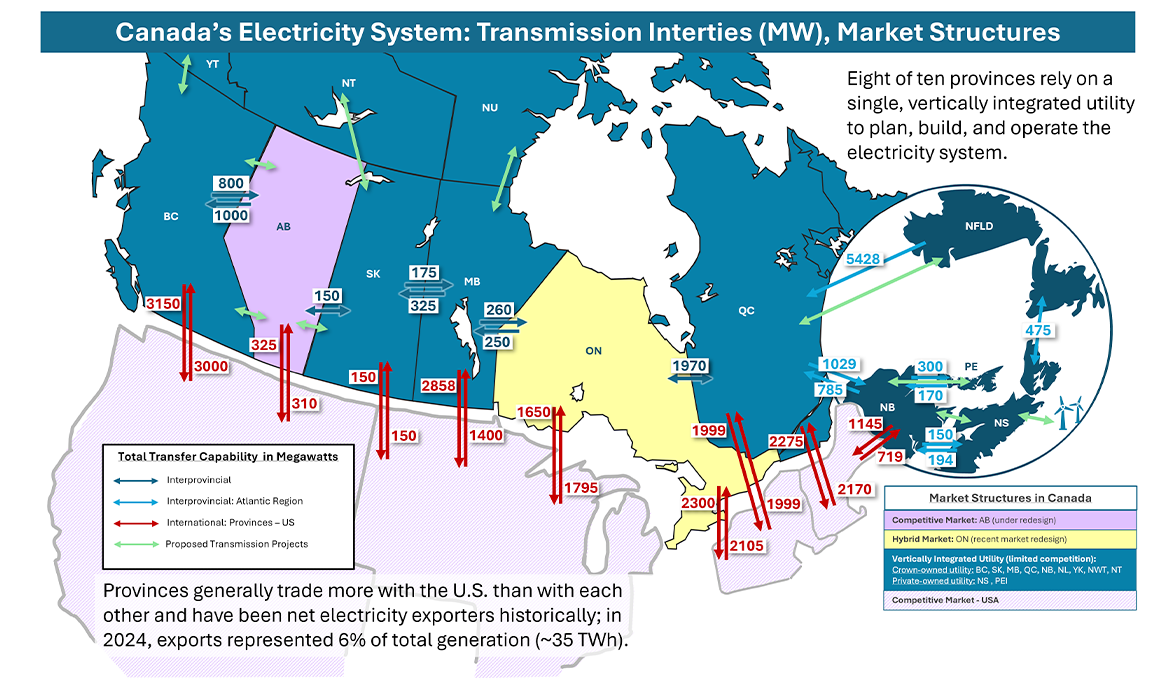
Figure 5. Map of existing and proposed interties, and Canada-U.S. transmission (2025)
Text description
A transmission intertie capability map with colour-coded arrows in megawatts (MW) and jurisdictions colour-coded by market structures.
Provinces generally trade more with the U.S. than with each other and have been net electricity exporters historically; in 2024, exports represented 6% of total generation (~35TWh)
Market Structures in Canada and colour coding
Eight of ten provinces rely on a single, vertically integrated utility to plan, build, and operate the electricity system.
Jurisdictions colour codes
- Dark purple – Competitive market: AB (under redesign)
- Yellow – Hybrid Market: ON (recent market redesign)
- Blue – Vertically Integrated Utility (limited competition):
- (indent) – Crown Owned utility: BC, SK, MB, QC, NB, NL, YK, NWT, NT
- (indent) – Private-owned utility: NS, PEI
- Dashed light purple – Competitive Market – USA
- Total Transfer Capability in Megawatts by colour coded arrows between markets/jurisdictions.
Arrow colour codes
- Dark blue arrow: Interprovincial
- Light blue arrow: Interprovincial – Atlantic Region
- Red arrow: International – Provinces <> US
- Green arrow: Proposed Transmission Projects
Transfer Capability in Megawatts
-> denotes 1 way capability, <-> denotes 2-way capability.
- BC -> US: 3150
- US -> BC: 3000
- BC -> AB: 800
- AB -> BC: 1000
- AB -> US: 325
- US -> AB: 310
- AB <-> SK: 150
- SK <-> US: 150
- SK -> MB: 175
- MB -> SK: 325
- MB -> US: 2858
- US -> MB: 1400
- MB -> ON: 260
- ON -> MB: 250
- ON -> US (MISO): 1650
- US (MISO) -> ON: 1795
- ON -> US (NYISO): 2300
- US (NYISO) -> ON: 2105
- ON <-> QC: 1970
- QC <-> US (NYISO): 1999
- QC -> US(ISO-NE): 2270
- US(ISO-NE) -> QC: 2170
- QC -> NB: 1029
- NB -> QC: 785
- NB -> US: 1145
- US -> NB: 719
- NB -> PE: 300
- PE -> NB: 170
- NB -> NS: 150
- NS -> NB: 194
- NS <-> NL: 475
- NL -> QC: 5428
The limitations of Canada’s largely isolated provincial grids are becoming more apparent, particularly in comparison to the more integrated regional systems in the U.S. or the highly interconnected electricity markets of Europe. In those jurisdictions, integrated electricity markets deliver billions of dollars in annual cost savings from system optimization, lower energy production costs, and optimized renewable integration.Footnote 22
Larger, more interconnected grids provide multiple benefits. They enhance resiliency by pooling resources to offset shortages during peaks, outages, or extreme weather. They take advantage of geographic and time zone differences to allow for better load balancing. Connected grids lower costs by avoiding the need for each province and territory to invest in duplicative or redundant capacity builds. They accelerate emissions reductions by allowing for more clean energy deployment, enabling greater penetration of renewables by smoothing variability across regions, reducing reliance on backup generation, and facilitating lower-carbon imports and exports across interconnected systems. Interconnected systems also bolster energy sovereignty and security, including amid rising demand.Footnote 23 Interties can also deliver long-term savings by reducing the need to build redundant infrastructure to meet each province or territory’s peak demand.
A 2020 reportFootnote 24 demonstrated that a $1.7 billion investment in interprovincial transmission could attract an additional $6.6 billion in private funding for transmission alone, and an additional $92.5 billion over ten years for renewable power.Footnote 25 Similarly, a 2025 study indicated that doubling the capacity of the BC-Alberta interconnection could yield $1.7 billion in net benefits to 2050, and a tripling of capacity between Manitoba and Saskatchewan could yield $2.3 billion in net benefits.Footnote 26, Footnote 27
Despite the potential benefits, achieving greater regional grid integration in Canada has been uneven. Inter-provincial electricity interties are complicated by differing ownership, market, and regulatory models throughout Canada, ranging from government-owned Crown monopolies to competitive, investor-owned systems. This creates potential misalignment in incentives for interconnection and trade, and with this a market integration challenge.
Increasingly, Canadians are seeing the case for stronger regional coordination and integration, not only as a reliability and affordability issue, but as a strategic economic and energy security priority for Canada.
2.5 Enabling the build
As electricity systems double in size, Canada will need to capture the full economic and strategic advantage of the build-out. This means strengthening the industrial base and expanding domestic manufacturing capabilities to make electricity components at home. It also means building national capability in clean technologies, smart grids, and advanced electricity systems, and advancing energy security in the North.
Building capacity across the value chain
Building out the electricity system will require large volumes of specialized manufactured components and clean technologies. This includes physical components such as transformers, cables, batteries, switchgear, semiconductors, control panels, and generators, as well as advanced digital and “smart” clean technologies like sensors, smart meters, power electronics, digital control systems, AI-driven analytics, and cybersecurity suites for modernized networks. Strengthening domestic capacity across these technologies will be important to supporting not only system reliability and resilience, but also to ensure Canada’s long-term energy security.
Many of the manufactured components required, such as transformers and switchgear, are already in short supply globally and face elevated costs and multi-year backlogs. Furthermore, Canada’s electricity sector is highly import dependent, particularly on the U.S., including for some of the most critical components.Footnote 28 In recent years, domestic production of these components has declined as a share of total supply (from 58% in 2018 to 52% in 2023), widening the trade imbalance and increasing exposure to the U.S. This growing reliance on external supply chains can create vulnerabilities at a time when energy security, economic competitiveness, and national sovereignty are increasingly prominent considerations. On a positive note, Canada is starting to develop its own battery production, with new production recently beginning in Ontario, marking an important milestone for the domestic industry.
Beyond the specialized manufactured components needed to build out electricity systems, new smart, digital, internet-connected and AI-driven technologies will also be needed to modernize Canada’s electricity systems. Made-in-Canada tools can help to improve cybersecurity while also allowing for modernized grid design which can help to minimize strain on physical assets and enhance system reliability. For customers, they can unlock new opportunities for active participation in electricity systems (e.g., through dynamic pricing, peer-to-peer trading, and home energy management apps). Canada also has a long-standing advantage in nuclear technology, including CANDU reactor design, fuel-cycle capabilities, and an established supply chain that supports both domestic operation and export opportunities.
In addition to continuing to leverage Canada’s nuclear advantage, strengthening domestic capacity in manufactured components and smart technologies will enhance energy security, supply-chain resilience, and reduce exposure to import dependence. It will also deliver economic benefits, including skilled jobs, new industrial activity and associated Gross Domestic Product growth, revenue from domestic procurement (e.g., mining, steel, and aluminium), and stronger long-term competitiveness in global clean energy markets.
Ensuring workforce readiness
The availability of skilled workers is critical to the successful operation, maintenance, and expansion of Canada’s electricity system. Employment in the electricity sector has grown significantly over recent years, exceeding 110,000 workers in 2022. It is expected to require 28,000 new workers by 2028 and create up to 130,000 job openings in the electricity sector under a net zero scenario by 2050.Footnote 29 Despite high demand, the sector faces challenges in finding skilled workers. Over 80% of employers in the electricity sector identified finding skilled talent as the most pressing constraint on their outlook over the next five years, far surpassing concerns such as inflation, regulatory requirements, and interest rates. Scaling infrastructure, and meeting manufacturing and installation needs will require a strong pipeline of skilled engineers, tradespeople, and apprentices trained in emerging technologies, from grid-connected equipment to smart energy systems. Supporting apprenticeships and encouraging growth in the skilled trades is crucial to ensuring Canada is equipped with the workforce needed to expand the electricity system and support increased demand.
Further, the need to keep pace with rapid technological advancements presents added difficulty in maintaining a skilled workforce. Worker retention is critical, and Canada is competing with other global jurisdictions for qualified workers. This underscores the need for a comprehensive approach to human resources, as securing skilled labour will be fundamental to the success of the electricity system build-out. These workforce requirements cannot be properly addressed without enabling government policies and funding.
Securing the North
Most northern and remote communities, which have significant Indigenous populations, are not connected to Canadian electricity grids or natural gas networks.
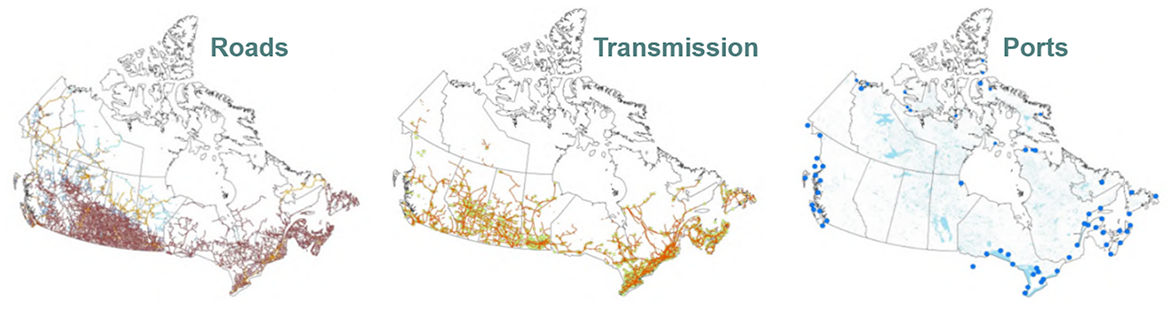
Figure 6. Road, transmission, and port infrastructure in Canada.
Text description
The first map shows roads in red, which have a higher density in the prairie region, the Windsor-Quebec City corridor and the maritime provinces, with a low density of infrastructure in the Canadian shield.
Transmission lines, in yellow and orange, have a similar distribution to roads but with more large lines reaching into the Canadian shield to connect with large scale generation and load sites.
Port infrastructure map is mostly concentrated around the Pacific and Atlantic coasts along with high density along the Great Lakes, St Lawrence Seaway and a smaller number of ports on Canada’s Arctic coast.
Northern and remote communities often rely on small diesel-based micro-grids as well as on legacy hydroelectric infrastructure, most of which is in immediate need of significant investment. Remote electricity projects, both large and community-scale, are significantly more expensive due to logistical, technical, and geographic complexities. As a result of these dynamics, northern and remote utility rates are six to ten times higher than the national average. Footnote 30
In Yukon, existing hydroelectric generation is insufficient to meet peak winter demand, forcing the territory to import diesel generators and LNG to fill the gap. In December 2025, the territory twice exceeded its record for peak electricity demand at a time when the failure of energy infrastructure is a matter of life and death.
In the North, access to electricity is not only a necessity, it can also be a strategic resource for defense infrastructure and enable resource development, while bolstering energy sovereignty through reduced dependence on imported fuels. Northern regions hold significant deposits of critical and rare earth minerals – essential inputs for batteries, wind turbines, solar panels, and other technologies. Leveraging defence investments to establish multi-use infrastructure can benefit local communities, strengthen Arctic sovereignty, and position the North as the economic engine of the future.
Development in the North, often to a greater degree than in grid-connected areas, can affect Indigenous rights and interest. Development must occur in close collaboration with Indigenous Peoples, who now are leading the advancement of numerous projects across the country. This is one of the most significant opportunities to combine energy development, climate action, and economic reconciliation.
2.6 Nuclear energy in Canada
Driven by growing electricity demand, the global nuclear energy industry is expected to grow between $100 billion and $200 billion per year by 2030. Canada is a Tier One nuclear nation – one of the few in the world with robust nuclear fuel-cycle capabilities, proven domestic reactor technology, a skilled and growing workforce, and a strong nuclear regulator.
Nuclear energy is a key competitive advantage for Canada, presenting opportunities for economic growth, enduring international partnerships, and trade diversification. It also addresses energy sovereignty by providing clean, baseload power to meet electricity demand growth.
For over 80 years, Canada has been a leader and important global power in the development and deployment of nuclear energy, exclusively for peaceful purposes. Canada invented and owns the intellectual property for the homegrown Canada Deuterium Uranium (‘CANDU’) nuclear reactor, which has provided provinces and countries around the world with non-emitting electricity for decades. The Canadian Nuclear Safety Commission (CNSC), Canada’s nuclear energy regulator, is one of the world’s longest-standing and most credible regulators, and Canada’s nuclear industry has an enviable safety record. Canada also boasts extensive research & development capacity and is home to multiple Nobel prizes won by Canadians and in Canada for research in nuclear energy.
Today, nuclear energy supplies about 15 percent of Canada’s electricity, and it forms the backbone of Ontario’s electricity system. Ontario is continuing to build on this strength through a reactor life extension and refurbishment program, on budget and ahead of schedule – a huge accomplishment for Canadian project management that builds the credibility of our expertise, here and abroad. Other provinces, including Saskatchewan, Alberta, and New Brunswick, are actively exploring nuclear power to support their future electricity needs, and are looking to leverage and expand that domestic expertise.
Canada’s current fleet of reactors have sheltered Canada from the volatile market for enriched uranium, currently dominated by Russia, and have underpinned our reactor exports to allies looking to do the same. Canada will be the first G7 nation to deploy a SMR at Ontario’s Darlington Nuclear Generating Station. Canada is also looking to the future of nuclear innovation, whether for micro-modular reactors or nuclear fusion. The expertise and supply chains that Canada is building can also be leveraged for the export of services and reactor components to countries looking to deploy these technologies.
Beyond reactors, Northern Saskatchewan is home to the world’s largest high-grade uranium reserves, making Canada the only country with sufficient uranium production to fuel its own nuclear fleet, and allowing Canada to build a strong domestic fuel cycle, from mining, to milling, to conversion and fuel fabrication. Canada exports about 90 percent of its uranium production, which has further positioned it as a reliable nuclear ally around the world.
To support the build out of Canada’s nuclear energy capacity at home and abroad, the federal government is developing a transformative new Nuclear Energy Strategy for Canada, with input from provinces and territories, Indigenous peoples, utilities, and industry, which will outline a path forward for nuclear energy in Canada. It will position nuclear power – of all kinds – as an essential part of a modern, clean, and better-connected grid.
3. A national strategy: time to build
It is time to act on electricity’s role in nation-building. Provinces, territories, and the federal government all have a role to play in advancing a national strategy to put the electricity sector at the centre of efforts to address affordability, grow the economy, and tackle climate change.
A national strategy means recognizing that, while each province and territory will still determine what works best in its own market and take appropriate action based on local circumstances, we are stronger together.
There is a strong consensus regarding the role that the electricity sector must play in a prosperous future. The challenge now is to move from vision to action, and to answer the question of how we get there.
3.1 Building the electricity system
To meet expected demand, by 2050 Canada needs an electricity system that generates and delivers twice as much power as it does today. To meet these needs affordably and reliably, Canada must significantly increase the electricity system’s capacity to generate and deliver clean electricity to where it is needed most.
In addition, interprovincial transmission capacity could increase as much as 27% by 2035Footnote 31 or 70% by 2050Footnote 32, supporting greater electricity exchanges across provinces with diverse clean resources such as hydro, wind, and solar. At the same time, maintaining reliability requires modernizing aging infrastructure, expanding storage, and improving grid resilience as extreme weather events become more frequent.
With approximately 80% of today’s electricity already coming from non-emitting sources, Canada is well positioned to build a more reliable, more affordable grid that coordinates major investments in generation, transmission, distribution and smart grid technologies across all regions.
3.2 Financing the build
Supporting investment and securing affordability
The federal government is strongly committed to supporting investment by sharing in the cost of building out electricity systems. To do this, the federal government has established three types of financial support:
- Tens of billions in investment tax credits (ITCs), including in Clean Electricity, Clean Technology, and Carbon Capture, Utilization, and Storage.
- Strategic financing via the Canada Infrastructure Bank (Clean Energy target of $20 billion), Canada Growth Fund, and Indigenous Loan Guarantee Program (envelope doubled from $5 billion to $10 billion); and,
- Targeted programming (e.g., such as the $4.5 billion Smart Renewables and Electrification Pathways Program).
Going forward, to further assist Canadians with affordability, the Government of Canada intends to take additional action on energy-saving retrofits for up to one million households across Canada through a combination of financing, grants, and complementary measures. For example, enabling households to electrify home heating and cooling through transition from propane, oil, and electric baseboard heating to heat pumps.
Canada Infrastructure Bank and Canada Growth Fund
The federal government is supporting the build-out and modernization of Canada’s electricity system through targeted financing and investment vehicles that address different stages of project development and commercialization. Federal financing mechanisms like the Canada Infrastructure Bank and Canada Growth Fund play critical roles in de-risking and accelerating Canada’s clean electricity buildout.
The Canada Infrastructure Bank (CIB) has the mandate to invest and seek to attract private and institutional investment in revenue-generating infrastructure projects in the public interest. The CIB uses tools such as loans to crowd in private capital, accelerate project delivery, and reduce risk for projects. Budget 2025 increased the CIB’s capital envelope from $35 to $45 billion, and clean energy remains a top priority with a target of at least $20 billion in investments. Examples of funding include a $284 million loan for a new 130-kilometre transmission line in Alberta, $138 million toward Atlantic Canada’s largest planned energy storage project, and up to $518 million to the Oneida battery storage project in Ontario.
The Canada Growth Fund (CGF) leverages a range of investment instruments to support the clean electricity ecosystem, including first-of-a-kind technologies. For example, the CGF recently announced an investment of up to $2 billion to support SMR deployment at the Darlington site in Ontario, building on an earlier $970 million investment by the CIB. Other investments have supported manufacturing and deployment of emissions-reducing technologies, including geothermal energy, smart grid technology, and energy storage.
The Government of Canada will also continue to prioritize projects of national interest that support electricity system growth. In particular, with the importance of many transmission projects across the country, the Government will refer the development of a new comprehensive Transmission InterConnect Investment Strategy to the Major Projects Office.
It is committed to continuing to identify impediments to investment and opportunities to address them, including considering opportunities to attract more foreign direct investment when that is in the best interest of Canadians.
The Government plans to extend the Clean Electricity ITC to certain major high-voltage intra-provincial transmissions projects, complementing existing support for inter-provincial interties. Intra-provincial transmission is critical for moving electricity from where it is generated to where it is needed, enabling the connection of new generation, supporting growing industries and regional economic development, facilitating inter-provincial interties, and enhancing overall system reliability, resilience, and flexibility.
In addition, the government is launching the Canada Strong Fund, providing $25 billion to seed Canada’s first national sovereign wealth fund. The Fund will focus on supporting Canadian companies and nation-building projects such as new ports, mines, and trade and energy corridors that will unlock Canada’s resources, secure domestic supply chains, and enable access to new markets.
3.3 Regional integration
Lowering costs, improving reliability, and bolstering energy sovereignty
Provinces and territories are already working together on regional integration. A new agreement, initiated by Ontario, is bringing together British Columbia, Alberta, Saskatchewan, Manitoba, New Brunswick, Prince Edward Island, Nova Scotia, Yukon, and the Northwest Territories to advance new electricity transmission projects and strategic interties across Canada. Provinces, territories, and the federal government collectively made intertie development a priority for the 2026 Energy and Mines Ministers’ Conference.
The federal government, which plays a key role in interprovincial trade, is committed to actively supporting provinces and territories in developing intertie connections and has already taken steps to advance work in this area:
- Introducing the Clean Electricity ITC, which supports investments in transmission between provinces and territories.
- The CIB has prioritized interties and recently committed $285 million in equity for the Nova Scotia-New Brunswick Wasoqonatl Reliability Intertie, including $54 million through the Indigenous Equity Initiative, supplemented by $24.7 million in predevelopment funding from Natural Resources Canada (NRCan) programs.
- NRCan’s $4.5 billion Smart Renewables and Electrification Pathways Program (SREPs) is supporting multiple intertie projects in Western Canada.
- NRCan’s $1.5 billion First and Last Mile Fund (Critical Minerals Infrastructure Fund) committed $40 million to the Government of Yukon for pre-feasibility activities to advance a 765-km high-voltage transmission line that would connect Yukon to B.C.
Going forward, the Government is committed to working in close collaboration with provinces and territories to identify impediments to greater regional integration and to finding opportunities to address them, including by exploring:
- Giving priority consideration to proposed intertie projects (e.g., for referrals to the Major Projects Office and federal funding).
- Actively supporting those jurisdictions that are willing to undertake more transformational efforts to advance regional integration.
- Establishing innovative mechanisms to enable the advancement of interprovincial interties, including through the development of new federal-provincial-territorial collaboration. This would entrench long-term regional planning, project development, and dispute resolution.
- Developing a standard cost allocation mechanism to guide and arbitrate costs among project participants, including the federal government (e.g., drawing on models such as the European Union’s Projects of Common Interest frame).
- Implementing data sharing and regional grid modelling and planning to identify, generate consensus on, and better support key intertie project advancement.
3.4 Improving regulatory certainty and speed
A predictable and durable approach to regulations affecting the electricity sector is critical to unlocking needed investment decisions.
Amendments to the Clean Electricity Regulations
Existing regulations were put in place to guide the electricity sector towards net-zero by 2050, and the federal government remains committed to achieving this. However, the global context has changed, and Canada faces new and urgent pressures and threats. An evolved approach is required. In this context, the Government of Canada intends to adjust the Clean Electricity Regulations (CER) to enable the sector to grow more rapidly across all provinces and territories by providing greater flexibility to offset residual emissions elsewhere. This will make mass electrification and the cost-effective emissions reductions it delivers an even larger part of the Government’s climate and economic strategies, by leveraging the electricity sector to deliver even more emissions reductions. Any changes will maintain the net-zero by 2050 goal and protect the environment and human health from climate change and greenhouse gas emissions. These proposed adjustments will be the subject of consultations.
At a Glance: Changes to the Clean Electricity Regulations
- Maintaining net-zero by 2050 goal while allowing greater use of credible carbon offsets, recognizing the electricity sector’s capacity to deliver outsized economy-wide emissions reductions.
- Avoiding stranded assets by enabling greater flexibility for existing units to maintain reliability and avoid costly premature replacement.
- Accelerating investment in Canada’s grid by enabling more room to add new units in the near-term.
Supporting investment and protecting core interests
In addition, to support regulatory predictability and efficiency, the federal government is engaging with Indigenous partners, provinces, territories and the public on:
- Ensuring federal reviews and decision-making timelines take no more than one year once all information from the project proponent has been received;
- Establishing a Crown Consultation Hub to strengthen Crown consultation on project reviews and coordinate one Indigenous consultation process, per community, per project;
- Creating a regulatory system where a single comprehensive federal decision is made on permits and approvals for major projects;
- Moving to a “single federal decision” model by assigning authority for pipeline, inter-provincial transmission and nuclear project reviews to the federal regulator with the lifecycle responsibilities and most expertise; and,
- Creating federal economic zones through regional impact assessments, in consultation with Indigenous Peoples.
- Launching a Red Tape Review to address duplicative, outdated, or overly burdensome processes and rules, or inefficient or unpredictable administration or service delivery that impedes investment and growth.
- Establishing legislative and regulatory frameworks to develop offshore wind, including evolved roles for the offshore boards jointly administered with Nova Scotia and Newfoundland and Labrador.
- Introducing Bill S-4 to modernize the Energy Efficiency Act so it can continue to drive energy and cost savings from today’s digital, interconnected equipment and online markets.
- Setting Canada up as an attractive, trusted and stable investment destination for private capital, including through the Invest in Canada Summit, and seizing a “once in a generation opportunity” for market leadership.
- Initiating work, led by the Canadian Climate Institute, to develop voluntary made-in-Canada sustainable investment guidelines (taxonomy). These guidelines will become an important tool for investors, lenders, and other stakeholders, by credibly identifying “green” and “transition” investments, including for clean power.
Major Projects Office
Launched in 2025, Canada’s Major Projects Office (MPO) is accelerating nation-building infrastructure. By providing a single point of contact, the MPO is fast-tracking critical electricity projects across Canada.
- The Darlington New Nuclear Project will be more than a power generation project; it is a signal of Canada’s return to the forefront of global nuclear innovation. It will establish Canada as the first G7 country to have an operational SMR, power 300,000 homes, support 200 high-paying jobs, and position Canada as a global leader in SMR technology.
- The North Coast Transmission Line (NCTL) will be the backbone of a new industrial frontier in Northwest British Columbia. The project will deliver low-cost, clean electricity, and will enable transformative new industrial projects – including the Ksi Lisims LNG facility and critical minerals developments in the Golden Triangle – while reducing emissions by up to three million tonnes annually.
- The Iqaluit Nukkiksautiit Hydro Project is a 15-30MW hydroelectric facility outside of Iqaluit, Nunavut, led by Nunavut’s first 100% Inuit-owned renewable energy developer. The project would displace Iqaluit’s current use of diesel-generated electricity with affordable, reliable and emissions-free power.
- The Taltson Hydro Expansion Project will double the Northwest Territories’ hydro capacity by building an additional 60MW hydro facility and connect the North and South Slave Lake electrical grids for the first time through a 320-km transmission line. This project will help to create opportunities for new economic growth, including in mining and other industrial developments, and will support Canada’s sovereignty and increased military presence in the North.
- The Atlantic Energy Strategy would leverage on- and offshore-wind, as well as other non-emitting energy, including nuclear and hydro power, across Atlantic Canada. Related transmission would connect renewable and emissions-free energy to meet rapidly growing demand across Eastern and Atlantic Canada and beyond. The Atlantic Energy Strategy could include important projects like interties between New Brunswick and Nova Scotia, transmission cables between Prince Edward Island and New Brunswick, as well as Wind West, and further development of Churchill Falls and Gull Island by Quebec and Newfoundland and Labrador.
3.5 Managing demand and modernizing the system
Increasing system efficiency and customer choice
Canada needs a modern and efficient electricity system. Energy efficiency, demand response, distributed energy resources, and grid modernization and digitalization help to curb peak loads, defer expensive new generation, and keep bills affordable while preserving reliability amid projected demand doubling. These solutions can help to maximize existing generation assets while providing electricity users with more choice in how they manage their own energy use.
The federal government has already provided support for energy efficiency and innovative smart grid solutions, including:
- The recently concluded Canada Greener Homes Grant, which provided grants worth $1.8 billion that reduced energy use in more than 400,000 homes, decreasing annual emissions by approximately 0.8Mt per year starting in 2026.
- $600 million Canada Greener Affordable Housing program which supported 3,249 units in multi-unit residential buildings to pursue deep energy retrofits.
- $383 million to improve the energy performance of buildings through work on codes and by accelerating big building and whole-neighbourhood retrofits, as well as $194 million to strengthen industrial energy management provided in Budget 2022.
- Investments in home energy retrofits and labelling, reducing energy use and bills for lower income households, including through the Canada Greener Homes Affordability Program.
- Budget 2025’s renewal of the Energy Innovation Program’s Smart Grid Stream and the Innovation & Electricity Regulation Initiative.
Going forward, the federal government will continue to support research, development and deployment of demand-side and distributed energy resource solutions, including energy efficiency and grid modernization. The government is also committed to working in close collaboration with provinces and territories to ensure alignment and identify impediments to greater deployment of demand side and ‘smart’ solutions.
Specifically, this includes commitments to exploring:
- Targeted demand-side measures to help reduce energy bills, including incentivizing accelerated retrofits of large buildings; encouraging large industrial end-users to adopt active energy management practices; and, strengthening building code science and the capacity of industry, provinces, territories, and municipalities to adopt and enforce codes consistently.
- Supports for Integrated Resource Planning to address silos for infrastructure planning across gas, electric, and thermal energy networks.
- Implementing the new Automotive Strategy, including a National Charging Infrastructure Strategy, which will address grid integration and facilitate demand side management and the use of EV batteries as distributed energy storage.
3.6 Building capacity across the value chain
Developing domestic strength and creating jobs
The federal government is committed to developing both manufacturing capacity for strategic electricity system components as well as domestic capability in clean, ‘smart’ technologies. This will strengthen energy security, reduce supply-chain risks, and capture greater economic value from the growth of the electricity system. The federal government’s approach will go beyond traditional manufacturing to prioritize higher-value activities across design, engineering, software, and system integration. Recognizing that not all components should be produced domestically, Canada will be targeted in its approach, while actively diversifying and strengthening trusted trade relationships to ensure resilient, secure, and cost-effective supply chains.
In the 2026 Spring Economic Update, the government confirmed it is examining options to strengthen Canada’s supply chains including improving how trade corridors are planned and governed, accelerating the delivery of trade-enabling infrastructure, reducing regulatory burden on businesses, and modernising trade processes. The federal government has already implemented financial support for both made-in-Canada manufactured products, as well as for smart, modern clean technology, including through:
- Strategic Response Fund support for domestic manufacturing of electricity grid components and battery materials production (e.g., over $2 billion investments in battery manufacturing; $40 million to expand Hitachi Energy Canada’s transformer facility in Quebec).
- The Clean Technology Manufacturing ITC, which supports investments in manufacturing certain clean electricity equipment.
- A new Productivity Super-Deduction, a set of enhanced tax incentives covering all new capital investment that allows businesses to write off a larger share of the cost of these investments right away.
- Various measures related to critical minerals, including the $3.8 billion Canadian Critical Minerals Strategy, the First and Last Mile Fund, the G7 Critical Minerals Production Alliance, and investments to increase competitiveness and secure Canada’s growing battery value chain under NRCan’s Energy Innovation Program.
- Funding support for nuclear energy in Canada, including CIB and CGF support for SMR deployment at Ontario’s Darlington Nuclear Generating Station. CGF has the ability to support and derisk first-of-a-kind clean-technology solutions, as well as offer contracts for differences to improve project viability.
- NRCan programs supporting smart grid and battery energy storage supply chains include: the Energy Innovation Program, which is providing over $100 M over five years under calls which targeted innovation to the technical development of smart grids, regulatory innovation to enable the scale of modern grid solutions, and research and demonstration to develop a clean and innovative battery value chain in Canada; and, the Smart Renewables and Electrification Pathways Program, which provides funding for deployment of grid modernization tools and battery energy storage projects.
These measures can be stacked to provide even greater support for domestic products and services.
The federal government is committed to capitalizing on the buildout of the electricity system by providing support to develop and strengthen domestic manufacturing capabilities for key manufactured components and for smart, clean technology. This will include considering:
- Developing a more comprehensive understanding of Canada’s electricity component supply chain and publishing a federal analysis that industry can leverage.
- Providing support for the development in Canada of domestic manufacturing capabilities for key, strategic electricity components (e.g., transformers, turbines).
- Working with trade partners to diversify import and export supply chains for manufactured components, similar to initiatives for critical minerals.
- Providing support for the development and deployment of smart, clean energy technologies, such as advanced grid controls, automation, analytics and advanced energy storage, to modernize electricity systems, including in the North.
3.7 Ensuring the skills and labour needed
The federal government recognizes the shortage of skilled tradespeople needed to execute the electricity buildout and manufacturing ramp-up required to meet increasing demand. Supporting apprenticeships and encouraging new trades entrants is a key part of addressing this shortage and ensuring Canada has the skilled workforce it needs.
Specialized roles in high-voltage transmission, substation construction, turbine installation, and grid control systems demand technical expertise. Apprenticeship programs and technical training opportunities will need to supply workers who can do this.
Federal support can bolster provincial and territorial-led programs with more training spots and incentives for employer-led upskilling, while fostering domestic manufacturing clusters that multiply high-wage jobs. Apprenticeships, including those leading to Red Seal endorsements, will also be critical to building the next generation of highly skilled workers capable of delivering major electricity projects. Without a deliberate focus on building this workforce now, Canada risks project bottlenecks, cost overruns, and failure to meet development timelines despite abundant resources.
The federal government is taking action to support a skilled workforce in the electricity sector by:
- Building on commitments under the Canadian Sustainable Jobs Act, including the 2026-2030 Sustainable Jobs Action Plan which outlines the government’s approach to investing in Canada’s workforce to ensure that workers are equipped with the skills and training needed to accelerate growth and build a strong, resilient nation.
- Supporting careers in the skilled trades, launching Team Canada Strong, a $6 billion nationwide effort to recruit, train, and hire 80,000 to 100,000 new Red Seal trades workers in the next five years. This includes funding to:
- Recruit: $2 billion to support young Canadians with paid, job-ready placements that lead directly into registered apprenticeships.
- Train: $331 million over five years, and $18 million ongoing to boost and modernise apprenticeship training to expedite Red Seal certification, digitise the Red Seal Program, to reduce certification timelines, and expand the Union Training and Innovation Program.
- Hire: $3.4 billion over five years, and $468 million ongoing to address the challenges that can stop apprentices from completing training and moving into permanent jobs.
- Investing over $75 million through the Sustainable Jobs Training Fund to help workers upgrade or gain new skills, with approximately $27 million dedicated to skills in low-carbon energy sectors.
- Investing $95.2 million in the Union Training and Innovation Program – Sustainable Jobs Stream, which supports unions in developing green training for workers in the Red Seal trades critical to reducing emissions, including in the electricity sector.
- Investing $81.4 million over five years to launch Workforce Alliances in key sectors. Energy and Electricity, one of the six priority Alliances, is central to Canada’s energy needs and economic security. This Alliance will focus on ensuring we have the workforce necessary to meet clean energy and power needs. It will include employers, unions, industry groups, post-secondary educational institutions and Indigenous partners related to conventional energy and clean electricity generation, transmission, and grid modernization.
- Launching the new Sectoral Workforce Innovation Fund which will invest up to $294 million over five years and $56 million ongoing in initiatives that attract, develop, and retain the workforce required to deliver federal missions and national priorities.
- Investing $30 million in the Science and Technology Internship Program (STIP) – Green Jobs Program, part of the Government of Canada’s Youth Employment and Skills Strategy, to support young Canadians in successfully transitioning into the labour market. This includes $3 million investment for Electricity Human Resources Canada (EHRC) to help youth access meaningful employment opportunities in Canada’s electricity sector. The funding will support paid, skills-building work or training experiences that strengthen career pathways and connect them to long-term employment in a growing industry.
- Investing in work-integrated learning opportunities for post-secondary students, through the Student Work Placement Program, including $3.5 million for EHRC, providing post-secondary students in the electricity sector hands-on experience and helping employers build Canada’s skilled clean energy workforce.
- Strengthening labour market information and addressing systemic workforce challenges in key sectors, including electricity, through the Sectoral Workforce Solutions Program.
- Working with provinces and territories to further improve foreign credential recognition across the immigration continuum so that those who come to Canada can contribute their skills to the economy more quickly upon arrival.
The federal government is committed to working in close collaboration with provincial and territorial governments to provide support for developing and ensuring the workforce Canada needs to deliver the electricity grid and domestic manufacturing expansion. These actions will support Canada’s economic and climate goals in the coming decades.
3.8 Securing the North
Supporting sovereignty and ensuring system inclusivity
Canada’s northern communities hold vast deposits of natural resources and are crucial to Canada’s economic and security interests. Reliable and secure electricity is needed to unlock the North’s potential.
The federal government already supports this by:
- Delivering $299 million to 348 capacity building and renewable energy projects in the North since 2018, via the Clean Energy for Rural and Remote Communities program, the Indigenous Off-Diesel Initiative, and the Northern Responsible Energy Approach for Community Heat and Electricity.
- Launching the $1.5 billion First and Last Mile Fund (formerly Critical Minerals Infrastructure Fund) to address key infrastructure gaps in energy and transportation that enable critical minerals production and getting key resources to global markets.
- In March 2026, announcing that the government is referring additional projects to the Major Projects Office, including the Taltson Hydro Expansion Project in the Northwest Territories to add 60 megawatts to the existing hydro system.
- Announcing support for electricity in Nunavut, including $94 million to upgrade power plants in Cambridge Bay, Gjoa Haven, Igloolik, and Iqaluit and $20 million to help the Nunavut Nukkiksautiit Corporation complete the first phase of the development of the Iqaluit Nukkiksautiit hydroelectricity facility to provide renewable energy security and create jobs across Nunavut.
The federal government is committed to working in partnership with territorial and Indigenous partners to provide support for growing and securing electricity systems in the North.
4. Areas for action: Seeking input
The federal government is committed to working together with provinces and territories, Indigenous peoples, utilities, investors, and all interested partners to develop and carry out this nation building strategy.
The federal government is seeking input on the following areas, which are being considered for further collaborative action.
| Building the electricity system |
|
| Financing the build |
|
| Increasing regional integration |
|
| Improving regulatory certainty and speed |
|
| Managing demand and modernizing the system |
|
| Building capacity across the value chain |
|
| Ensuring the skills and labour needed |
|
| Securing the North |
|
5. Next steps
Advancing the national strategy
Canada is at a hinge moment, and its electricity sector is at the centre. We must act boldly, and together, to ensure Canada has the backbone of power needed to ensure its future economic growth, realize its climate goals, and maintain affordability for Canadians.
The release of this paper signals three things:
- It is time to act
The federal government is fully committed to implementing the significant measures already in place, in continued partnership.
- It is time to think big
The federal government is seeking views on the action areas identified in this paper to inform its approach to the sector.
As a first step, First Ministers recently agreed to work together toward a practical approach that respects each government’s jurisdiction, and to substantially increase affordable electricity supply while pursuing a net zero electricity grid by 2050.
- It is time to work together
The Government of Canada is committed to working together with provinces and territories (including reconvening First Ministers), as well as the private sector and other partners in the realization of these shared goals, and in positioning Canada as a global leader.
The Government of Canada is seeking input on the proposed areas for action and will engage in targeted consultations in the coming months. Interested parties are invited to provide input on the national strategy by contacting electricity-electricite@nrcan-rncan.gc.ca.