NEW YORK CITY—College presidents may have new allies on Capitol Hill, but old problems persist.
Seven university leaders grappled with pressing issues at a dinner with journalists Monday night in New York City, where topics included uncertainty over federal research funding, campus sexual assault, the escalating costs of college athletics and multiple other pressing issues.
A new host led the dinner—now in its 39th year—for the first time since 2002: University of Tennessee–Knoxville Chancellor Donde Plowman stepped in for Arizona State University President Michael Crow, who couldn’t make it to the event due to flight issues.
Inside Higher Ed was on hand to hear what the presidents had to say as they prepare for a new Congress while continuing to navigate the Trump administration’s policy agenda.
The Federal Policy Outlook
The sector has been rocked by whiplash over the last two years as colleges scramble to comply with—or legally challenge—new government rules around diversity, equity and inclusion programs; admissions; international enrollment; research funding; and more. While this month’s “blue tsunami” swept a strong Democratic majority into Congress—where they are expected to push back on much of the Trump administration’s education agenda—college presidents are still apprehensive about what lies ahead.
Asked about their priority issues when the new Congress gets underway, presidents pointed to the need to stabilize federal research funding and ease restrictions on international student enrollment. But the concerns they take to Congress may be determined as much by litigation as legislation, as court fights over everything from DEI-related funding freezes to the mandatory reporting of admissions data continue to play out.
Syracuse University Chancellor Michael Haynie noted that the new Congress will not likely disregard the public’s mounting discontent over the high cost and murky value of higher ed; though the newly elected Democrats did not articulate a clearly defined education policy agenda, many candidates expressed concern about student loan debt, college access and affordability. (Some Democrats also highlighted academic freedom and free speech concerns on the campaign trail.)
“I don’t think it should be assumed that because another party is taking control of [Congress] they’re going to be receptive to this idea that everything is fine in higher education,” Haynie said.
Other leaders said they aren’t planning to become more vocal about their policy concerns and priorities to the new Democratic Congress, but will continue to advocate for their institutions quietly behind closed doors.
Pennsylvania State University President Neeli Bendapudi noted that she and her peers will lean on groups such as the Association of American Universities, the Association of Public and Land-grant Universities, and the American Council on Education to take their message to Capitol Hill.
She argued, “It’s not what we say on the microphones or what we say in public, but the conversations that we all have all the time behind closed doors with our government relations folks, with our alumni, all speaking up together” that will ultimately have the greatest impact.
Handling Sexual Assault
The recent sexual assault uproar at Cornell University also hung over the dinner as reporters questioned what presidents should know about such incidents and whether they are re-evaluating the role of Greek life, given the many campus controversies that arise involve fraternities. Cornell President Michael Kotlikoff has admitted he did not follow up on the allegations of gang rape in 2024, or the aftermath for both the victim and the accused, sparking criticism of how he handled the incident and questions about what campus leaders should know and how they should react.
Multiple presidents in attendance noted that they receive reports on Title IX cases on their campus, and some said they are briefed on every investigation. But knowing is one thing; preventing and investigating sexual assault is more challenging, they said.
Fordham University President Tania Tetlow, a former prosecutor and longtime director of a domestic violence clinic, noted that while many universities are focused on sexual assault prevention, little federal research exists on the efficacy of such efforts.
“There’s not a lot of evidence that they work, and what research shows is the rates of sexual violence are just as high off of college campuses with this age group as they are on,” Tetlow said. “We are battling the evils of the world, and we are doing it without a lot of help.”
Plowman noted that as participation in Greek life has boomed at Tennessee, the university has responded by tripling the number of staff members overseeing fraternities and sororities. Still, she acknowledged the need for more work on bystander intervention, given the apparent failure by any members of Cornell’s now-banned Chi Phi fraternity to intervene in the alleged gang rape.
But despite the many headline-grabbing issues attached to Greek life—including hazing as well as sexual assault—presidents dismissed the idea of doing away with such campus organizations. Some noted that disbanding fraternities and sororities would push their activities underground, where universities would have less control over them. Others touted the service and philanthropic work such organizations do.
The Cost of Big-Time Athletics
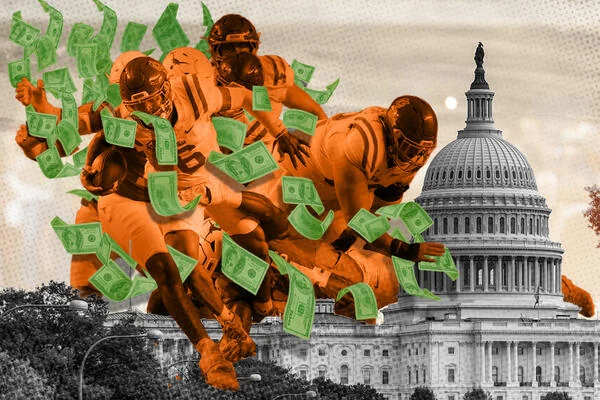
College athletics was another topic that drew robust conversation and disagreement. Asked by Inside Higher Ed how colleges square athletics programs—which overwhelmingly lose money—with the mission of affordability, some presidents emphasized the role of sports as a marketing tool and noted the hundreds of scholarships provided to student athletes across a variety of programs.
University of Colorado Boulder Chancellor Justin Schwartz said football coach Deion Sanders, an NFL Hall of Famer, is better known than the scholars at his institution who have won Nobel prizes. And that visibility, he said, has driven applications to the university since Sanders was hired in late 2022.
“I worry about what the world will be like with athletics on its current trajectory. I also worry about what our world will be like without it because of that visibility and the impact that it has,” Schwartz said. “It’s difficult to just do a real bottom-line financial assessment, because I don’t know how much I’d have to spend in marketing if I didn’t have college sports.”
Plowman echoed his point, noting that 43 million viewers watched the Tennessee Volunteers compete in various sports last year, bringing more attention to the university.
But Tetlow took a more critical view, arguing that the use of funds “that should be going to education” but are diverted to athletics is not defensible and that such allocations (often funded by student fees) should be “a bigger part of the story of the affordability crisis in higher ed.” She noted that many universities that rely on sports “as part of their identity, as part of their survival mechanism” are caught up in an arms race that compels more athletic funding to compete.
“The game is increasingly rigged,” Tetlow said. “It’s harder and harder to have this make sense.”
Presidents also noted that colleges have failed to effectively govern athletics, prompting some leaders to push for Congress to intervene and establish guidelines in the constantly evolving world of college athletics. (The Protect College Sports Act, which would address such hotly debated issues as player eligibility, compensation and student transfers, among other things, appears to be stalled in the final weeks of the current Congress; many experts predict that the new Democratic majority is unlikely to revive the bill next year.)
Bendapudi—whose institution, Penn State, is one of the few universities in the nation with a self-sustaining athletics program—said that while she loves the “trite analogy” of athletics as the front porch of the university, institutions need to remain committed to their true purpose. Without education at their core, she said, “We’ll have an amazing porch and no house behind it.”