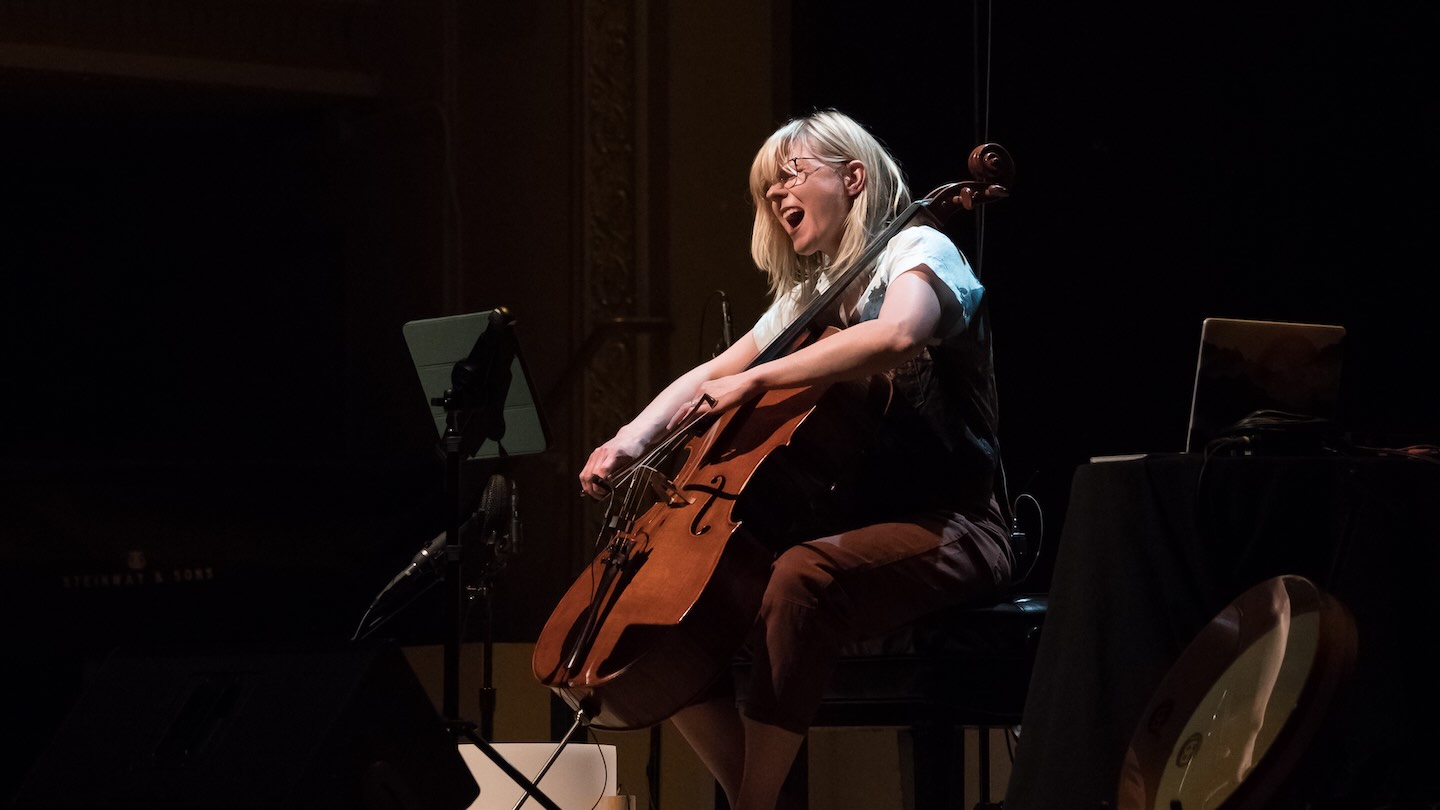
Through Forward Music Project, cellist Amanda Gookin’s ambition has been to inject a sense of humanity into the often abstract and ascetic landscape of new music. The initiative commissions female-identifying composers to write pieces reflecting their experiences as women, and on Forward Music Project 3.0: fever dream (Nov. 13, Bright Shiny Things), Gookin draws listeners into an intense, expressive sound-world that insists its artists be heard, however difficult or complex their ideas might be.
In the liner notes, Gookin summarizes the six new experimental works as “exploring what it means to live, create, and exist as a woman, shaped by experiences of mental health, moving from states of being stuck, tethered, and bound toward freedom and release.” And yet it feels too simple to say that fever dream merely evokes struggles with mental health or women’s perspectives of being in the world. This music captures the kind of interiority that I associate with experimental modernist novels — a feature that keeps me returning to them over time to hear how they, or I, have changed.
You are the water by inti figgis-vizueta and Flight by Jessie Montgomery bookend the album, and both works evoke motion. You are the water is both title and instruction, demanding near-constant movement from the cellist as the work and its coda are split across multiple tracks. Gookin takes this directive seriously, and through whispering harmonics and glassy arpeggiations, she manages to depict water flowing, dripping, churning, and even freezing. If you’ve ever shattered an ice plate on a frozen river and heard the shards skittering across the top, then the coda will feel intimately familiar.
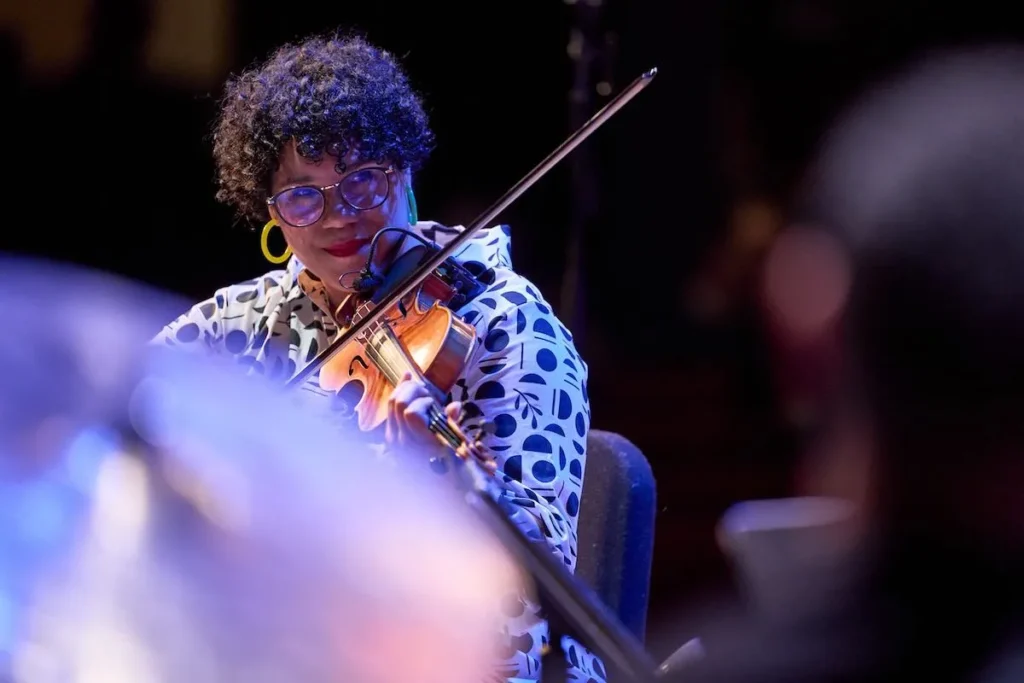
Montgomery’s Flight leaves much more room to breathe and makes for a hopeful final track. After an album full of harmonics and rasping dissonances, Flight shows the equal expressiveness of double stops and long full tones. The work puts Gookin’s skill into perspective and demonstrates that she is equally adept with traditional and extended techniques. Here, the warmth of the cello’s tenor register surges into the spotlight as each phrase begins, crests, and reaches its resolution with a moment of ease.
Break Free by Seong Ae Kim and Tied by Sarah Hennies more explicitly address women’s mental health. Break Free begins quietly and builds energy to a grating forte, then releases and begins the cycle again; Gookin works her way up the fingerboard through whistling tremolo harmonics until an abrupt stop — the “break.”
Hennies’ Tied offers stark contrast; the first five minutes are a single-note experiment at a relatively consistent pulse, sometimes solo and sometimes electronically layered to create a sense of ensemble. Where other pieces on the album are acrobatic in their techniques, Tied takes “austere” to a new level, leaving Gookin free to experiment with stronger or more ethereal tones, as well as her distance from the microphone (an under-utilized technique).

The two remaining pieces on fever dream explore complexities of speech and meaning, both with spoken audio components. The Thinness Of by Camila Agosto questions how women experience a world that tells them who they oughtto be. The jagged, whispered text by Martine Kinsella Thomas is disembodied, recalling social demands that a woman be thin to be worthy. Long electronic tones aurally create the “thinness” of the title, and their blend with cello tremolos and echo effects feels mechanical, almost cyborg.
Pamela Z’s And and And layers spoken recorded excerpts from an interview with journalist Ashley Hahn over long sustained tones and shimmery harmonics. Z treats the sound clips as another instrument, collaging excerpts into an independent line that becomes uncanny in its repetition. Individual words form a hocket-like rhythm that propels the piece forward. In the middle section, Gookin really plays the whole cello with everything she’s got: squeaky hinge-noises, forte multiple-stops, and an intense (intentional!) lack of vibrato. The emotional capacity that fever dream captures is extraordinary; though perhaps, as a feminist project, it is not a surprise. Moments of intensity are effectively offset with moments of lightness or repose, but there is no frivolity through the six pieces. Gookin also does nothing to warm up the sound of her cello beyond its natural timbre, which suggests a refusal to perform conventional beauty or politeness. On an album like this, such niceties would obscure the truth of what these artists have to say.
I CARE IF YOU LISTEN is an editorially-independent program of the American Composers Forum, and is made possible thanks to generous donor and institutional support. You can support the work of ICIYL with a tax-deductible gift to ACF. For more on ACF, visit composersforum.org.