Introduction
Will it still be possible to buy Bitcoin in Russia after the new rules are introduced? Yes, but access for ordinary investors is expected to become limited. On August 11, 2026, the Bank of Russia submitted a draft directive for public discussion. Under the proposal, an unqualified investor would be able to purchase digital currencies through a broker for no more than RUB 300,000 per calendar year. This is not a ban on cryptocurrency, a limit on a single transaction, or confirmation that every citizen automatically has the right to buy assets for that amount. The proposed model includes three levels of control: the investor category, the total annual purchase volume, and the list of available digital currencies. The assets named for unqualified investors are Bitcoin, Ethereum, and Tether USDT. Qualified investors are expected to receive a broader selection, but without any guarantee of returns or protection from market losses.
What Exactly Did the Bank of Russia Propose?
The Bank of Russia proposed limiting the total value of digital currencies purchased and to be purchased on behalf of an unqualified investor through a broker to RUB 300,000 during a calendar year. This wording appears in the regulator’s official draft directive. Therefore, the proposal concerns the accumulated volume of purchases rather than the maximum amount of a single transaction.
The proposal is not yet a final rule in force. The draft was published for discussion, so its wording, control procedures, and implementation date may be clarified. RBC Crypto reports that the law on digital currencies and digital rights is expected to take effect on September 1, 2026, while the specific restrictions for unqualified investors are to be established by the Bank of Russia. These two events should not be conflated: the date when the law takes effect does not automatically equal the date when every limit parameter is finally approved.
Media reports about the Central Bank’s proposal also describe the limit as applying through each intermediary — a broker, crypto exchange service, or asset manager. At the same time, the official draft available on the regulator’s website directly describes the calculation through a broker. It is therefore more accurate to refer to a proposed restriction within regulated infrastructure and follow the final version of the document, rather than present the draft as a universal ban on every method of owning cryptocurrency.
Why Is This Not a Complete Cryptocurrency Ban?
The restriction would leave unqualified investors able to buy selected digital currencies, but it would reduce the maximum amount they can invest through regulated channels. The stated purpose is to protect retail clients from sharp and unpredictable price fluctuations. The regulator is not claiming that a modest limit makes the assets safe; it only limits the potential size of losses in an adverse scenario.
This approach represents a cautious market launch. The Central Bank can first assess client behavior, the work of intermediaries, and practical risks, and then change the amount, asset list, or control procedure if necessary. Therefore, RUB 300,000 should be viewed as a parameter of the proposed initial model rather than as an unchangeable long-term standard.
Who Would the RUB 300,000 Limit Apply To?
The proposed limit is intended for unqualified investors, who would receive restricted access to cryptocurrency in exchange for additional protective measures. The draft uses a formula based on the total value of digital currencies purchased and to be purchased through a broker during a calendar year.
This means that the limit is not a ceiling for one purchase. A client may conduct several transactions, but their value must be included in the total amount for the relevant calendar year. At the same time, the rule cannot be simplified to mean that every Russian citizen can buy exactly RUB 300,000 worth of cryptocurrency. Final access will depend on the client’s status, the intermediary, the type of transaction, and the final regulatory framework.
Does the Limit Apply Per Person or Per Intermediary?
As of August 12, 2026, public materials pointed to accounting through an individual intermediary rather than a confirmed single limit across all platforms used by one client. This is an important distinction. A limit at one broker does not necessarily equal a universal aggregate ceiling across all brokers if there is no unified data-sharing system between them.
RBC Crypto notes that the mechanism for control across intermediaries and the question of how purchases should be counted remain subjects of practical debate. In particular, it is not yet entirely clear whether the calculation will include the gross turnover of all purchases or only the investor’s net position. If gross turnover is counted, selling an asset and buying it again could exhaust the annual limit more quickly, even if the actual balance in the account remains small.
The potential for separate accounting is not a recommendation to seek ways to circumvent regulation. Using several platforms makes risk control, transaction accounting, tax reporting, and verification of the source of funds more complicated. In addition, the rules may be supplemented after the draft is discussed.
What Is the Difference Between an Unqualified and a Qualified Investor?
An unqualified investor is an ordinary client who has not confirmed that they meet the criteria for qualified status. For this investor, the regulator may restrict the available instruments, transaction sizes, and trading methods. Under the proposed model, such an investor would receive access to a limited list of digital currencies and an annual purchase limit.
A qualified investor is a client who meets established requirements concerning experience, knowledge, assets, income, or other indicators of financial capacity. This status provides access to a broader range of complex and risky instruments. However, qualification does not mean that the investor necessarily understands every asset, will avoid losses, or will receive protection against a market decline.
RBC Crypto cites an expert comment according to which qualification benchmarks may include assets worth at least RUB 24 million or average annual income of at least RUB 12 million over the previous two years. These figures should be checked against the applicable legislation and the intermediary’s final rules. An expert comment should not be presented as an exhaustive statutory list.
What Will Be Available to Qualified Investors?
According to the description of the draft, qualified investors will be able to purchase digital currencies admitted to trading on exchange and over-the-counter markets without the comparable restriction proposed for unqualified investors. This means a broader choice of assets, but it does not eliminate volatility, technical failures, custody risks, sanctions-related restrictions, or the possibility of losing all or part of the investment.
The difference between the two investor categories is therefore not the presence or absence of risk. An unqualified investor receives a protective regime with limited access. A qualified investor assumes greater responsibility for analyzing the instrument and determining the position size.
Which Cryptocurrencies Will Unqualified Investors Be Able to Buy?
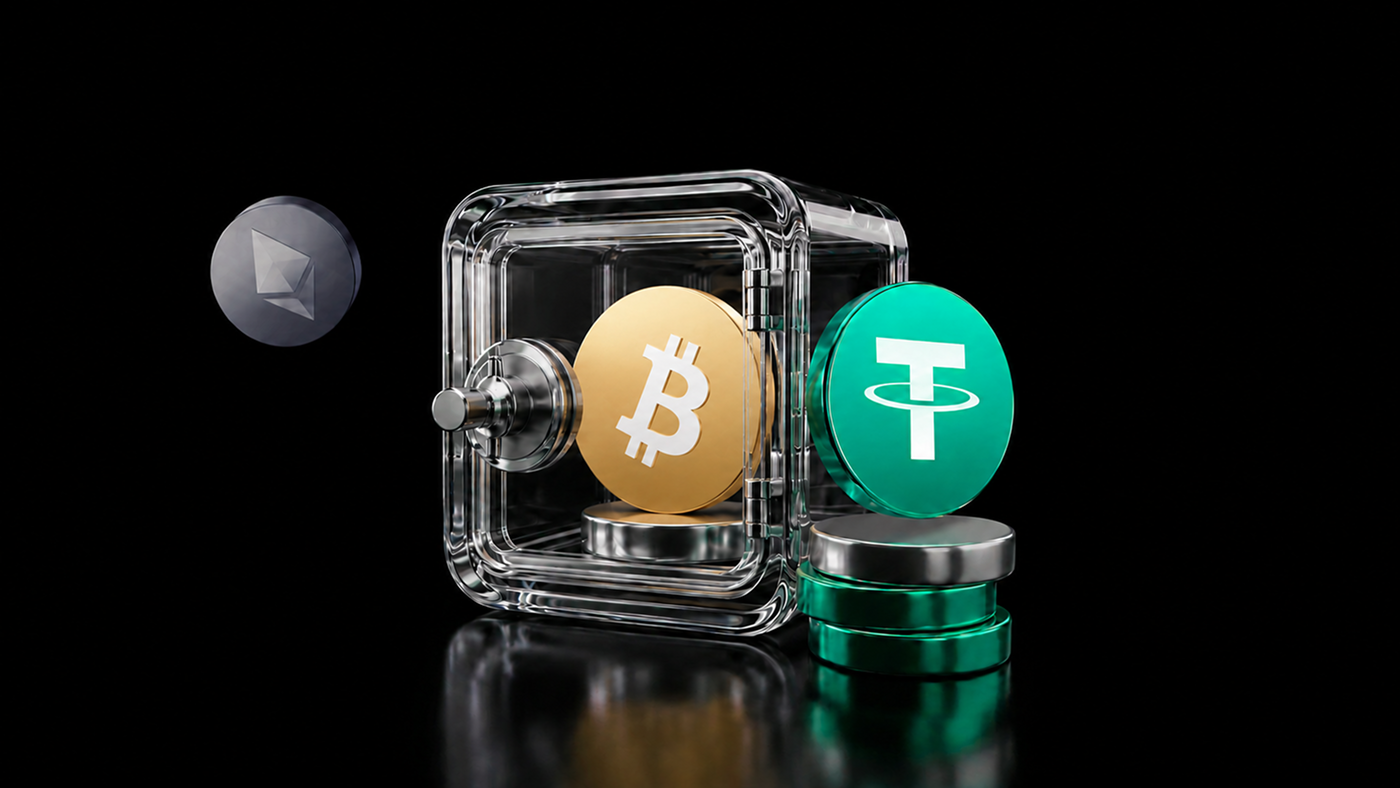
The proposed list for unqualified investors includes Bitcoin, Ethereum, and Tether USDT. According to the Bank of Russia, the selection takes into account market capitalization, average daily trading volume, and a price history on foreign platforms of at least five years.
These criteria are intended to begin regulated trading with assets that have a significant market scale, an observable market price, and a long trading history. High trading volume may make execution easier and reduce the risk of liquidity problems. However, it does not make an asset automatically reliable.
Why Does High Liquidity Not Mean Safety?
Liquidity shows how actively an asset is traded and how easily it can be bought or sold without one transaction having an excessive impact on its price. It does not show whether the price will rise or remain stable. Bitcoin and Ethereum remain highly volatile cryptoassets and can lose a significant portion of their value quickly even when trading volumes are large.
USDT also cannot be considered a risk-free alternative to the dollar. The stablecoin seeks to maintain its value relative to the US dollar, but its users accept the risks associated with a private issuer, the quality of its reserves, its operating infrastructure, and the potential freezing of tokens. Experts cited by ComNews specifically highlight USDT’s dependence on the issuer’s policies and its technical ability to block funds.
The three assets also do not provide full diversification. A limited list may reduce exposure to low-liquidity tokens and fraudulent projects, but it does not protect investors from a systemic decline across the entire cryptocurrency market.
How Will the Calendar-Year Limit Work in Practice?
The calendar-year limit is calculated for the period from January 1 through December 31. The official draft describes the ruble value of digital currencies purchased and to be purchased on behalf of a resident through a broker during a calendar year. This differs from a 12-month limit starting on the date of the first purchase and from a restriction based on the current value of the portfolio.
Suppose an investor buys RUB 100,000 worth of cryptocurrency in January, another RUB 100,000 in April, and another RUB 100,000 in October. Under this model, the total purchase volume would reach RUB 300,000 even if the asset price changed by October. If the investor then sells the asset and wants to buy it again, the possibility of that transaction will depend on how the final rules define the accounting of purchases and repeat transactions.
A broker will likely need to automate the tracking of the accumulated amount, notify the client when the threshold is approaching, and stop transactions after the threshold is reached. RBC Crypto notes that such a mechanism could rely on infrastructure already used in the financial market. However, the final algorithm must be established in a regulatory document and in the rules of the relevant intermediary.
What Happens When Cryptocurrency Is Purchased Through a Foreign Platform?
Transactions outside Russia’s regulated infrastructure may not fall under the same accounting mechanism, but this does not mean that they are risk-free or that every transaction is guaranteed to be lawful. The user assumes the risks of a foreign jurisdiction, the platform’s rules, account suspension, withdrawal restrictions, and the absence of the level of protection normally available within a regulated environment.
Blockchain transactions are generally transparent and traceable, but this does not give Russian authorities control over a foreign exchange or a non-custodial wallet. The technical availability of an overseas service does not equal reliability. Before conducting a transaction, users should check the applicable rules, identification requirements, and permitted methods of depositing and withdrawing funds.
When Will the New Rules Take Effect?
As of August 11–12, 2026, the RUB 300,000 restriction was still at the draft and public-discussion stage. Therefore, it cannot be stated that the limit is already in force in its final form. RBC Crypto reported that the law on digital currencies and digital rights was expected to take effect on September 1, 2026, but the parameters of the subordinate regulation are to be established by the Central Bank.
Investors should rely on the published final text of the directive, official explanations from the regulator, and the rules of the relevant intermediary. Until then, statements about the exact date when purchases will be blocked, a single limit across all platforms, or an unchangeable asset list would be premature.
How Will the Restriction Affect Russia’s Cryptocurrency Market?
The measure may reduce the potential size of losses for beginner investors, but it will not eliminate market risk. If a client invests the permitted RUB 300,000 in an asset whose price subsequently falls, the limit will not compensate for the loss or guarantee the return of capital.
For brokers and crypto platforms, the proposal means they will need to verify client status, track purchases, and provide clearer risk disclosures. Competition may shift away from encouraging maximum turnover and toward custody quality, transaction speed, transparent fees, analytics, and customer support. According to experts, the restriction could also make loyalty programs based on large trading volumes more difficult to operate.
The main systemic weakness is the risk of regulatory arbitrage. Some clients may move to foreign platforms, P2P services, or unscrupulous intermediaries where protection is weaker. Therefore, the effectiveness of the limit will depend not only on the amount itself but also on financial education, advertising oversight, the quality of qualification testing, and the convenience of legal channels.
Conclusion
The Bank of Russia’s proposal does not represent a complete ban on cryptocurrency for ordinary citizens. Instead, it establishes a restricted-access regime while Russia’s regulated market is being formed. Its foundation is the division of investors into unqualified and qualified categories, an annual limit, and a list of assets available to unqualified investors. The draft refers to a total purchase value of RUB 300,000 through one broker during a calendar year. Therefore, the amount should not be described as a limit on one transaction or automatically treated as a single ceiling for every Russian citizen across all channels.
For unqualified investors, the named assets are Bitcoin, Ethereum, and USDT. Their capitalization, trading volume, and long price history explain their inclusion, but do not guarantee stability or safety. Bitcoin and Ethereum can fall sharply, while USDT carries issuer, reserve, and potential token-freezing risks.
As of August 12, 2026, the rules remained in draft form. The final impact will depend on the final wording of the directive, accounting across intermediaries, and enforcement practices. The limit may reduce potential damage, but it does not replace knowledge testing, risk assessment, or responsible use of cryptocurrency platforms.
Frequently Asked Questions
1. Is the limit for one purchase or for the entire year?
It is a proposed limit on the total value of purchases through a broker during a calendar year, not a restriction on a single transaction of RUB 300,000.
2. Can cryptocurrency be purchased for more than RUB 300,000?
For an unqualified investor using a specific broker, the draft provides for a limit of RUB 300,000 per calendar year. For qualified investors and other channels, the final conditions will depend on the completed regulatory framework.
3. What will happen to cryptocurrency purchased before the rules take effect?
The draft does not provide for the automatic confiscation of previously acquired assets. The treatment of completed purchases and transitional provisions must be clarified in the final version of the rules.
4. Can the Bank of Russia add new assets to the list?
Yes. The list may be revised if digital currencies meet the established criteria for capitalization, trading volume, and price history. The published draft names Bitcoin, Ethereum, and USDT.
5. Does the limit protect investors from losing money?
No. It limits the potential purchase amount, but it does not fix the price or compensate for a loss if the market declines.