Unlock the Editor’s Digest for free
Roula Khalaf, Editor of the FT, selects her favourite stories in this weekly newsletter.
The Last Kings of Hollywood begins with an ending. Warner Bros — proudest of all film studios — has just been sold to seeming smaller fry, Seven Arts. The whole American movie business teeters. Timing is everything. The book actually opens in 1967, but is published now as Warners changes hands again, bought by another apparent inferior, Paramount, amid film industry gloom at AI and everything else.
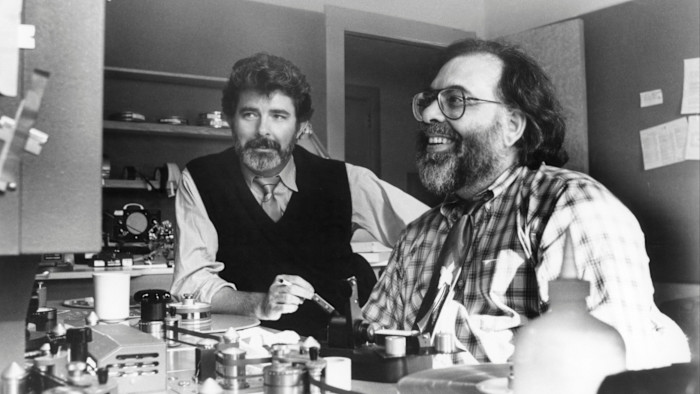
For writer Paul Fischer, it makes a dark kind of gift. How better to spotlight the ongoing relevance of Francis Ford Coppola, Steven Spielberg and George Lucas — titan directors of movies that changed movies themselves. After all, it was another panic at the studios that let them redefine their job from hired hand to spirit guide. Fischer gives voice to the young Spielberg’s revelation: “Directors weren’t scared of the unknown. They led you into it.”
This bold, perceptive book tracks its still youthful subjects as they lead the world into — most momentously — The Godfather, Jaws and Star Wars. Fittingly, 1970s Hollywood in crisis shares the page with something more interior. Wrestling with his Mafia epic, Coppola finds a key idea in the thick of Mario Puzo’s source bestseller: three disparate heirs to one throne. Fischer is subtle enough to let that speak for itself, but it also shapes a book that weaves deep research into movie history with a novelistic edge.
It can read as child psychology too. Early on, we meet schoolyard versions of our protagonists: Coppola the “fat kid” (his words) overshadowed by a thwarted father and magnetic older brother; Lucas all-American but socially awkward; Spielberg the bullied Jewish boy, stranded in the suburbs. Much like an actual childhood, these younger selves echo down all that lies ahead. (Tellingly, Fischer refers to the three throughout as Steven, Francis and George, like 12-year-old characters in a kids’ adventure.)
In adulthood, the book turns propulsive. If the risk is writing about museum pieces, they come to kinetic life. The story is one of creative competition, earthshaking films, howling misfires and the cost of working with Hollywood. Like racing drivers, the lead is swapped between three figures sometimes inspired by each other, and often rawly jealous, but never not aware of where the other two are. (A fourth hotshot, Martin Scorsese, occasionally crashes in, calling to mind the madcap Kramer in an episode of Seinfeld.)

Film lovers may already own Peter Biskind’s Easy Riders, Raging Bulls, the lurid, live-wire account of the same “New Hollywood” moment. But time is on Fischer’s side again. Easy Riders . . . was published in 1998, with Hollywood still essentially the place American auteurs like Coppola made it. (The Best Actor Oscar that year was won by Jack Nicholson; rival nominees included Robert Duvall, Dustin Hoffman and Peter Fonda.) But here in the second quarter of the 21st century, 1998 might as well be 1970, two distant points from the same lost age before tech overwhelmed the film business.
Biskind wrote a gossipy celebration; Fischer gives us a cool, richly detailed postmortem of the party. There are still great stories, but told now with the wry raised eyebrow of a fact-checker. When one of the principals shaves their age in an anecdote, the author corrects the record. Rather than print the legend, the book makes room for awkward small print. (At The Godfather premiere, we find Henry Kissinger, who Coppola has cultivated even while US bombs rain on Vietnam.)
Aside from the films that changed cinema, we also encounter ones never made. The idea of Spielberg planning a 1969 sex comedy based on Snow White is deeply weird, for reasons the book is insightful about. Fischer notes how strange it is that filmmakers of such scale — here in the permissive ’70s — were phobic about sex scenes. That wasn’t what would now be called being feminist allies. It was a symptom of not knowing what to do with women on screen at all.
But then, such is the double edge of a time when filmmakers’ personal foibles could fuel vastly popular movies that left studios baffled as to why audiences liked them. Fischer is rightly wary of nostalgia. Still, it is hard to read his book without reflecting on how many Hollywood decisions are now made by algorithm, with AI in the wings. Kings are flawed. Like people in general, that is also what makes them interesting.
The Last Kings of Hollywood: Coppola, Lucas, Spielberg — and the Battle for the Soul of American Cinema by Paul Fischer Faber £22, 480 pages
Danny Leigh is the FT’s film critic
Join our online book group on Facebook at FT Books Café and follow FT Weekend on Instagram, Bluesky and X