The Host
The Trump administration has conceded in court documents that it used purely political considerations to cancel grant funding previously approved by Congress. But that has provoked a surprisingly muted response from lawmakers, who under the Constitution control the power of the purse.
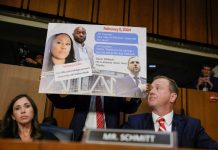
Meanwhile, Republicans in the Senate summoned former National Institutes of Health and White House official Anthony Fauci to testify — again — about his handling of the covid pandemic. Fauci, however, refused to answer questions, citing the advice of his attorneys.
This week’s panelists are Julie Rovner of KFF Health News, Rachel Cohrs Zhang of Bloomberg News, Shefali Luthra of The 19th, and Liz Essley Whyte of The Wall Street Journal.
Among the takeaways from this week’s episode:
- Recent court filings shed light on how the Trump administration has used politics to justify its decisions to cancel federal grants. While similar revelations may have been explosive under other presidents, the filings have triggered muted, if any, responses from lawmakers.
- The Trump administration announced this week that it would end the temporary Medicare Part D subsidies, introduced under the Biden administration, that help lower the monthly premiums older Americans pay for drug coverage. While next year’s premiums probably would have increased anyway, the change — which many will notice when they shop for plans later this year, shortly before the midterm elections — may not help Republicans in the voting booth.
- Meanwhile, Sen. Rand Paul (R-Ky.) brought Fauci before the committee he chairs to address accusations related to his role in the nation’s covid response as a key adviser to Presidents Donald Trump and Joe Biden. But little of substance was said, with the hearing quickly devolving into political grandstanding as Fauci asserted his constitutional right not to self-incriminate.
- An FDA advisory panel voted to recommend the agency make it easier for Americans to obtain several previously banned compounds known as peptides — even as FDA staff caution that there’s no evidence they are safe. The panel included members who stand to profit from expanded access to peptides.

Plus, for “extra credit” the panelists suggest health policy stories they read this week that they think you should read, too:
Julie Rovner: The Arkansas Times’ “Postpartum Women Go Without Care as Arkansas Holds Out as Lone State To Deny Them Medicaid,” by Byron Tate.
Rachel Cohrs Zhang: KFF Health News’ “Trump Administration Demands Hospitals Share Emergency Room Records,” by Amanda Seitz, Maia Rosenfeld, and Darius Tahir.
Liz Essley Whyte: Stat’s “E-Bikes, E-Scooters Are a Burgeoning Pediatric Public Health Emergency,” by J. Todd R. Lawrence and Madison A. Kesler.
Shefali Luthra: The Washington Post’s “The Problem With RFK Jr.’s Crusade Against Antidepressants,” by Aaron E. Carroll.
Also mentioned in this week’s podcast:
Click here to find all our podcasts.
And subscribe to “What the Health? From KFF Health News” on Apple Podcasts, Spotify, the NPR app, YouTube, Pocket Casts, or wherever you listen to podcasts.