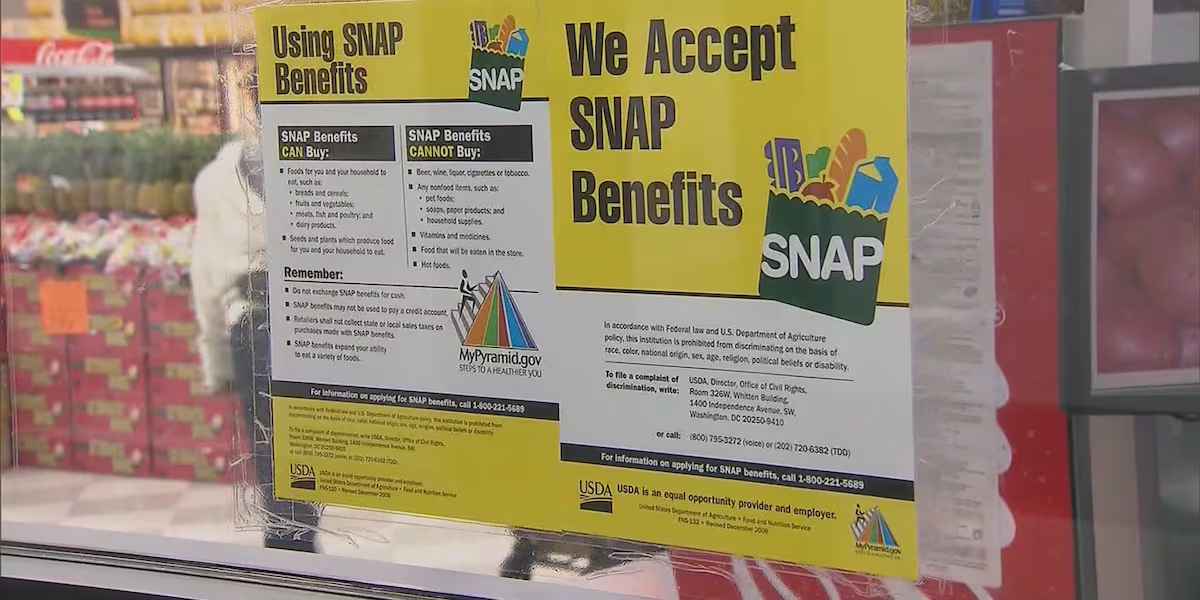
EAU CLAIRE, Wis. (WEAU) – Between 23,000 and 34,000 Wisconsinites have lost access to vital food assistance over the past year, according to state and federal data, following the largest federal cuts to the Supplemental Nutrition Assistance Program (SNAP) in U.S. history.
It has been a full year since federal lawmakers passed sweeping legislative changes—often referred to by proponents as the “one big beautiful bill”—which overhauled the program nationwide.
The changes implemented stricter work requirements, altered reporting standards, and reduced employment exemptions for participants.
Currently, over 600,000 Wisconsinites rely on SNAP (known locally as FoodShare) to help put food on the table. However, data from the Center on Budget and Policy Priorities shows that SNAP participation nationwide has dropped by 11% under the new rules.
The impact of those losses is being felt heavily on the ground in West-Central Wisconsin.
“There’s been a lot of volatility over the past year,” said Padraig Gallagher, Executive Director of Feed My People Food Bank in Eau Claire.
Gallagher emphasized that federal programs like SNAP operate at a scale that local nonprofits simply cannot match on their own.
“For every pound of food that we’re able to distribute from our facility and from our efforts, SNAP actually gets eight pounds of food to the households in Wisconsin,” Gallagher said.
When federal aid shrinks, local food banks are left to fill a massive gap. In response to the federal policy shifts, Feed My People has seen a dramatic rise in local residents seeking help.
“We’ve seen big spikes, but pretty consistently, we’ve seen increases,” Gallagher said. “Year-to-date in 2026, we distributed 14% more food from our facility to the 14 counties we serve than we did during the same months in 2025.”
While Gallagher says the food bank is used to adapting to shifting economic conditions, rising living costs and inflation are continuing to compound the crisis for Chippewa Valley families.
“There’s a lot of concern that prices will continue to go up and that assistance will continue to go down,” Gallagher said. “There’s a lot of frustration and concern in the folks that we talk to.”
Local shelter and housing advocates are also raising the alarm about how food insecurity ties directly into broader housing instability.
In a statement to WEAU, Semone Thomas of the Beacon House shelter in Eau Claire noted that for families already living on the margins, “losing even a small percentage of their monthly food assistance represents a substantial financial setback.”
In anticipation of prolonged hardship for area families, organizations like Family Promise of the Chippewa Valley say they hope to strengthen their collaborations with local food pantries to prevent families from falling into homelessness.
“The more squeeze that gets put on there, the less funding that people have allocated for nutrition,” Gallagher said. “And when that happens, they look more and more to partners of ours, like the food pantries and meal programs that we support, to help them meet basic needs.”
Feed My People organizers say this is a critical window for the Chippewa Valley community to step up and support local hunger relief efforts.
“As we look forward, we’re not only getting ready ourselves to meet increased need that we think is coming, but that broader communities, broader neighbors… realize that everybody needs to work on finding solutions to these problems,” Gallagher said.
Staff at Feed My People say that community donations and volunteers are urgently needed to keep shelves stocked during this period of unprecedented demand. To learn how to volunteer or donate, visit fmpfoodbank.org.
Copyright 2026 WEAU. All rights reserved.