Good morning, happy Friday and welcome back. In today’s newsletter:
-
TikTok deal to remain in the US
-
Trump sues JPMorgan and Jamie Dimon for $5bn
-
Lessons from Davos
-
And this year’s Oscar nominations
We start today with the years-long geopolitical saga over the fate of TikTok, the popular app, which announced a deal last night that will allow it to continue to operate in the US.
Here’s what we know: The company has created a joint venture, in a deal brokered by Donald Trump, that will be majority owned by US investors including Oracle, Silver Lake as well as the Emirati investment vehicle MGX. Each company will own 15 per cent of the joint venture.
Other investors in the consortium include Dell chief executive Michael Dell and the family office of French entrepreneur Xavier Niel — as well as affiliates of General Atlantic and Jeff Yass’s Susquehanna, which were both previous investors.
ByteDance, TikTok’s Chinese owner, will control a 19.9 per cent stake in the new company, the most allowed under US law.
Members of the JV board include Egon Durban, the co-chief executive of private equity firm Silver Lake; Susquehanna International Group managing director Mark Dooley; and top Oracle executive Kenneth Glueck. TikTok chief executive Shou Zi Chew is also a member of the new board.
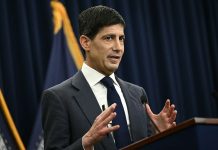
TikTok’s head of operations Adam Presser, who is fluent in Mandarin, has been appointed chief executive of the new joint venture, TikTok said.
Beijing-based ByteDance will retain direct control of the app’s main moneymaking business lines in the US, including ecommerce, advertising and marketing.
Why it matters: A crucial point of contention during the months of talks between ByteDance, the Trump administration and US investors has been whether Beijing will be able to retain control of TikTok’s sophisticated recommendation algorithm.
The joint venture would licence the algorithm from ByteDance, but then “retrain, test and update the content recommendation algorithm on US user data”, TikTok said on Thursday. “The content recommendation algorithm will be secured in Oracle’s US cloud environment,” it added.
Oracle, which is led by Trump ally Larry Ellison, will also guarantee the security of US user data. TikTok’s US staff in teams such as data security and content moderation will move to the new unit.
But critics argue that Trump’s deal, while delivering easy returns for American investors and introducing some new data protection for US users, fails to fully address national security concerns.
“There are larger issues at play,” said Brett Freedman, who served as chief of staff of the national security division at the Department of Justice during the Biden administration. “We have an administration that wants to have a ‘grand bargain’ with the PRC [People’s Republic of China] and that colours to some extent what they might have agreed to.” Read the full story.
Here’s what else we’re keeping tabs on today:
-
Ukraine war: Officials from the US, Russia and Ukraine meet today for the first time since Vladimir Putin’s full-scale invasion of his neighbouring country four years ago. Here’s what to expect.
-
Economic data: S&P Global is due to publish its flash manufacturing, services and composite PMI readings for January. The final January reading of the University of Michigan’s consumer sentiment index is also scheduled for release. In Latin America, Mexico’s INEGI statistics agency is due to release the IGAE economic activity figures for November.
-
Results: Oilfield services firm SLB is expected to report a fall in fourth-quarter profit.
-
Davos: World Trade Organization chief Ngozi Okonjo-Iweala, IMF managing director Kristalina Georgieva and European Central Bank president Christine Lagarde round out a week dominated by one man.
How well did you keep up with the news this week? Take our quiz.
Five more top stories
1. Trump has sued JPMorgan Chase and its chief executive Jamie Dimon, seeking at least $5bn in damages over claims the biggest US bank unfairly closed his accounts for political reasons. Read details of the lawsuit.
-
Pay boost: JPMorgan Chase increased Dimon’s pay by 10 per cent to $43mn for 2025, a record package for the long-serving chief executive.
-
More banking news: Ford and General Motors have received approval from federal regulators to set up banks.
2. Elon Musk’s rocket maker SpaceX is lining up four Wall Street investment banks — Bank of America, Goldman Sachs, JPMorgan Chase and Morgan Stanley — for leading roles on a blockbuster initial public offering, which is likely to be the world’s largest new listing.
-
More IPO news: Ledger has tapped bankers for an initial public offering in the US that could value the French cryptocurrency company at more than $4bn.
-
Czech IPO: Shares in European ammunition maker Czechoslovak Group soared 24 per cent on its trading debut in Amsterdam today.
3. Netflix’s co-chief executive Greg Peters has said it is on track to win the backing of Warner Bros Discovery shareholders for its $82.7bn offer for the company’s film and television studios, adding that Paramount’s rival bid “doesn’t pass the sniff test”. Read the full interview.
4. Liability management exercises — otherwise known as “non-pro rata” refinancings or “creditor-on-creditor violence” — overwhelmingly default within three years, according to new research. LMEs, such as the one completed by US retailer Saks Global in June, have increasingly usurped formal Chapter 11 proceedings for distressed US companies.
5. Venezuela’s national assembly has backed a new hydrocarbons law that would open up the socialist country’s oil sector to private companies, potentially undoing a quarter-century of state dominance. The legislation allows foreign and local private companies to operate and commercialise oilfields.
Today’s big read

Donald Trump’s retreat from his tariff threats over Greenland this week followed a sharp stock market sell-off. The U-turn was the latest example of financial markets’ apparent power to tame Trump — a phenomenon widely known as Taco, or Trump always chickens out. It also shows how investors are being forced to second-guess the president’s pain threshold.
We’re also reading . . .
-
Lessons from Davos: Judging from the chatter at Davos, there are four key lessons for chief executives and investors amid the turmoil, writes Gillian Tett.
-
Israel: Voters go to the polls later this year, in what activists say represents an “existential” moment for the country.
-
John Burn-Murdoch: Growth, it is often argued, creates liberal democracies. But over the past 15 years we may have seen this theory go into reverse.
Chart of the day

AI data centres, which are increasingly being fingered as the culprit of rising energy prices in the US, only accounted for 4 per cent of electricity demand in 2024. Outside major data centre hotspots, the rise in bills was driven more by the price of gas — last year it was 60 per cent higher than in 2024. Nonetheless, the AI boom is already making its mark on energy prices (for premium subscribers only).
Take a break from the news . . .
Oscar history was made yesterday before a single prize was handed out, as Sinners secured 16 nominations. FT film critic Danny Leigh rounds up the other nominations for this year’s gongs.