For the Fourth of July, at least we stayed home to enjoy (cower before?) the close thunder of illegal fireworks at nearby beaches.
We didn’t make that same cogent decision over Memorial Day, however.
We made the somewhat insane decision, in retrospect, to head into Yosemite Valley that weekend.
While it’s been six weeks or so since we had an adventure like few others at Yosemite, the holiday crowds here were a reminder of the intense coming together of nations, creeds and languages at Yosemite that Memorial Day weekend, and, according to news reports, again over the Fourth.
While my wife and I, along with our daughter and her family were staying about half an hour away from the park, we decided to get to Yosemite early, around 7:30 a.m. to beat, we thought, the crowds.
A fool’s errand.
After waiting in line at an entrance pavilion, we headed into the valley, with our bikes on the car rack figuring, hey, we can ride on trails and take in the sights and grandeur that way.
Yeah, right.
The crush of vehicles was apparent once we approached El Capitan. Already, relatively early in the morning, visitors were abandoning cars along the roadside and hiking in, apparently aware that parking was long gone and shuttle buses, Yosemite’s solution to overcrowding, were useless.
After s-l-o-w-l-y circling the valley, we eventually (about two hours after entering) went with the flow and parked my pickup alongside the road below El Capitan (a legal parking place, by the way) and took our bikes off the rack.
We had to ride along the road with no marked bike or walking lane, dodging frantic drivers who would come to a screeching halt thinking they had found a parking place, only to see it was impassable because of a boulder or a steep drop-off.
Our daughter was sending us texts that they had found a parking place near the hotel (it would turn out they too were parked illegally and would get a “warning” ticket that said if there was a next transgression the fine would be $700) and we could ride there to meet them.
We tried, we really did.
But weaving through the throngs when we finally made it to pathways, was no easy task.
At one junction, we encountered park rangers on horseback, who were answering pleas from frustrated visitors trying to find parking. In essence, their replies went like this: “Sorry, but the federal government ended our reservation system, and we can’t handle these crowds.”
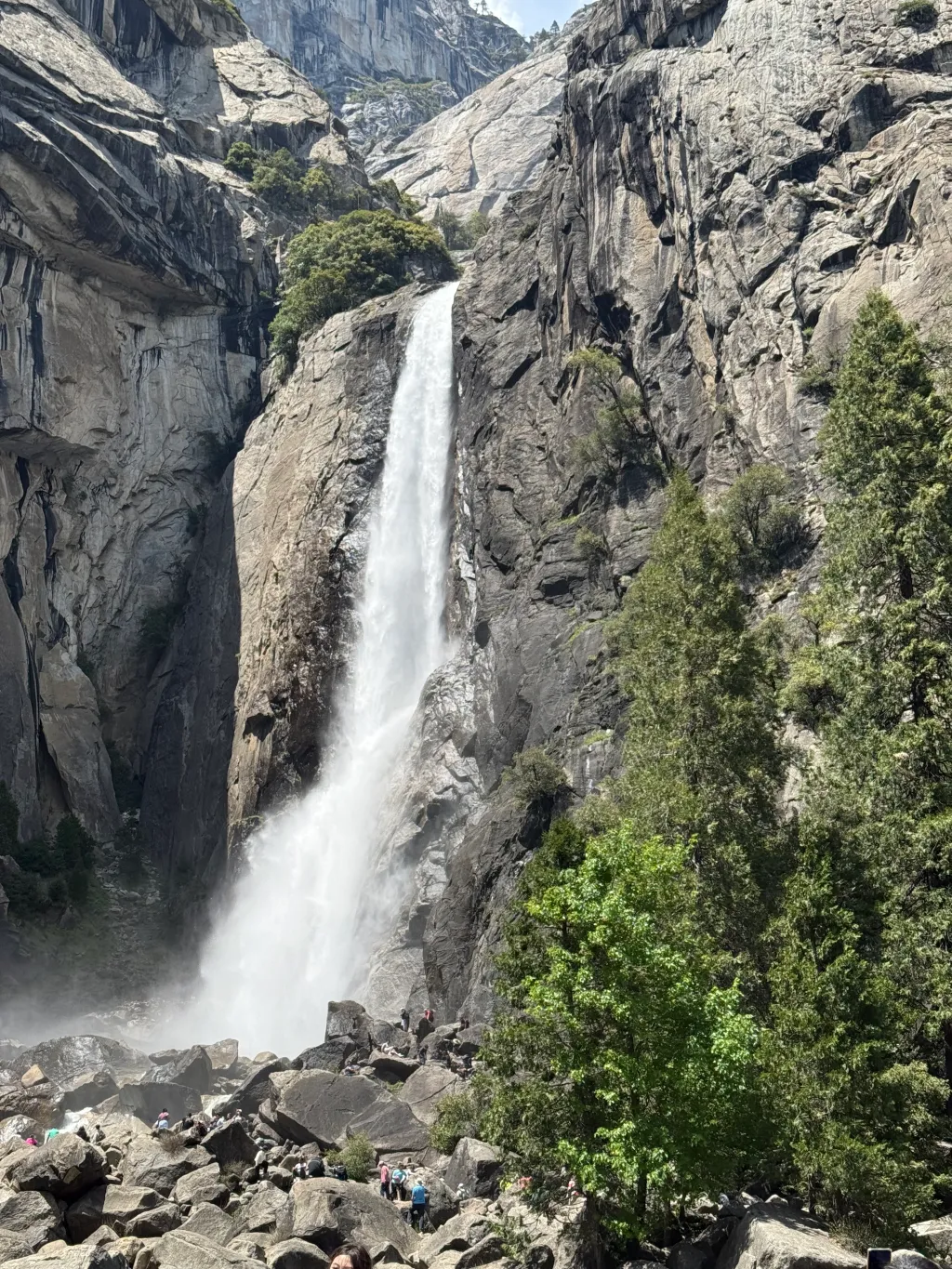
We eventually made it to the base of Yosemite Falls, where the snow melt created white water thundering into the rocks below, drawing massive crowds of people (including us), dogs, strollers, even a skateboarder or two.

Two hours later, after taking a long loop trail away from the falls, it was now late afternoon and we knew we needed to get back to our truck. No simple task. We ended up taking our bikes over rock- and brush-strewn trails, then walking across a stream, and finally getting back to the Valley roadway at, fans of this publication should identify with, Sentinel Beach, where the Merced River creates a pool of frigid water that reflects the ever-looming El Cap.
We locked our bikes in the parking lot and walked about a mile and a half from there back to our truck.
When I started back, the truck was in four-wheel drive mode, which wasn’t going to work on the road, so I reached down to change the gearing.
I must have swerved when I did this. Almost immediately we saw flashing lights behind us.
I pulled over.
One of two rangers in a park vehicle approached us.
“Hello, sir, we saw you swerving back there. Have you been drinking?”
“Nope.” (Neither my wife nor I drink alcohol and haven’t in decades.)
“Mind if we have look in the back seat?”
“Nope.”
After handing over my ID and engaging in a lengthy and meaningless conversation that I assumed was to ascertain my sobriety, the rangers said we were free to go.
No harm, no foul.
Ah, but the story didn’t end there. We unlocked our bikes (e-bikes of course), but to lift the heavy one up, I took off the battery and placed it by the side of the road.
And then we drove off, just wanting to be free of the craziness we were obviously a part of creating.
That meant winding our way through more intense traffic, along with people hiking back to their own cars and visitors setting up mini-camps alongside the road, where they were using portable grills to cook dinner.
We finally made it out of the park and were headed back to the cabin where we were staying, when, about half and hour along the way, I asked my wife, “Did I pick up the battery for my bike?”
Just asking gave me the answer. The $500 battery had been left behind at Sentinel Beach.
We had to go back.
Back through the desperate masses seeking a Yosemite experience.
When we finally arrived back at the river site, the battery was still sitting by the bike racks.
At this point, we had no desire to fight the traffic again, so we took a dip in the frigid river and took in the sights, again. A few moments of awe and gratitude.
Leaving, it took another 45 minutes or so to make our way through the loop to again be on our way.
So, in case you might be thinking of visiting Yosemite this summer, understand that the crown jewel of the nation’s national park system is even more crowded than in past years because, get this, of a decision by the Trump administration to do away with summer reservations here.
The traffic jams, the long waits to get in and the interminable lines at food outlets aren’t just frustrating visitors. Yosemite employees and the organizations that support the park say that the hordes are demoralizing staff and damaging the park, as well as its reputation.
“This is a far cry from the awe-inspiring sights Yosemite is known for,” the state’s two U.S. senators, the Democrats Adam Schiff and Alex Padilla, wrote in a letter earlier this month to the Trump administration criticizing the cancellation of Yosemite’s reservation system, as reported in the New York Times.
On the Friday of the July Fourth weekend, the Times reported, “so many people had already arrived at Yosemite Valley, known for its sprawling meadows and towering palace of granite rock faces, that by 7 a.m. drivers were circling lot after lot as they tried to find a spot.”
Yup.
Yosemite does offer free shuttles to transport visitors to various stops in the valley, but these were too full to pick up any of the hundred or so people waiting at the stops over Memorial Day weekend and, since then, on weekends and over the Fourth.

None of this is surprising. Yosemite Valley helped inspire the creation of the national park system and its waterfalls and glacier-carved monoliths, such as Half Dome and El Capitan, have made it the country’s most beloved and visited national park.
So, to counter the overcrowding, in 2020, Yosemite began experimenting with a summer reservation system to manage the summer crowds.
But Yosemite did away with reservations this year, after President Trump signed an executive order urging parks to rescind restrictions to improve access and help local economies.
Ray McPadden, Yosemite’s superintendent, was quoted in the Times saying that a reservation system should be a last resort. He said that in previous years the park had to turn families away because they hadn’t booked a visit in advance, which was unfair to them and meant a loss of fees that could have gone toward fixing up trails, campgrounds and bathrooms.
McPadden told the Times he expects a 12% increase in visits compared with last year, which would be about 4.7 million visitors, and the second-busiest year in the park’s history.
“No secret: Yosemite is really popular,” he said.
The union local representing Yosemite staff, NFFE Local 465, countered with a statement as reported by the Times, that the decision to end the reservation system had undermined staff and was “disheartening and disappointing,” particularly when the park was short-staffed after federal cuts.
The overcrowding “is an environmental disaster for the park, and it’s a safety issue for visitors,” Mark Rose, the Sierra Nevada program manager for the nonprofit National Parks Conservation Association, told the Times.
All is not lost, however. As part of his overhaul of the National Park Service, Trump granted free park admission to U.S. residents on his birthday, which coincided with Flag Day, as well as July 3, 4 and 5.
And, of course, Yosemite is still Yosemite. Which, I suppose, is why we went that day, knowing it would be crowded.
And next time, maybe we’ll go the many other areas of the park where crowds are sparse and the beauty also is breathtaking. Maybe.
Don Miller is the Sentinel opinion editor.