On August 24th, at its first extraordinary session, the National Assembly voted to approve the law amending and supplementing several articles of the Law on the State Bank of Vietnam , the Law on Anti-Money Laundering, and the Law on Credit Institutions.
Regarding the amendment and supplementation of certain articles of the Law on Prevention and Combatting Money Laundering, concerning the reporting of suspicious transactions (Article 26), the law stipulates that reporting entities are responsible for reporting suspicious transactions to the State Bank of Vietnam when there is reasonable basis to suspect that the assets involved in the transaction are assets obtained through criminal activity.
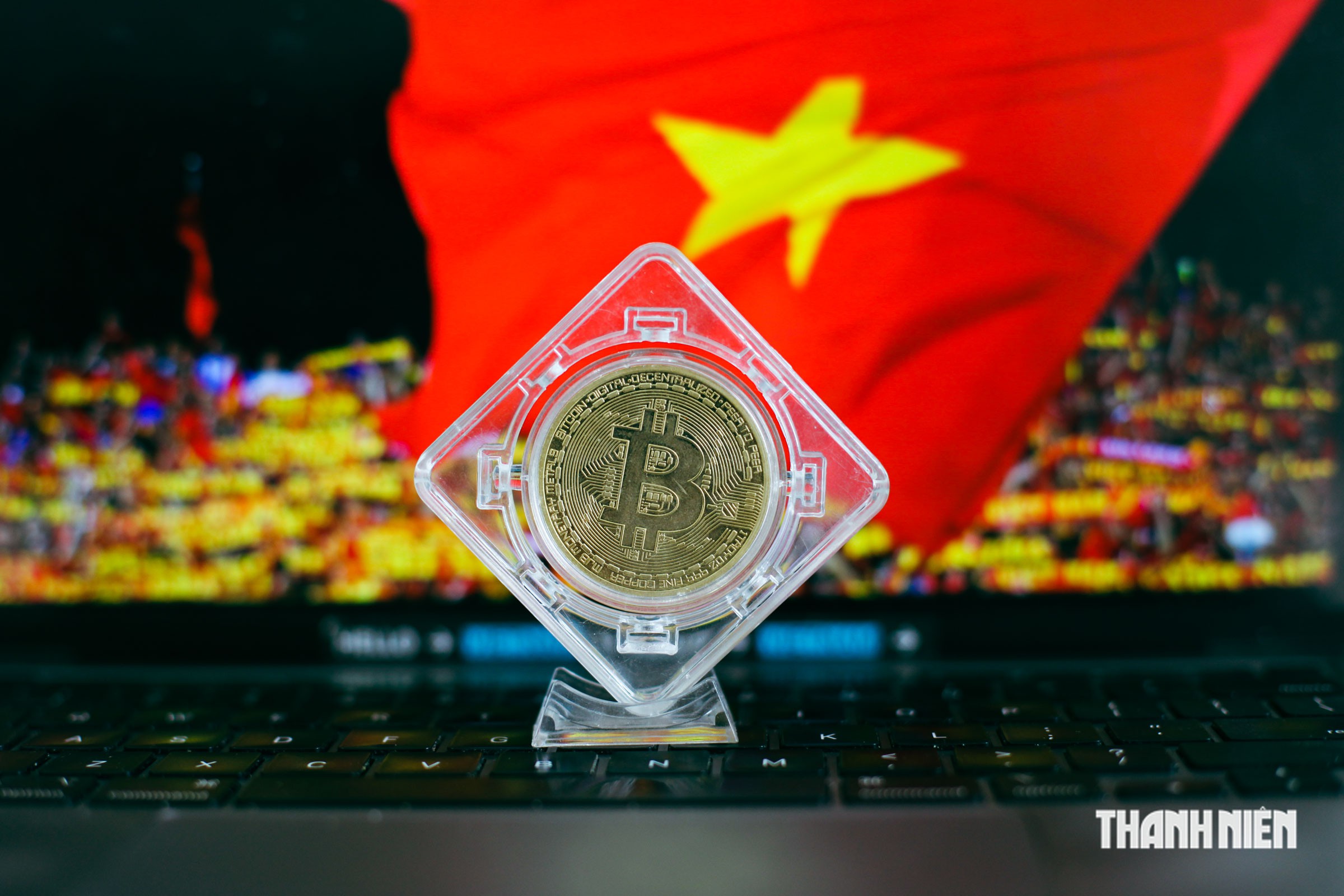
Bitcoin symbol coin
Specifically, the law adds Article 33a after Article 33, stipulating 15 suspicious signs in the field of crypto assets. These signs include:
- Executing numerous high-value cryptocurrency transactions in a short period of time without a clear business purpose;
- Deposit, trade, and withdraw crypto assets consecutively within a very short period of time immediately after establishing a customer relationship;
- Customers access the platform of the cryptocurrency service provider through a tool that allows them to hide their identity or internet protocol address…
Previously, the State Bank of Vietnam also pointed out 15 suspicious signs in the field of crypto assets. The content was developed based on recommendations from the FATF (Financial Action Task Force), and on input from the Ministry of Finance and units of the Ministry of Public Security .
Specifically, these 15 indicators are divided into four groups: unusual transactions; concealment of origin and technology; lack of transparency regarding customer identity; and high-risk partners and regions in the cryptocurrency sector.
The list of suspicious signs includes several notable features, such as:
- Customers refuse or delay providing customer identification documents or information about the origin of assets; provide documents that appear forged or contain inconsistent information; or are unable to reasonably explain the transaction, the origin of assets, and the relationship with the counterparty.
- Using crypto assets with enhanced anonymity features, transaction mixing services, or performing multiple transfers across different crypto asset types to conceal the origin and flow of assets or disrupt transaction traceability.
- The customer’s cryptocurrency wallet address appears in public information sources related to illegal activity; or the cryptocurrency deposits and withdrawals have a history of being processed through high-risk inter-chain bridges.
- Customers may exhibit signs of being nominees, being exploited as intermediaries, or being victims of fraud, including cases where customers have limited knowledge of crypto assets but conduct transactions with a frequency and value disproportionate to their personal financial profile; or conduct transactions at the direction of a third party.
- Transactions involving cryptocurrency service providers that are not registered or licensed; or transactions related to countries or territories with weak anti-money laundering frameworks or those on enhanced monitoring lists as published by international anti-money laundering organizations.
- Customers using cryptocurrency exchanges or trading platforms in countries and territories that have been identified by Vietnamese authorities and other countries around the world as hotspots for transnational fraud.
Source: https://thanhnien.vn/viet-nam-bo-sung-3-dau-hieu-dang-ngo-trong-giao-dich-tien-ma-hoa-1852608251642294.htm