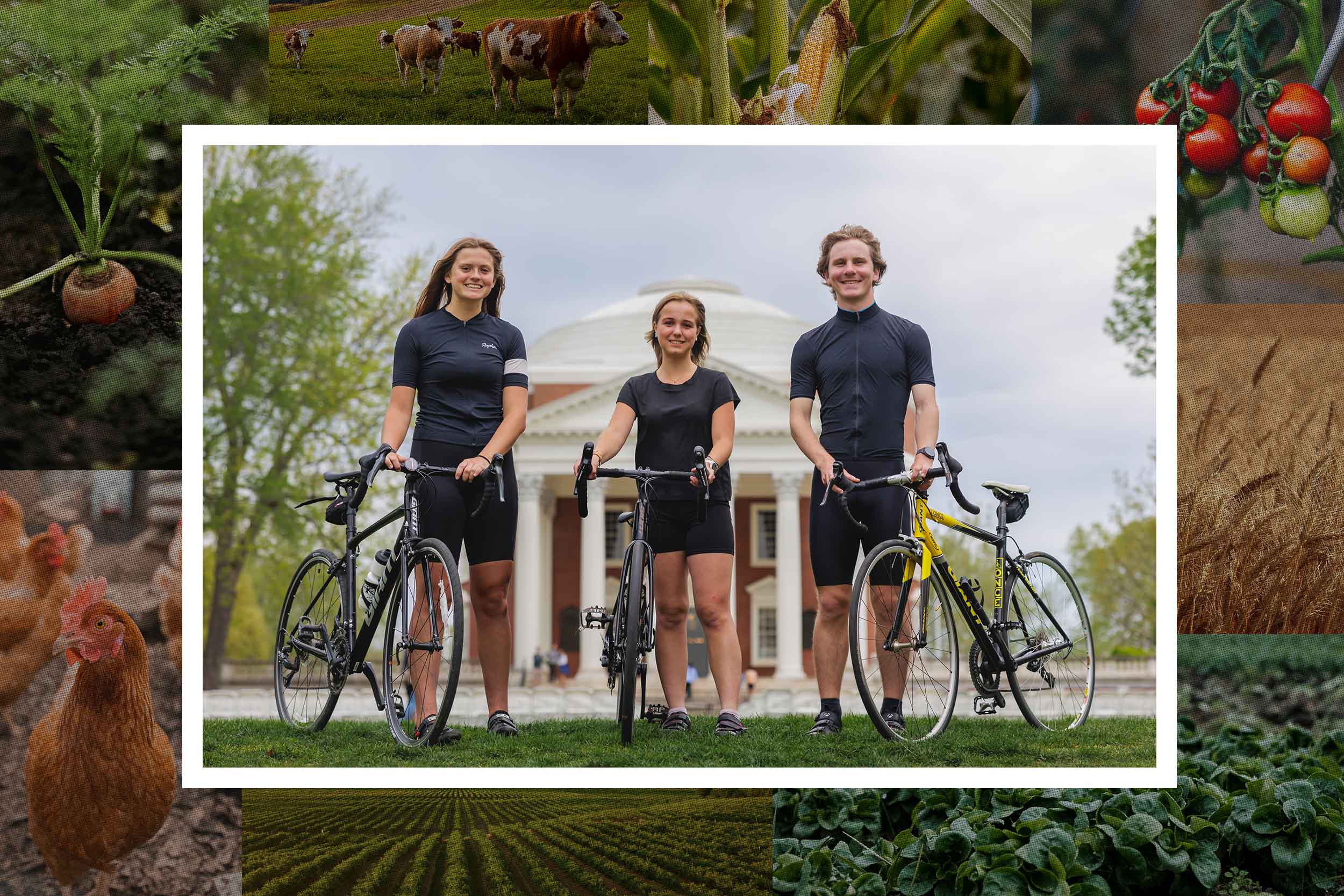
Augusta Halle was spending part of her summer on a research project in the Bahamas when she and a friend decided to explore the entire island of Eleuthera from the seats of battered beach cruisers.
They had no way to carry enough food to keep them pedaling for the full day, so the University of Virginia student found a piece of cardboard, painted “Got Snacks?” on it, and affixed it to her backpack.
“My friend and I, we love biking, and we love eating, so those were like our two loves combined,” Halle, now a second-year student in the McIntire School of Commerce, said. “It was really incredible to see the spectrum of offerings and to have the conversations.”
While some Bahamians offered commercial snacks, others presented native foods connected to their island culture. Halle realized that, in many places, culture and food are inseparable.
“People welcomed us into their homes and wanted us to stay,” she recalled. “It was incredible to get a glimpse of the cultural aspects through food, and how food offers a lens into so many other aspects of life.”
She decided to replicate that research in America – not with a single day of pedaling, but 30 days, from coast to coast.
Next month, Halle and a team of college students – including two other Hoos – will set off on a 3,500-mile bicycling and storytelling adventure from Seattle to Washington, D.C., or “farm to farm, coast to capital,” as the team describes it on their website.
The goal of the “Roots on the Road” project is twofold: meeting with farmers to discuss the future of agriculture and closing the divide between food producers and consumers. Besides farms – where the bikers will camp and sometimes work – the team plans to pedal anywhere people peddle food, including kitchens, truck stops and farmers’ markets.
“We’re all connected to the food system in some capacity or another, whether we’re eating our breakfast or farming on the ground,” Halle said. “And we want to capture that and start a national conversation between farmers and consumers and everyone in between.”
The gulf between farmers and consumers has grown wider as the country has aged, Halle said. That’s led to a degree of what some call “agricultural illiteracy,” or a significant disconnect in understanding of how food gets to restaurants and grocery stores.
“One of my favorite statistics is that 16.4 million Americans think chocolate milk comes from brown cows,” she said. (Fact check: true, at least according to a 2017 survey). “It’s strange to think there are so many people unaware of where their food comes from, and we are really trying to bridge that gap.”