While shopping for new sneakers before long walks to class, or a new top before game days, some students have a priority to keep their fashion trendy.
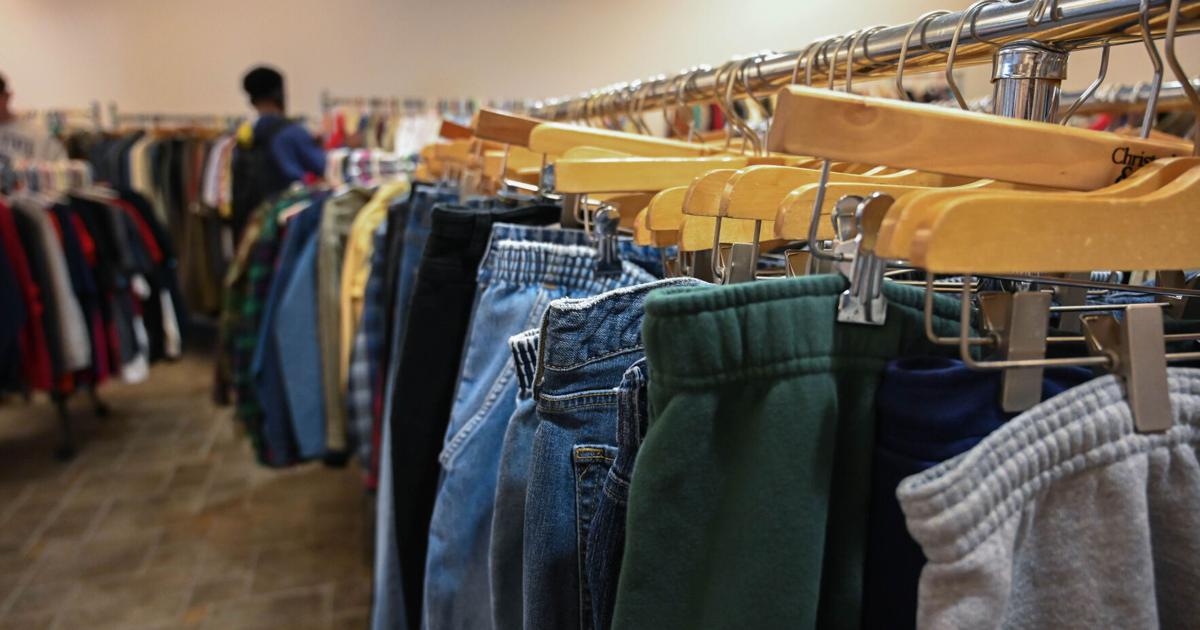
For many, gone are the days of not having to worry about the cost of clothes. But by sifting through thrift racks in State College and doing at-home repairs, students can have a refreshed wardrobe without it costing a fortune, too.
As the store owner of Love It Upcycle Boutique on North Atherton Street, Deb Love knows the back-to-school shopping season well. Loves’ shelves are frequented by shoppers looking for more mature, luxury items, like purses and formal attire, but on a budget.
Love opened her first store in Huntingdon, Pennsylvania, a quaint borough about 50 minutes south of State College. Growing up, her family visited downtown State College for its thrifting selection. Her history in the area, she said, is what influenced her to open her second store in State College.
Many people come there to shop, and she said the community aspect of the store is what makes the boutique possible. But the store buys clothes off of people, too; a form of recycling, Love said.
“There’s so many people that come in to sell us their clothes and they say, ‘We used to just throw our clothes away,’” Love said.
Love said she often collaborates with her neighbor-store, Plato’s Closet, to swap pieces that fit each respective secondhand store’s aesthetic.
While shopping secondhand helps students save money, it also lends to cutting down on the excess of fast fashion products.
Buying secondhand clothes helps decrease the 85% of clothing materials that wind up in landfills every year, according to research compiled by the Geneva Environment Network. Its research reports around 71% of clothing consumers have goals of adopting a more sustainable approach to fashion, but 62% still purchase fast fashion.
Leah Rau, a third-year studying secondary education, is a learning coordinator for the environmental science course Biological Science 3. Rau said the class gave her insight on tactics to shop sustainably and give pieces a longer lifespan.
“I would really advise people to know people that have similar interests,” Rau said. “Ask, ‘Does that person know how to sew?’ It’s pretty awesome to indulge and share skills with each other.”

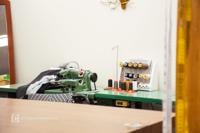
A sewing machine and thread sit inside the tailor shop of Harpers clothing store on Thursday, March 28, 2024 in State College, Pa.
As a learning coordinator, Rau said that teaching practicality by utilizing her community has been the most effective way to promote acting with sustainability. Rau said she prioritizes shopping seasonally instead of annually to reduce waste, and she only shops for pieces she needs.
“It’s mostly thrifting specific items I need,” Rau said. “I’ll up-cycle my clothes mostly, right now I like taking off the collar of my shirt and making it off the shoulder. You can style T-shirts a thousand different ways.”
Upcycling pieces is an activity that focuses on the pieces already in your closet. It helps the environment to keep clothes hanging in the closet instead of laying in a dump, but it’s also a project to get your creative gears going.
Ash Knox, a second-year studying business management, said she creates things so she no longer has to buy them at the store.
“I started small ’cause I don’t have anybody to teach me,” Knox said. “Teaching myself how to sew, I started making cosmetic and toiletry bags, making different patchworks and things like that.”
Knox began the practice of shopping sustainably in high school, influenced by her sister who she said frequently spoke of the unsafe working conditions in which many fast fashion items are produced. Earthday reports that this, alongside unfair wages, are common in the industry.
Additionally, factory workers are exposed to carbon emissions in all stages of fast fashion production, from material creation to construction of the piece, according to the Intergovernmental Panel on Climate Change. These emissions make up 10% of greenhouse gas emissions annually.
“Ultimately, fashion is something that’s very important to people, ” Knox said. “It is a part of your identity, and more people have the privilege to have access to clothing through secondhand shopping.”
MORE LIFESTYLE CONTENT