Despite the undying nostalgia for ’80s Hollywood, it’s no secret there are plenty of classics, from sci-fi to comedy, that are unwatchable today. Where some of these were disasters from the jump, only really maintaining a cult fan base, others have just gotten worse with age. Considering the questionable special effects often used, the dated concepts and fever dream stories, it’s no surprise these oddities are easy to find.
The ’80s saw one of the most diverse ranges in genres, styles, and ideas in movie history, from campy and tacky adventures to bold but bad horror sequels. After all, this was an era known for non-stop studio interference that made even some of the most talented directors abandon their work. The spirit of the decade might be alive and well, but that doesn’t mean it lacks its share of failures either.
Halloween 5: The Revenge of Michael Myers Is the Weakest In the Thorn Trilogy

Halloween 4: The Return of Michael Myers set the franchise back on track after Season of the Witch, but it also began the divisive “Thorn Trilogy.” While the fourth installment was perfectly enjoyable, the sequel, The Revenge of Michael Myers, showed that the series had gone off the rails since John Carpenter left. It follows the Haddonfield serial killer’s return as he once again stalks his niece, Jamie Lloyd, slaughtering everyone who escaped his wrath one year before.
The fifth Halloween movie was an aimless retread of the events of the fourth, and its direction and cinematography all feel like some of the worst in the franchise. There are some good ideas here, but at times it feels closer to an amateur film or TV movie than it does to a worthy successor to the original. For those who dislike the ideas behind the “Thorn Trilogy,” this will be an especially unwatchable entry as a reminder the producers didn’t know what to do with Michael.
Caravan of Courage: An Ewok Adventure Underwhelmed Star Wars Fans

Just after completing his original Star Wars trilogy, George Lucas produced one of the biggest misfires in the franchise in Caravan of Courage: An Ewok Adventure. In the aftermath of the defeat of the Empire, it follows the Tawani family as they’re stranded on the forest moon, only for the parents to disappear. It falls to the children to work with the native Ewoks to find them.
Caravan of Courage: An Ewok Adventure bears little resemblance to the world Star Wars fans know and love, feeling closer to a Jim Henson adventure than sci-fi fantasy. Its small production budget instantly puts one in mind of the worst aspects of the 1978 Holiday Special. There was very much an audience for more from the galaxy far, far away, but this was a cheap cash grab from the jump.
Streets of Fire Is a Misfire of a Rock and Roll Fable

Perhaps one of the best ideas of the ’80s was Walter Hill’s Streets of Fire, an action-thriller marketed to audiences as a “rock and roll fable.” It takes place in a near-future light dystopia, where a singer named Ellen Aim is taken prisoner by a biker gang. To try and save her, a team of unlikely heroes that includes her mercenary ex, her current boyfriend, and a mechanic set out into the city’s underworld.
Streets of Fire’s only real redeeming qualities are its stars and songs, but little else to tie everything together. Hill had a solid concept with an ambitious vision, but it plays out more like an extended Air Supply music video than a real film. Some of the performances are needlessly over-the-top, the backdrop lacks life, and the pacing is completely disjointed, making it a complete slog.
Jaws: The Revenge Is A Classic Sequel Catastrophe

In 1987, Joseph Sargent brought Jaws back to the silver screen for Jaws: The Revenge, the fourth and final entry in the franchise. Although the franchise had been creatively dead since the second movie, this one took the disaster to new heights with one of the most ill-conceived sequel ideas of all time. It revolves around Martin Brody’s now-adult son Michael as he realizes there’s a new shark on the prowl, and it wants revenge against the family.
Jaws: The Revenge is basically synonymous with everything wrong with ’80s creature feature movies, right down to trying to turn it into a slasher. The idea of a killer shark with vengeance on its mind twisted Benchley’s story and Spielberg’s film into something silly, and the actual filmmaking matched that. The cast couldn’t seem more disinterested, the concept more unwanted or the execution more disastrous. This is a franchise whose fans almost unanimously agree should have been left at one.
The Dark Crystal Is A Weird Dark Fantasy Experience

The collaborations between Frank Oz and Jim Henson made for some great ’80s cult classics, but The Dark Crystal wasn’t among the better ones. Set on the faraway planet Thra, a place divided between the sinister Skeksis and peace-loving Mystics, it follows the kindly Jen as she embarks on a quest to fulfil an ancient prophecy. Despite some good worldbuilding efforts, there’s little to admire here beyond the craft behind the practical effects.
As much as some fans allow their ’80s nostalgia to insist otherwise, The Dark Crystal has always been a bizarre and unwatchable fantasy film. Its character designs somehow alternate between absurd camp and uncanny valley levels of weirdness, and the plot had little to set it apart from other dark fantasy tales. When compared to the charm of Labyrinth, it’s hard to see it as anything other than a case of good work being undermined by poor execution.
Howard the Duck Reveals the Limits of ’80s Comic Book Movies

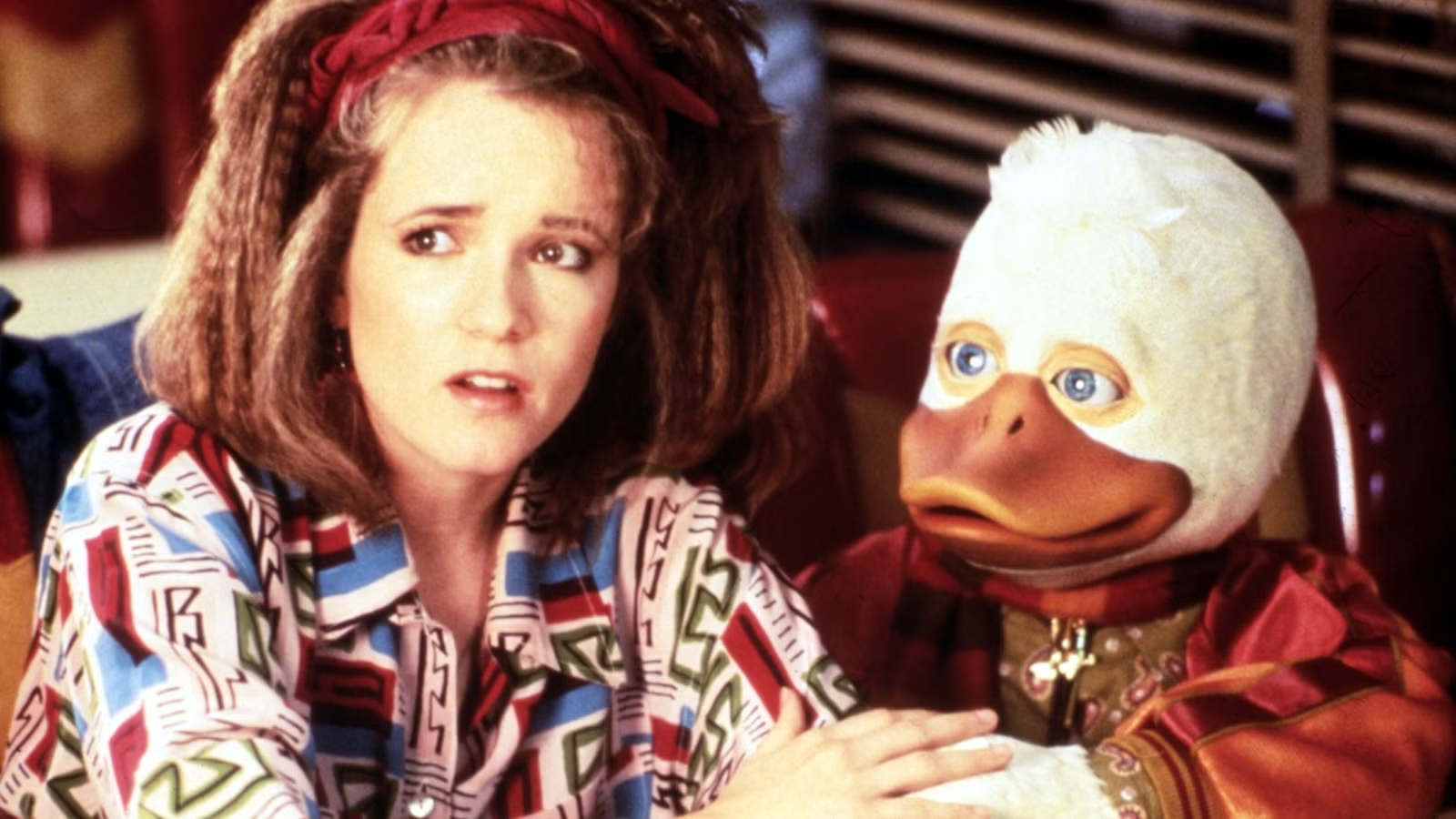
Long before the MCU, George Lucas stepped up to make one of the few ’80s Marvel movies in Howard the Duck. Basing his story on the writing of Steve Gerber, he told the tale of the titular character as he’s pulled from his home in Duckworld into ’80s America. While there, he befriends aspiring singer Beverly Switzler, with whom he learns that a malevolent being was transported to Earth with him.
Howard the Duck is very much a product of its time, a relic of a decade in which comic book movies were afford low budgets and even lower respect. Considering what he had to work with, Lucas did a respectable job, and there’s certainly an audience for this flick. However, that doesn’t change the fact it’s a complete fever dream of a movie made at a time that just didn’t have the means or motivation to make it good.
Piranha II: The Spawning Made James Cameron Abandon It

Before James Cameron was a household name with the Terminator franchise, he directed one of the most infamous horror sequels ever, Piranha II: The Spawning. This time, the killer fish were able to fly, turning them into one of the most absurd creature feature menaces of the decade, redefining the campy side of the genre. It follows the revelation of new, genetically-engineered piranhas on the loose as they terrorize a resort.
Piranha II: The Spawning is a classic among horror fans who admire the “so bad it’s good” side of cinema, but offers little else to mainstream audiences. As bad a monster movie as it gets, it’s no wonder Cameron even tried to break into the editing room to change the final cut, only to dissociate later on.
The Dead Pool Failed the Dirty Harry Franchise

In 1988, Buddy Van Horn helmed the last film in the Dirty Harry series when he directed The Dead Pool. It follows Harry Callahan’s search for a serial killer who’s picking off names from the city’s exclusive celebrity ‘dead pool,’ a game to bet on which public figures will die next. With a dead rock star and his own name on the list, he pulls out all the stops to track down the sadist responsible before his own number is up.
The Dead Pool is easily the weakest of the franchise, and that alone makes it a rough watch for any Clint Eastwood fan. It’s less an issue of how well made it is than it is the creative direction it takes, missing everything great about who Callahan is. This should have been an ’80s hard-boiled detective sendoff, but instead it comes across as a mean, dispirited and almost obligatory conclusion.
Maximum Overdrive Is Cheesy ’80s Sci-Fi Horror

Stephen King’s direction has always been hit or miss with horror fans, and when watching Maximum Overdrive it’s easy to see why. It begins when a cosmic phenomenon awakens all of Earth’s machinery, turning vehicles into malevolent and sentient beings bent on destroying humanity. A small band of survivors must go head-to-head with a sinister killer truck if they are to survive the new apocalypse.
Maximum Overdrive is an acquired taste, feeling like a fever dream collision between Christine and Steven Spielberg’s Duel. However, it falls short of the quality of both, showing King to be a much better writer than filmmaker. It has a great premise behind it, but the execution falls short of just about every other “killer trucker” horror flick ever made.

In 1987, Gary Goddard became the first director to answer the challenge of adapting Mattel’s Masters of the Universe to live-action. His film follows Prince Adam as he leads his heroic friends to Earth to find the Cosmic Key, a device that gives the owner the power to open portals to anywhere they choose. It falls into the hands of an American teen named Julie, who becomes the latest ally to the defenders of Grayskull.
The almost insulting budget that was allocated to Goddard’s film alone shows how little faith the studio had in it. Almost immediately, the characters depart the wonder of Eternia for the mundaneness of ’80s America, at times feeling no different from a generic teen movie, save for the monsters. When compared to Prime Video’s 2026 reboot, the 1987 Masters of the Universe has never felt more unwatchable.