Once pumpkin-spice season starts creeping onto menus, it’s not much of a leap to start thinking about travel with a darker edge. But you don’t need a haunted house full of actors jumping from behind curtains to find it.
Around the world, real places come with stories of restless spirits, unusual burials, ancient rituals, and legends passed down for generations. Some are genuinely unsettling. Others are beautiful, thought-provoking, or even celebratory.
A few of these are sacred spaces, cemeteries, or cultural traditions centered on real people who died, so the Halloween connection is only the seasonal hook. Visit with curiosity and respect, then let the true stories provide the chills.
1. The Mummies of Guanajuato, Mexico

Guanajuato’s colorful hillsides take on a different atmosphere during Día de Muertos, when observances and celebrations fill the historic city after dark.
(Adrienne Barile)The bodies displayed at Guanajuato’s Mummy Museum weren’t intentionally mummified. They were naturally preserved after burial in the adjoining Santa Paula cemetery and discovered during exhumations that began in the 19th century. Many belonged to people who died during Guanajuato’s 1833 cholera epidemic, and its collection includes adults and children, which makes a visit even heavier.
I visited during Día de Muertos, which placed the museum within a broader Mexican tradition of treating death as part of life rather than something kept entirely out of sight. Outside the museum, Guanajuato was filled with altars, flowers, parades, music, and families honoring departed loved ones.
2. Edinburgh’s underground vaults, Scotland

Edinburgh’s Old Town is atmospheric after dark, but some of its strangest stories are hidden below the streets in the 18th-century South Bridge vaults.
(by Andrea Pucci via Getty Images)Beneath Edinburgh’s Old Town, stone chambers built into the South Bridge date to the 1700s. Over time, the vaults were used as workshops and storage spaces and were associated with some of the city’s poorest residents.
Today, guided tours descend into the dark corridors while recounting crime, hardship, and the paranormal stories that accumulated around them. Some tours lean heavily into ghost lore; others focus more on the people who actually lived and worked beneath the city. Either way, Edinburgh somehow becomes even moodier underground.
3. Capela dos Ossos, Evora, Portugal

Evora’s Capela dos Ossos was my first ossuary, and seeing thousands of human bones incorporated into a sacred space made mortality feel far less abstract.
(Adrienne Barile)More than 5,000 human skeletons line the walls and pillars of the Capela dos Ossos, or Chapel of Bones, beside Evora’s Church of São Francisco. Franciscan monks created the chapel in the 16th century partly to address overcrowded cemeteries, but also as a reminder of the fleeting nature of material life.
This was the first ossuary I ever visited, and it changed the way I thought about places like this. The chapel’s religious setting and the careful arrangement of bones made clear that it was meant to inspire reflection rather than shock visitors.
If your Portugal trip takes you south to the Algarve instead of Évora, Faro has another bone chapel inside the Igreja do Carmo.
4. Isla de las Muñecas, Xochimilco, Mexico City

Weathered dolls hang throughout the original Isla de las Muñecas in Xochimilco. Visitors who want to reach it should plan for a longer trajinera excursion through the canals.
(johnemac72 via Getty Images)According to Xochimilco legend, Don Julián Santana began hanging discarded dolls around his chinampa after a girl drowned nearby, hoping to ward off her spirit and other unwanted visitors. Decades of sun and rain have left hundreds of dolls staring from trees and buildings on the original Isla de las Muñecas.
I should confess that I haven’t reached the original. On a daytime trajinera ride, I passed one of the doll-covered replicas found along the canals, which was plenty unsettling. Travelers who want the real island should book accordingly: the official route from Puente de Urrutia takes about four hours round trip.
5. Leap Castle, Ireland

Centuries of clan conflict and ghost lore surround Leap Castle, including stories tied to its ominously named Bloody Chapel.
(nikkigensert via Getty Images)Leap Castle looks as though someone commissioned it specifically for ghost stories, but its turbulent history came first. Built in County Offaly in the early 1500s under the powerful O’Carroll clan, it served at different times as fortress, home, and tomb.
Its legends center on the appropriately named Bloody Chapel, along with apparitions and an ominous presence commonly called the Elemental. The privately owned castle still welcomes visitors, making it one of the rare places where medieval clan warfare, family history, and centuries of ghost lore occupy the same rooms.
6. Catacombs of San Gennaro, Naples, Italy

Naples’ Catacombs of San Gennaro are more contemplative than frightening, with early Christian frescoes, tombs, and broad chambers carved into volcanic rock.
(Wirestock via Getty Images)The Catacombs of San Gennaro are atmospheric, but calling them simply creepy misses what makes them extraordinary. Their earliest sections date to the second century, and roughly 3,000 burials have been identified among vast chambers carved into volcanic tuff. Early Christian frescoes and mosaics survive alongside the tombs.
When I visited, the scale surprised me most. These aren’t tight tunnels lined with bones, but broad underground spaces tied closely to Naples’ long relationship with its patron saint and the dead. Visits are guided, and reservations are required.
7. Bonaventure Cemetery after dark, Savannah
Live oaks, elaborate monuments, and generations of Savannah history make Bonaventure Cemetery moody even before an after-hours tour begins.
(Carol Herbert Photography via Getty Images)Spanish moss, enormous live oaks, elaborate monuments, and stories stretching back generations make Bonaventure Cemetery atmospheric even in daylight. After the gates close, it becomes something else.
I took an after-hours tour on Halloween, when walking between the monuments by lantern light added an entirely different dimension to Savannah’s stories. The tours mix cemetery symbolism, local history, colorful characters, and the lore surrounding Midnight in the Garden of Good and Evil. In 2026, special after-hours tours are again scheduled throughout October, including Halloween night.
8. Sedlec Ossuary, Kutná Hora, Czechia

The Sedlec Ossuary is still a sacred burial place, despite its extraordinary arrangements of human bones. Photography is now prohibited inside, so visitors should check current rules before going.
(mofles via Getty Images)From the outside, the Cemetery Church of All Saints looks relatively restrained. Downstairs is another matter.
Inside the Sedlec Ossuary, the remains of thousands of people have been arranged into elaborate decorations, including garlands and a famous chandelier. Seeing photographs before visiting won’t quite prepare you for standing in a room where almost every decorative element was once part of a person.
Sedlec emphasizes that this is still a tomb and functioning sacred space. Photography is now prohibited, and timed tickets are strongly recommended because capacity is limited.
9. A French Quarter ghost tour, New Orleans

After dark, New Orleans ghost tours turn French Quarter streets into the setting for stories of crime, folklore, voodoo traditions, and alleged hauntings.
(Spondylolithesis via Getty Images)In New Orleans, you don’t necessarily need one haunted building. The whole French Quarter can provide the setting.
Walking tours weave through streets lined with balconies, courtyards, old hotels, bars, and mansions while guides recount some combination of documented history, crime, voodoo traditions, ghost stories, and local folklore. The city has more than 300 years of material to work with, so choose a tour that makes clear where history ends and legend begins.
Personally, I think half the fun is deciding afterward which stories you actually believe.
10. Merida during Hanal Pixan/Festival de las Animas, Mexico

During Merida’s Festival de las Animas, Día de Muertos traditions bring processions, altars, candles, and elaborate Catrina costumes into the streets and General Cemetery.
(loeskieboom via Getty Images)Hanal Pixán doesn’t belong on a list of “scary attractions,” but it’s a special and emotional time to visit Mexico’s Yucatan region. The Maya tradition, whose name means “food for the souls,” remembers deceased family members with altars, candles, photographs, flowers, and favorite foods. October 31 traditionally honors children who have died, November 1 adults, and November 2 all souls.
I’ve experienced Hanal Pixán in Mérida, where the season brings public altars, processions, traditional foods, and festivities into the city. It’s moving and joyful rather than frightening (except one mourning procession where the actors sobbed so convincingly it brought me to tears), and a reminder that not every encounter with death has to be solemn or spooky.
11. The Ossuary at St. James, Brno, Czechia

More than 50,000 people were buried beneath what is now central Brno, their remains hidden below the modern city for centuries.
(Adrienne Barile)For centuries, thousands of remains sat largely forgotten beneath the streets of Brno, Czechia’s second-largest city. The ossuary beneath St. James Square was rediscovered during a survey in 2001, and archaeologists estimate that more than 50,000 people were buried there.
When I visited, knowing the remains belonged to generations of Brno residents, including people who lived through epidemics, wars, and sieges, made the city’s history feel suddenly very close.
Narrow underground chambers hold carefully arranged skulls and bones just steps below the modern city, making this one of Europe’s largest known ossuaries and one that many travelers still haven’t heard about.
12. Bran Castle, Romania

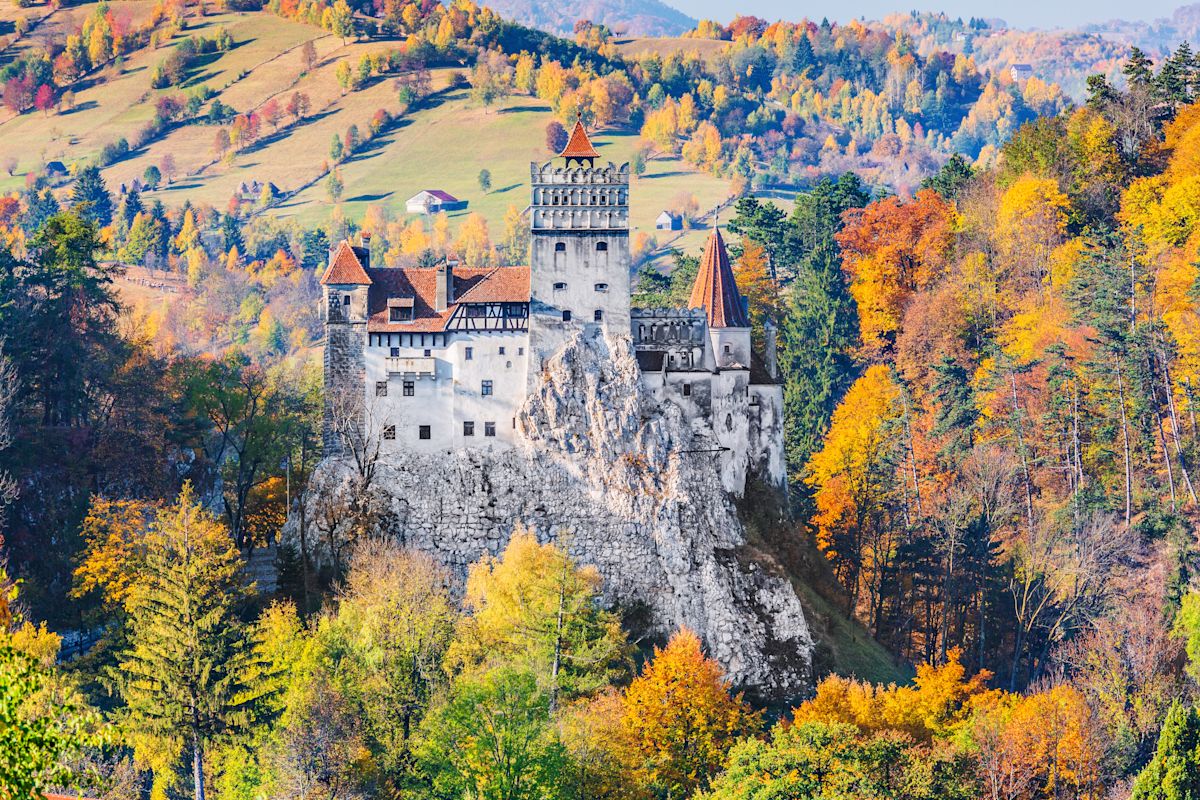
Bran Castle owes much of its fame to Dracula mythology, although its connection to Vlad the Impaler is far less straightforward than the legend suggests.
(SCStock via Getty Images)Bran Castle has spent decades being marketed as Dracula’s castle, which is impressive considering Bram Stoker never visited Romania and the connection between the fortress and Vlad the Impaler is far more tenuous than pop culture suggests.
That gap between legend and reality is the reason to visit. Vlad III was real, his reputation for brutal punishment was well established, and his name helped feed later Dracula mythology. But the turreted Transylvanian castle travelers associate with the vampire is largely a product of storytelling and tourism. Even Bran Castle’s own interpretation separates the historical Vlad from the fictional count.
13. Museum of Witchcraft and Magic, Boscastle, England

Boscastle’s Museum of Witchcraft and Magic explores real traditions of folk magic, charms, ritual practices, and witchcraft rather than Hollywood versions of the supernatural.
(Milos Ruzicka via Getty Images)We finish our list in the Cornish fishing village of Boscastle, where the Museum of Witchcraft and Magic explores centuries of folk belief rather than Hollywood witchcraft.
Its collection ranges through charms, ritual objects, ceremonial magic, folklore, pagan traditions, and modern witchcraft, with thousands of objects and an extensive archive. It’s the kind of museum where seemingly ordinary objects become much stranger once you learn what someone believed they could do.
The museum is open daily through October 31 in 2026, making Halloween an unusually appropriate deadline for getting there. (No broomstick required.)
The best spooky places don’t need special effects
What makes these places linger in your mind isn’t a staged jump scare. It’s knowing that the bones are real, the tunnels existed long before anyone sold ghost-tour tickets, and generations of people have told the same stories about certain castles, islands, and city streets.
Some of those stories are folklore. Others are history, religion, or traditions that continue today. And sometimes the truth is much stranger than the ghost story you expected to hear.
If this sent you checking sights and flights when you were just trying to be responsible, my work here is done. Follow me below on Yahoo for more travel ideas, and find me on Instagram at @thehaphazardtraveler for real-time adventures.