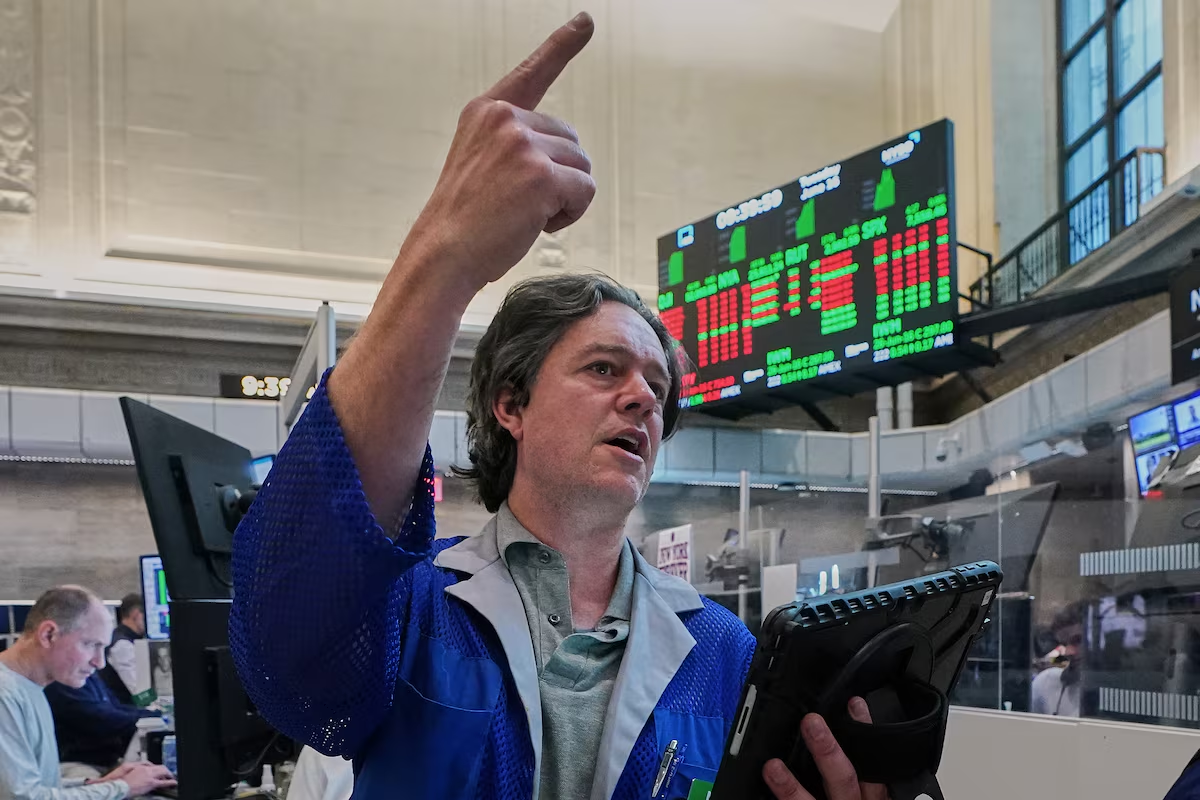
Global stocks fell on Tuesday, dragged lower by a broad selloff in technology and semiconductor shares as profit-taking set in and investors braced for more aggressive Federal Reserve action on inflation.
In Toronto, the S&P/TSX composite index was up 22.13 points, or 0.06 per cent, at 35,024.31 at 12:32 p.m. ET after falling as low as 34,584.58 earlier in the trading session.
On Wall Street, the tech-heavy Nasdaq led losses, with semiconductor and some megacap stocks under pressure.
Nvidia fell 3 per cent and Tesla dropped 5 per cent, while shares in SpaceX reversed early declines to trade up 1.6 per cent. Chip stocks were down 7 per cent.
The Dow Jones Industrial Average was up 0.06 per cent, the S&P 500 fell 1 per cent, and the Nasdaq Composite fell 1.6 per cent.
“If you look at the technical indicators, the SOX was at its most overbought level in the last three years so there’s definitely an element of expectations getting stretched, market positioning getting stretched, and valuations getting stretched,” said Amanda Agati, chief investment officer at PNC Asset Management Group.
European shares also declined, with the STOXX 600 down 0.51 per cent, weighed by losses in semiconductor and chip-equipment makers. The weakness followed declines across Asia, where Seoul’s KOSPI index plunged 10 per cent in its sharpest one-day drop since March. MSCI’s gauge of stocks across the globe fell 1.26 per cent.
“Questions are once again being raised over AI infrastructure spending, particularly as some corporate giants plan to sell equity to help fund expansion,” Trade Nation senior market analyst David Morrison said.
“Time will tell if this is yet another ‘buy the dip’ opportunity, or a harbinger of worse things to come.”
Oil prices remained subdued, with Brent crude holding below US$80 a barrel as tanker traffic through the Strait of Hormuz increased and physical market prices neared pre-conflict levels.
The U.S. agreed to waive sanctions on Iran for 60 days from Monday after the first round of talks under a nascent peace deal agreed last week on ending more than three months of war.
While lower oil prices would typically support equities, investor focus has shifted to the inflation outlook and central bank policy. Markets now expect the Fed to take a firmer stance on inflation under Chair Kevin Warsh.
U.S. Treasury yields have surged in recent sessions, with 2-year yields — highly sensitive to rate expectations — hitting 16-month highs. On Tuesday, both 2- and 10-year yields were modestly lower on the day at 4.20 per cent and 4.48 per cent, respectively.
Money markets show investors are close to fully pricing in a rate rise by September. Against that backdrop, the dollar is at one-year highs against a basket of currencies.
“The data to me does not suggest that they need to be raising rates. It suggests they need to sit on pause for a while and see if the Middle East-conflict driven inflation data unwinds as a function of the negotiations and the deal,” Agati said.
Money markets are now close to fully pricing in a rate hike by September, helping push the dollar index to one-year highs against a basket of currencies. The index was last up 0.32 per cent to 101.33.
The dollar’s strength has weighed heavily on the Japanese yen, which hovered near 40-year lows at 161.53 per dollar. The euro slipped below US$1.14 to its lowest level in a year as investors scaled back expectations for further European Central Bank tightening.
Japanese Finance Minister Satsuki Katayama said she discussed global financial markets with U.S. Treasury Secretary Scott Bessent on Monday, a move analysts said could signal rising risk of intervention to support the yen.
In Britain, the pound fell 0.35 per cent to US$1.3201 on the 10th anniversary of the Brexit vote. Sterling remained under pressure after Prime Minister Keir Starmer said he would resign, paving the way for what is expected to be a smooth political transition to Andy Burnham.
Gold also declined, falling 1.5 per cent to US$4,127 an ounce as higher rate expectations reduced the appeal of non-yielding assets.
In cryptocurrencies, bitcoin fell 2.95 per cent to US$62,475.67. Ethereum declined 4.12 per cent to US$1,661.63.
Reuters