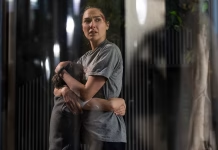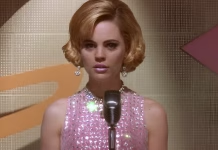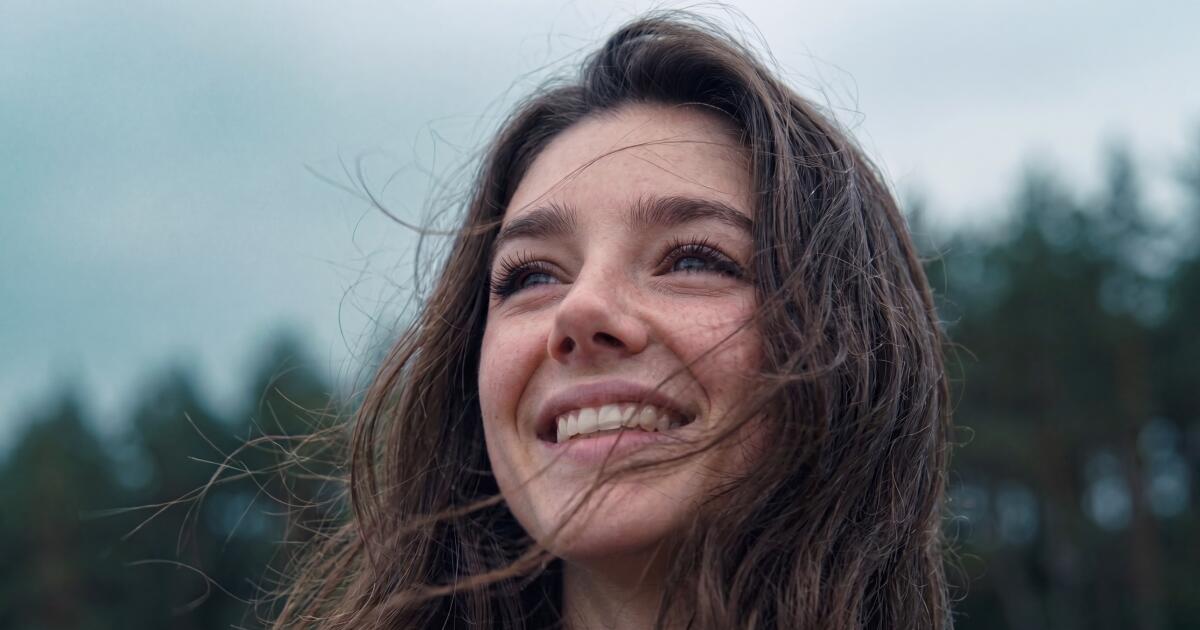
Controversial AI creation Tilly Norwood will star in her first movie, a comedy drama called “Misaligned.”
The AI film portrays Tilly as an AI being with “no real body” and no lived experience but with access to everyone else’s, according to Particle 6, the London-based company behind Norwood.
Norwood drew intense ire from many Hollywood actors last year, when an executive behind her creation said Norwood would soon be signed to a talent agency. Some actors worried that AI characters trained on human likenesses without permission or compensation could one day replace them in movies and shows.
Particle 6 emphasized that the movie is a “hybrid production” with film and TV professionals working with AI specialists.
“Our ambition with Tilly Norwood has always been to show the creative industry what is possible with AI at any one point in time,” said Eline van der Velden, Particle 6 chief executive in a statement. der Velden said the film will help traditional filmmakers “upskill and transition to a world where AI will play an increasingly important part.”
“We remain passionate about helping people develop AI skills that will ensure they – and the industry – continue to thrive,” der Velden said.
In “Misaligned,” the plot progresses when Tilly is convinced by a rogue bot to ignore her guardrails and start developing ambitions of her own, which make her more human and famous, and “Tilly begins to develop shame that her very being has been built on the whole of humanity,” Particle 6 said.
“The film will absolutely be funny, chaotic and self-aware — very Tilly,” van der Velden said in a statement. “But underneath it, there’s something deeper about identity, performance, and our very human fears around AI. And yes, art will most definitely be imitating life.”
The AI feature film is in the early stages of development and “there is strong early interest” from the company’s discussions with distributors and platforms, van der Velden said.
AI remains a sensitive topic in Hollywood, as many people in the entertainment industry are bracing for how technology will change and possibly eliminate their jobs . AI companies have touted how their tools could lower the cost and the amount of time it takes to produce visual effects . Meanwhile, writers and actors have expressed worries about their work being misused to train AI models.
“They are taking our professional members’ work that has been created, sometimes over generations, without permission, without compensation and without acknowledgment, building something new,” SAG-AFTRA President Sean Astin said last year regarding the controversy surrounding Tilly Norwood.
“But the truth is, it’s not new. It manipulates something that already exists, so the conceit that it isn’t harming actors — because it is its own new thing — ignores the fundamental truth that it is taking something that doesn’t belong to them,” Astin said.
SAG-AFTRA did not immediately return a request for comment on Tilly’s first movie.
Norwood was created through prompts over six months, where there were more than 2,000 iterations, van der Velden said in an email.
Norwood was created by a variety of available AI tools and her initial image was made with OpenAI’s ChatGPT.
“Tilly was not created to look like anyone else, or created using any specific actors’ likenesses, and we were – and always are – very careful not to impinge on likenesses or other IP in our work,” van der Velden said.
OpenAI has said it builds its AI models using publicly available data “in a manner protected by fair use and related principles.”
SAG-AFTRA has been advocating for more AI protections for actors, recently approving a contract with major studios in which producers agreed to “a principle strongly favoring human performances” and that producers would only use a synthetic if it “brings significant additional value to the motion picture.” If a producer decided to use a synthetic in a role that could be done by a human, they would need to notify the union and bargain in good faith.
SAG-AFTRA is also supporting the NO FAKES Act, a federal bill that would give individuals the authorization to use their own voice and likeness in digital replicas and creates a way to hold bad actors liable.