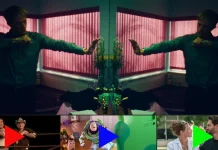
Movies can share surprisingly similar, if not identical, DNA without feeling remotely alike. Two filmmakers can start with essentially the same premise, place their characters in remarkably similar circumstances, or even construct parallel journeys for their protagonists, only to take those ingredients in completely different directions. The result can be two films that seem incompatible on the surface, but become fascinating companions once their underlying similarities are recognized.
That is what makes the following cinematic pairings so fascinating. A warm Christmas drama can have more in common with a terrifying horror movie than another holiday flick. A family comedy can share its central anxiety with a deeply unsettling horror movie. A subversive superhero movie can mirror a science-fiction blockbuster, while an animated children’s adventure can follow the same basic structure as a mind-bending science-fiction classic.
The following ten pairings demonstrate just how flexible storytelling can be. Each set of movies is markedly different in genre, tone, style, and execution, yet they share a fundamental idea, premise, character dynamic, and plot progression.
10
The Holdovers & The Whitecoat’s Daughter

The Holdovers and The Whitecoat’s Daughter could hardly seem more different. One is a bittersweet, warm-hearted Christmas dramedy, while the other is a horror story steeped in isolation and dread. Interestingly, both center on a remarkably similar setup: a small group of students remains behind at a boarding school during a snowy winter break while much of the outside world disappears.
In The Holdovers, Paul Hunham is tasked with supervising students who cannot return home for the holidays. What initially looks like an unwanted responsibility gradually becomes an unlikely relationship between Paul and Angus, with the school’s wintertime isolation providing the backdrop for an unexpectedly touching story about loneliness, grief, and human connection.
The Whitecoat’s Daughter takes the same basic ingredients and explores them in a far darker manner. A boarding school emptied by winter vacation becomes an isolated environment where the remaining students are exposed to something sinister. The snow, empty corridors, and absence of the normal student population transform what could be a cozy setting into an inherently unsettling one, amidst a story involving a sinister, demonic presence.
The similarity is particularly fun because winter break is already a narrative device that naturally separates characters from the outside world. Both movies exploit that isolation, but their genres and narrative trajectories could not be further apart.
9
Get Out & Meet the Parents

Get Out and Meet the Parents are perhaps the best example of the same anxiety being explored through entirely different genres.
Both films revolve around a man meeting his girlfriend’s parents for the first time and desperately trying to make a good impression. In each story, the protagonist enters an unfamiliar family environment where he is scrutinized, questioned, and made increasingly uncomfortable by the people who are supposed to welcome him.
Greg Focker’s ordeal is played for comedy. His attempts to impress Jack Byrnes spiral into increasingly humiliating disasters, taking the universal fear of meeting the parents to the extreme.
Get Out takes that same premise and weaponizes it. Chris Washington’s visit to his girlfriend Rose’s family initially resembles an uncomfortable version of the familiar “meet the parents” scenario, but Jordan Peele gradually reveals that Chris’s discomfort is not merely social anxiety. The film transforms the experience through the lens of race, exposing the far more sinister implications behind the behavior he encounters.
8
Disclosure Day & Glass

Disclosure Day and Glass come from radically different corners of the genre spectrum, but their endings share an extraordinarily specific similarity in that the existence of extraordinary beings is finally revealed to the entire world.
In Glass, Elijah Price’s elaborate plan ultimately results in footage of David Dunn and Kevin Wendell Crumb’s confrontation being released publicly. The world is presented with evidence that superpowered individuals genuinely exist, potentially changing humanity’s understanding of what is possible.
Disclosure Day reaches a strikingly similar destination. Margaret Fairchild and Daniel Kelman work to expose evidence proving that extraterrestrial life exists, eventually bringing that information to the public through a worldwide news broadcast.
In both movies, characters attempt to uncover, protect, or disseminate information that powerful forces desperately want to suppress. Glass treats the disclosure as a plot twist following the deaths of its central characters, whereas Disclosure Day builds toward its titular event throughout the movie from the very beginning. The latter therefore makes the public revelation feel like the culmination of the story rather than a surprise tacked onto its ending.
7
The Matrix & The LEGO Movie

The Matrix and The Lego Movie might be separated by fifteen years, genre, rating, and intended audience, but their protagonists follow a comically similar journey.
Neo and Emmet are both ordinary, rule-abiding everymen living mundane lives within highly controlled societies. Each initially accepts the world around him as normal before discovering that reality is not what it seems. More importantly, each learns that he is actually destined to become ‘The Chosen One’ capable of freeing others from that system.
The films’ similarities extend beyond the protagonists. There are wise mentor figures who understand the truth before the hero does. In The Matrix, there is Morpheus. In The LEGO Movie, there is Vitruvius. Both films also feature a formidable woman clad in black clothes who becomes the hero’s ally and love interest: Trinity and Wyldstyle.
Even the villains parallel one another. Agent Smith and Good Cop/Bad Cop are agents of the artificial systems controlling their respective realities, and both represent the oppressive forces attempting to keep their worlds functioning.

E.T. the Extra-Terrestrial and The Martian are both survival stories about an individual stranded far from home. E.T. and Mark Watney are both separated from their respective crews and left in environments where survival initially seems impossible. E.T. is an extraterrestrial stranded on Earth after being left behind by his species, while Watney is accidentally presumed dead and abandoned on Mars.
Watney is a botanist, and his ability to grow potatoes becomes central to his survival. He turns an inhospitable Martian habitat into a makeshift farm, using science and ingenuity to produce food while waiting for rescue.
E.T. also becomes associated with plant life, particularly through the character’s fascination with botany and the film’s memorable depiction of his relationship with Elliott’s home and garden. Both movies consequently use plants as symbols of life in environments where survival should be extraordinarily difficult.
5
Madagascar & Tropic Thunder

Madagascar and Tropic Thunder share an especially amusing connection. Both films feature Ben Stiller as a pampered celebrity suddenly thrown into a dangerous jungle environment.
In Madagascar, Stiller voices Alex, a famous zoo lion whose life has been defined by comfort, attention, routine, and an endless supply of food. When Alex and his friends escape their carefully controlled environment, they wind up stranded in Madagascar, where the comforts of civilization are nowhere to be found.
In Tropic Thunder, Stiller plays action star Tugg Speedman, an actor accustomed to adoration who is dropped into an actual jungle while making a war movie. He believes he is merely performing, only to discover that the situation around him is real.
Both characters begin as spoiled entertainers accustomed to artificial environments designed around their needs. But, as the stories progress, both are forced to confront a harsh world in which their celebrity status means nothing.
4
Taken & Finding Nemo

Taken and Finding Nemo transform the same parental nightmare into completely different cinematic experiences. In both movies, a parent is separated from a child who has been taken away from them, and the entire story becomes a desperate mission to find and rescue that child.
Bryan Mills responds to his daughter’s kidnapping with a very particular set of skills. His pursuit takes him across Paris as he methodically tracks down the sex traffickers responsible and attempts to bring his daughter home.
Marlin’s journey in Finding Nemo is considerably less violent, but emotionally it is almost identical. After Nemo is captured and taken far away from home, Marlin crosses the ocean in search of his son, encountering increasingly dangerous obstacles along the way. Both fathers love their child and refuse to accept that they are gone. They also both have somewhat tenuous relationships with their children before the kid goes missing. Their methods to reunite with their children could not be more different, but their motivation is exactly the same.
3
Se7en & Charlie And The Chocolate Factory

Perhaps the most bizarre pairing on this list, Se7en and Charlie and the Chocolate Factory are strikingly similar when exposed to a bit of extra scrutiny.
Both films feature an eccentric man who encounters people defined by particular sins or moral failings and devises elaborate scenarios that turn those very characteristics against them.
In Se7en, John Doe builds his murders around the seven deadly sins. Each victim is selected because they symbolize a particular sin, and Doe constructs elaborate punishments intended to reflect the offense.
Willy Wonka, meanwhile, takes a group of children into his factory and observes their behavior. Each child possesses a particular vice and each eventually encounters a consequence tailored specifically to that flaw. The moral frameworks are obviously different, but the structural similarity is striking.
2
Chinatown & Who Framed Roger Rabbit

Chinatown and Who Framed Roger Rabbit are two very different versions of a hard-boiled Los Angeles noir detective story. Both films center on private investigators pulled into sprawling conspiracies involving corruption, powerful figures, and the city’s transportation infrastructure. Most notably, both stories revolve around the Red Car public transit system, whose history becomes central to the mysteries being investigated.
Jake Gittes and Eddie Valiant are also cut from similar noir cloth. Both are cynical private detectives navigating a world where seemingly simple cases become increasingly complicated, dangerous, and morally murky.
There is even a broader connection between the two noir movies. A planned sequel to Chinatown, associated with the working title ‘Cloverleaf,’ was going to tackle how corporate interests dismantled L.A.’s Red Car public transit system. Heavily inspired by Chinatown, Who Framed Roger Rabbit screenwriters Jeffrey Price and Peter S. Seaman named the villainous corporate entity ‘Cloverleaf Industries.’
1
The Dark Knight Rises & Rocky III

The Dark Knight Rises and Rocky III follow remarkably similar arcs for their aging heroes. Bruce Wayne and Rocky Balboa both begin their respective stories as established champions whose best days appear to be behind them. They have achieved tremendous success, but their previous victories have left them complacent, physically compromised, and unprepared for the new threat coming their way.
This new threat comes in the form of Bane for Batman and Clubber Lang for Rocky. Both are younger, more physically imposing opponents who overwhelm the protagonist in a devastating first confrontation.
Both stories then remove a mentor figure from the hero’s life. Bruce loses Alfred’s guidance after their relationship fractures, while Rocky loses Mickey, whose death leaves him emotionally devastated.
After this added devastation, the hero must rebuild himself. Bruce returns to physical and mental training while imprisoned before confronting Bane again. Rocky turns to Apollo Creed, who helps him rediscover the speed and discipline necessary to defeat Clubber Lang.

Disclosure Day

9/10
- Release Date
-
June 12, 2026
- Runtime
-
145 Minutes
Cast
-

-

Josh O’Connor
Daniel Kellner