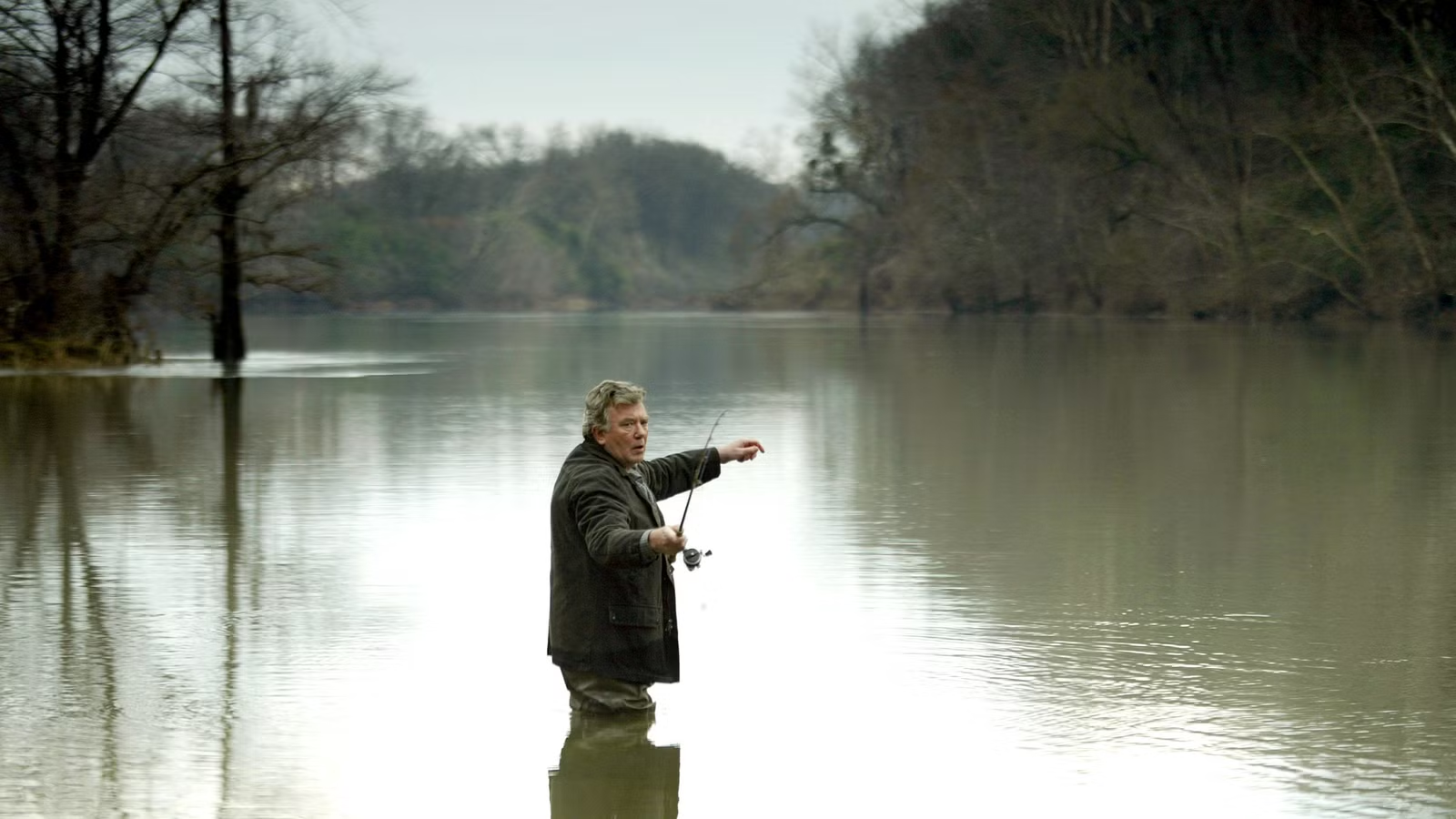
In conversations about Tim Burton’s greatest movies, Beetlejuice always comes up towards the top. So do his Batman movies, Edward Scissorhands, Ed Wood, and Pee-Wee’s Big Adventure. Even The Nightmare Before Christmas is in the discussion, regardless of the fact that it was directed by Henry Selick, not Tim Burton. You almost never hear about the film he released in 2003 — which is free to stream on Pluto TV as of July 1 — despite the fact that it’s some of his very best work.
Big Fish is the story of Will Bloom (Billy Crudup), a man looking to reconnect with his semi-estranged father, Edward Bloom (Albert Finney), who is on his deathbed. The film mostly consists of a series of flashbacks depicting the extraordinary adventures of the younger Edward Bloom (Ewan McGregor). He claims to have met an 11-foot-tall giant and a pair of conjoined twin singers, and that he once caught a seven-foot-long catfish. The son, having heard all the stories before, remains deeply skeptical. He’s also weary of his dad’s tall tales and wants to truly get to know his father before it’s too late.
If I were to use one word to describe Big Fish, I would probably say it’s “charming.” So much of that feeling comes from the natural charisma of the two guys playing Edward Bloom. What’s especially remarkable is they are completely convincing as the same character, despite the fact that the actors don’t really look like each other, nor do they use their considerable charm in the same way.
As the younger Edward Bloom, Ewan McGregor is this kind, loquacious, confident dreamer who never comes off as cocky or self-important. He’s just a guy that women are attracted to and guys just kind of want to be buddies with. The year 2003 was also peak McGregor — in-between the latter two Star Wars prequels and just three years after Moulin Rouge! — so he was the perfect casting choice at the time.
For Finney, his charm is like that of your favorite uncle, the kind of old guy who likes to spin a good yarn and occasionally says inappropriate things. The two different approaches help illustrate a captivating character at very different phases of his life, from the peak with McGregor, to the very end with Finney.
The movie is also well-paced, as you enjoy spending time with both versions of Edward Bloom. Most of it is told via those flashback stories Edward tells, which are both fun and fanciful. Did he really assist in a bank robbery? Was he actually in the circus? There’s also an incredible soundtrack with the likes of Elvis Presley’s “All Shook Up,” Buddy Holly’s “Everyday,” Canned Heat’s “Let’s Work Together,” and many more. It feels a bit like Tim Burton by way of James Gunn.

It’s very easy to forget that Big Fish is a Tim Burton movie, which is perhaps why it’s an oft-forgotten entry in his filmography. While it definitely has Burton’s sense of whimsy, he accomplishes it almost entirely without his signature German Expressionist aesthetic. The color palette is bright, and his lead character is not some weirdo who most people would want to lock away in some decrepit mansion. He’s a guy who is handsome and popular — the kind of person Burton would normally depict as a villain. The movie also came at a rather unfortunate point in Burton’s career, sandwiched in between two much-hated remakes — Planet of the Apes and Charlie and the Chocolate Factory — and just before Burton began his decade-long swing as a hired gun for bad Disney movies.
Whatever the reason for Big Fish’s neglect, it most definitely is undeserved, as the movie is nothing short of a joy to watch. It also features an ending that is downright life-affirming. While I won’t spoil it here, it’s the kind of thing that recontextualizes the whole movie in the best sort of way and might even get you thinking about that yarn-spinning favorite uncle of yours. It certainly did for me.