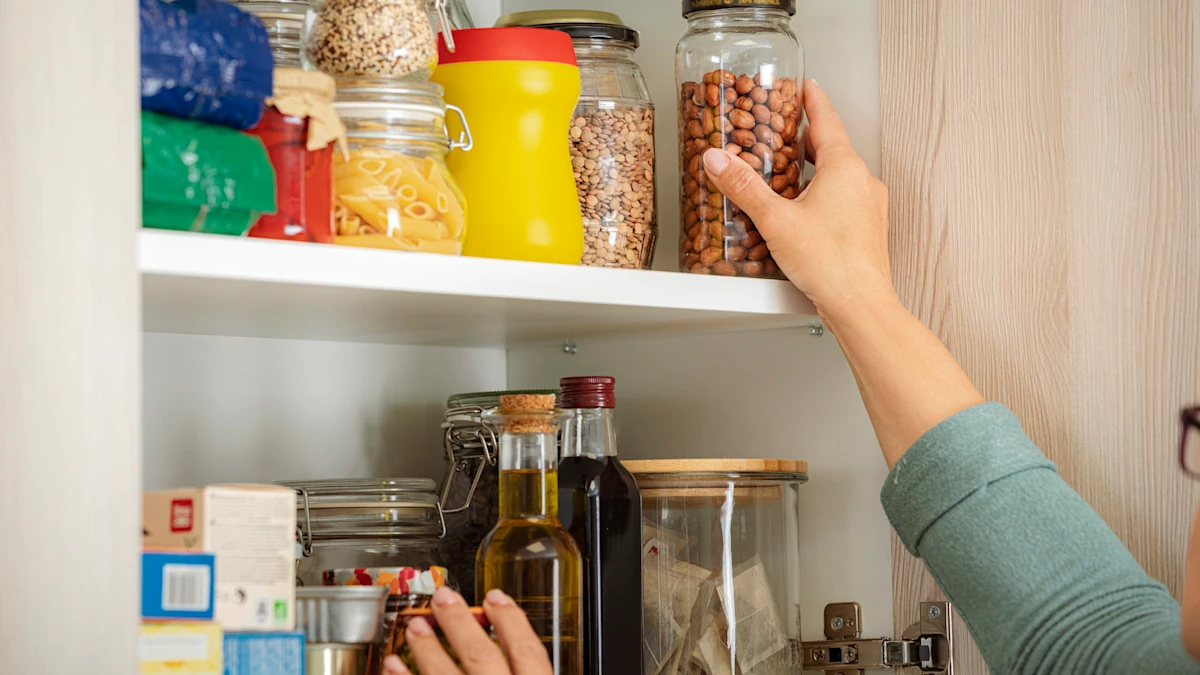
A well-organised pantry is a beautiful thing, but if you’ve been looking for inspiration on social media you’d be forgiven for thinking every item needs to be decanted into a container.
Decanting doesn’t work for everyone and every ingredient, which is why experts recommend thinking about how you use the food you’re storing and what works for your lifestyle before pouring out every packet.

Decanting ingredients doesn’t always work for your lifestyle, so consider that first. iStockphoto
“Some of the best pantries we organise are a combination of decanted staples and then products left in their original packaging and that’s what I do in my kitchen. So the goal isn’t to have the prettiest pantry, the goal is to have one that’s the easiest to keep organised because we’re all super busy,” Maria Patisso, professional organiser and founder of Organise My Life, told nine.com.au.
While there are plenty of benefits to decanting pantry items, including preventing food waste because you can easily see how much you have, streamlining cooking and making it easier to keep shelves tidy, it’s not always the best option.
Decanting can involve a lot of maintenance with refilling and washing containers and ensuring labels are up-to-date. It can also be expensive, depending on what containers you use, though experts do recommend investing in good quality airtight containers that will stand the test of time so you don’t need to replace them later.
“Not everybody has the time and budget to decant everything and that’s totally fine too, and I often recommend you don’t have to decant every item,” Belle Harte, professional organiser and founder of The Organised Abode Co, said.
“But I do think it’s very helpful to have your pantry staples, like the things you’re reaching for daily and weekly, to have those items decanted will save you time in the long run.”
Foods that should be decanted
Both experts agree pantry staples like flour, sugar, rice, cereal, oats and pasta are best decanted.
“All of those things that come in big bulky bags that are difficult to store neatly,” Harte said.
But even those things don’t need to be decanted if that doesn’t work for you. For example, if you don’t bake often, Harte suggested using bag seal clips to seal bags of baking supplies and putting each of those into a larger container so those occasions when you do bake you just have to grab that box out.
Patisso agrees: “If it’s only something you’re using once every six months, don’t bother decanting it because you’re just leaving food in there for a long period of time. It just has to be your everyday staples.”
Even then, you might also use an entire box of pasta in one go so it can be a waste of time to empty it into a container, unless you prefer to do that, of course.
Foods that don’t need decanting
Pantry items you don’t need to decant are things like snacks you will either eat the entire packet of, or that tend to stay fresher in their original bag with a seal clip.
“Not everything needs to be decanted, and I think that’s where Instagram has probably influenced people a little bit,” Patisso said.

A pantry with a combination of decanted items and food in its packaging often works best. Organise My Life
“I wouldn’t bother decanting things like chips because they lose their freshness really quickly.
“Some biscuits and crackers are actually better left in the original packet than placed inside an airtight container. Even the best airtight containers will still allow the small rice crackers to go stale.
“I have tried lots of different types of canisters and I can categorically say, open them, eat them, and that’s the end of that.”
Labelling containers
If you’re decanting food into containers you will likely need labels, but the professional organisers said you don’t have to label obvious items like pasta and rice unless you want to have a coordinated look across all containers.
The most important containers to label are those with flour and spices so you don’t end up using the wrong ingredients when you go to cook something.
For labels that will withstand being washed, try stick-on labels made with vinyl as they are so durable that Harte has found they can survive the dishwasher, even though it’s not recommended for them.

The most important decanted ingredients to label are things that you might easily confuse like flour and sugar. iStockphoto
Use-by and best-before dates are important to put on containers as well, unless you’re likely to empty a container well before the time is up.
Patisso likes using a chalk pen for writing those dates on the underside of containers as it can be wiped off easily when you refill it.
Another option, which Harte prefers, is to use small white labels from the office supply section of stores as there is room for multiple dates, so you can add the current one and cross it off and write another when you refill it.
Preventing pests in containers
Whether you decant or not, pantry moths and weevils can still take over your kitchen cupboards. Most of the time it’s not actually the storage method that’s at fault, because these insects’ eggs are already in food packets when you bring them home.
To kill the eggs and larvae and prevent an infestation it’s recommended to put your packets of pantry staples in the freezer before decanting or storing them in the pantry. Harte advised leaving them there for 24 to 48 hours, while Patisso prefers a minimum of three days.
The next step in the prevention of a pest infestation is using airtight containers.
“If you bring something home from the supermarket, and you’ve not frozen it, and it does have those eggs in it [and it’s in an airtight container], you are literally just containing that to the one container, it’s going to help with not spreading them to the rest of the pantry as well,” Harte said.