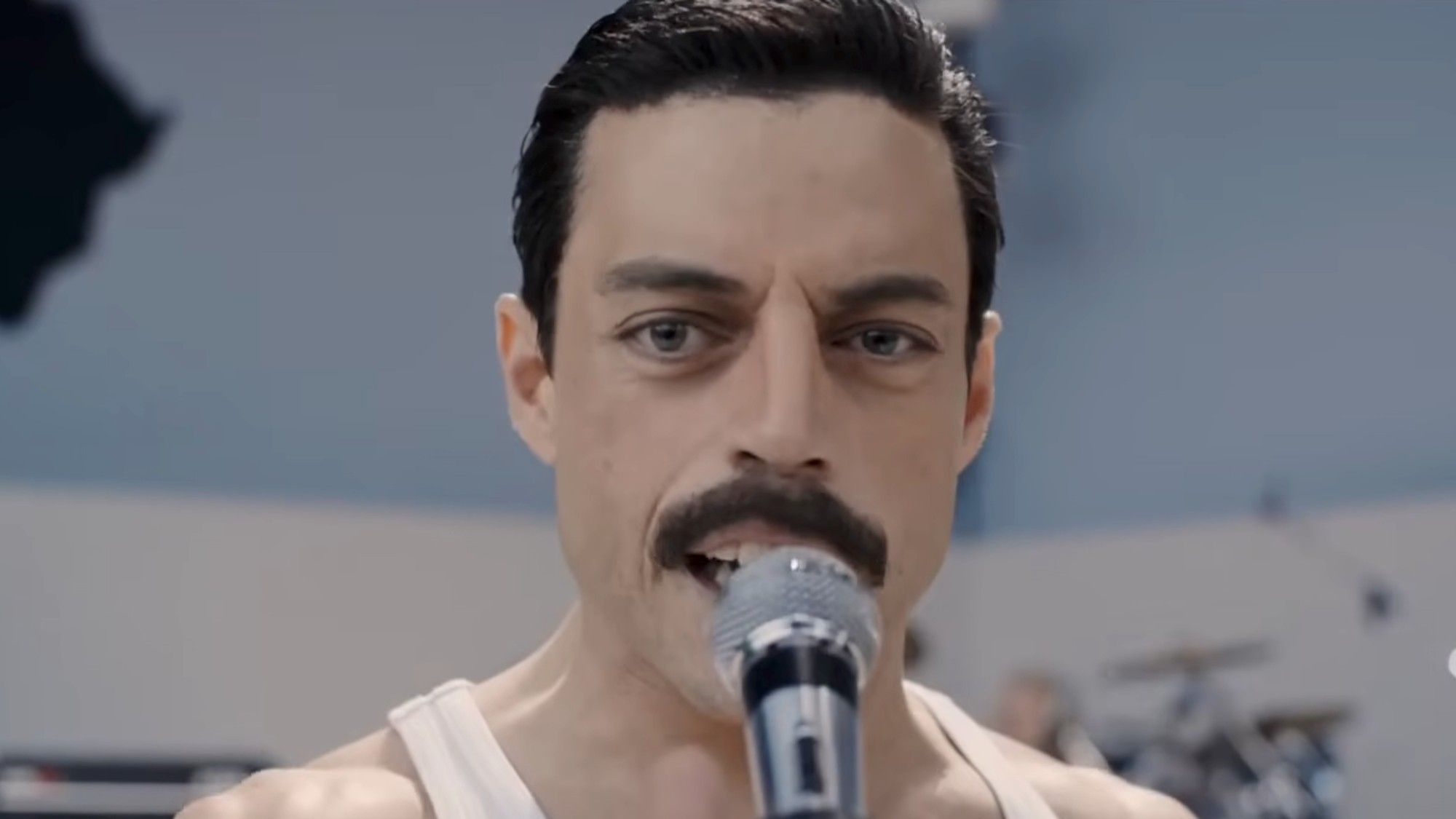
As an amateur rock historian who’s read countless rock biographies and seen most of the major music biopics about bands and stars, especially from the ‘60s and ‘70s, I’ll admit that most of them suck. One that particularly drives me insane is 2018’s Bohemian Rhapsody about Queen. I’m not even a very big fan of the band, but it still manages to enrage me to an admittedly unhealthy degree. It’s not the performances or the music; it’s the god-awful storytelling that manipulates the history of the band and especially Freddie Mercury’s life story.

The History Of The Band Is Just Wrong
I write this knowing that the surviving members of Queen, Brian May, John Deacon, and Roger Taylor, were actively involved in the movie, and honestly, that makes it all even more maddening that the real history of the band is so wrong. I know and appreciate that sometimes changes need to be made to stories to make a great movie and tell a good story, but there are things in Bohemian Rhapsody that are so egregiously incorrect that it ruins the whole movie. Much of this comes at the end of the movie and in the timeline of events.
The movie ends with Queen playing at Wembley Stadium at the Live Aid concert in 1985. The performance is widely considered one of the greatest concerts in rock history, and for good reason. Even me, who isn’t a huge fan of the band, can appreciate just how incredible the show is, especially Mercury’s performance. Rami Malek, who won an Oscar for his portrayal of the lead singer, is electric in the performance.
Latest Videos FromCinemablend
According to the movie, Mercury and the rest of the band had been estranged for a while, reunited right before Live Aid, joining the massive bill at the last minute and putting on the performance of a lifetime. Except none of that is true. Queen was not a last-minute addition to the bill; they’d been part of the lineup almost from the time the concert was conceived by Bob Geldof.
They also had not been “broken up” for any length of time. In fact, they had just wrapped a huge world tour in support of their 1984 album The Works in May of ‘85. Live Aid took place less than 2 months after the last show of the tour. It’s also worth noting that the Rock in Rio concert portrayed as having taken place in 1979 in the movie happened, in reality, in January of ‘85. That wouldn’t have fit the false narrative in the movie of the band being on some kind of hiatus at that time

The History Of Mercury Is Even More Egregious
Even more frustrating than the dubious history of the band told in the movie (and there are other examples other than Live Aid) is the bogus history it tells of Mercury, and specifically his HIV diagnosis. In the movie, it’s portrayed that as the band rehearsed for Live Aid, just after “reuniting” in ‘85, Mercury told his bandmates about his diagnosis, adding to the emotional nature of the legendary performance.
In reality, Mercury probably didn’t know he was HIV positive at the time. He wouldn’t receive that tragic diagnosis for another two years! He didn’t tell the rest of the band until 1989, a full four years after Live Aid. For me, this is an inexcusable manipulation of the facts to garner false emotion for film viewers. It’s really kind of gross. The story is tragic enough without needing to gin it up with a completely false narrative.
There are other things the movie, which set a record for the highest-grossing music biopic ever at the time (since eclipsed by Michael on the 2026 movie schedule), gets wrong about Mercury’s solo career and how it affected the rest of the band (spoiler alert, they all had side solo careers), and a few other things I could nitpick, but it’s the BS ending that really grinds my gears.