For their small number and swampy isolation, the Cajun people of Southwest Louisiana have exerted an extraordinary impact on American culture. Their cuisine, for example, has infiltrated home and restaurant kitchens from Spokane to Sheboygan, with supermarkets nationwide stocking Cajun seasoning alongside salt and pepper. Zydeco and Cajun music flowed into and shaped broader American forms such as blues-rock and country. Even the word Cajun has become a kind of cultural shorthand, signaling spice, rhythm, and a defiant rootedness. But if Cajun culture is so embedded in American life, why does it feel so faint in American fiction?”
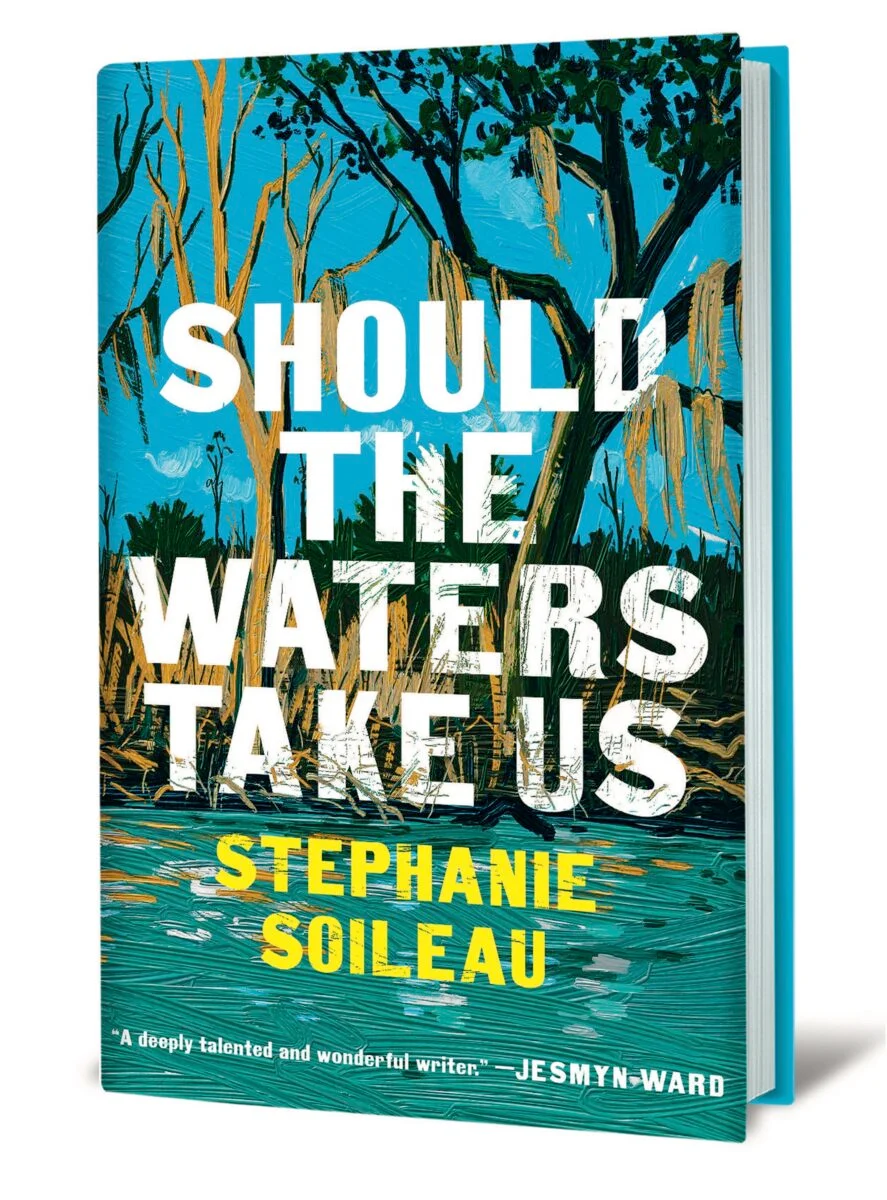
More interesting to me than the answer to that question—which is probably best left to grad seminars anyway—is what feels like its antidote: Should the Waters Take Us, the debut novel by the Lake Charles, Louisiana, native Stephanie Soileau. Soileau—pronounced “swallow”—stuffs her novel, like a boudin close to bursting, with the full gamut of Cajun life, past and present. That doesn’t mean pirogues and sauce piquante, though those make cameos. What it means, rather, is the deeper textures of Cajun life: land, water, memory, kin. Should the Waters Take Us is awash in vivid color, but not local color. Its accent is thick, but its drama is expansive.
The novel begins, like so much of Cajun history, with calamity: in this case, the 1893 hurricane that killed as many as two thousand Louisianans, among them, in Soileau’s fictional Chenière Disparue community, ten members of the Broussard family. From there we leap more than a century forward to 2010, when one of the Broussard descendants, Wilford “Boy” Broussard, finds himself in the crosshairs of another calamity.
Though he lives in what he calls his “trailer-in-the-sky” (a mobile home on stilts, to protect it from floods), Boy Broussard is about as close to the land as one gets. He earns spare cash poaching alligator eggs while waiting for the oyster spat he planted on a reef to mature. Supper might consist of out-of-season doves or squirrels shot on a tongue of marshland “where the uniform stalks of sawgrass melt into damp little green things with delicate leaves,” as Soileau writes, “and where, down a watery boulevard, oaks and cypresses promenade, hiking up their skirts above water that’s fresh enough to keep them in the flush of life.” The prelude to the calamity is the sudden appearance in his life of a twelve-year-old daughter whose mother, long estranged from Boy, parks her with him to take a job on a deepwater offshore oil rig. The calamity isn’t just what happens on that rig. It’s what happens after, and then—in that recurring pattern Cajun history knows too well—after.
Soileau’s fictional Pelerin Parish sits on the coastline and at the heart of a parallel-universe Louisiana where the worst-case scenario feared during the 2010 Deepwater Horizon oil spill—a Katrina-level hurricane swirling into the Gulf before the blown well could be capped—happens. In that regard Soileau’s vision is dystopian, but as she shows throughout the novel, via ancestral episodes braided into the story, Cajun history itself is soaked in dystopia. As Boy Broussard grumbles: “brand-new day, même vieille merde.” So often have exile, flood, and extraction converged here that catastrophe begins to feel less like interruption than like the logic of the Cajun ’tit monde—the small, embattled world one inherits and endures. “No matter what we do, we’re going to lose,” one character says. “The water wants it? Let the water take it.”
But then consider the great literary dystopias: Cormac McCarthy’s The Road, for instance, or Emily St. John Mandel’s Station Eleven. Their counterforce to calamity is always human resilience. That resilience, in Soileau’s hands, is rendered with exquisite tenderness, but because we’re in Cajun country, it’s compounded with pride and stubborn joy. “If you listened to everything they told you to do or not do,” Boy Broussard thinks at one point, “you’d never have time for a beer in the afternoon.” With Should the Waters Take Us, Cajun culture’s imprint on American fiction is not just less faint; it’s indelible, set deep. Laissez les bonnes pages rouler: Let the good pages roll.
Plus: Scene Makers
Southern settings, front and center
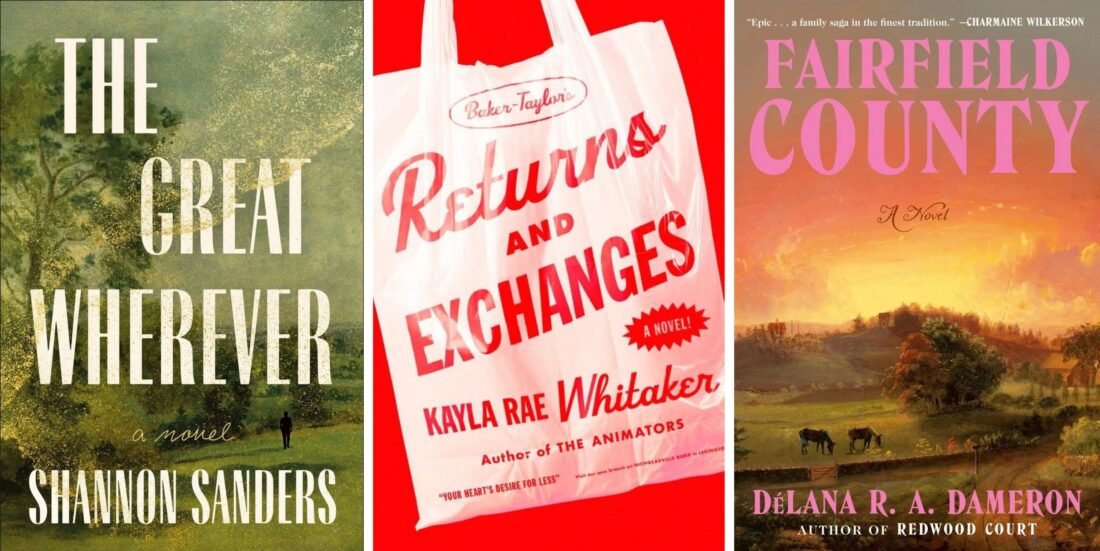
In Shannon Sanders’s stunning debut novel, The Great Wherever (Henry Holt and Co.), a young woman unexpectedly inherits a swath of Tennessee farmland. Beneath oaks and magnolias, the ghosts of her ancestors whisper long-forgotten lore. In Returns and Exchanges (Random House), Kayla Rae Whitaker follows a Lexington, Kentucky, family as they shepherd their department store to success in the 1980s. Laced with wry humor, this epic shows how sometimes life’s choices offer no refunds. And before the writer DéLana R.A. Dameron died prematurely last year, she turned in the manuscript for Fairfield County (Dial Press), the next in her line of novels about Southern Black cowboy culture. Its rugged horse-rearing characters, as well as her gorgeous descriptions of South Carolina’s red clay and pines, make this a powerful epitaph to her literary legacy. —CJ Lotz Diego
Jonathan Miles, a Garden & Gun contributing editor, has been the magazine’s books columnist since 2012. He is the author of three novels, including Anatomy of a Miracle, which was a finalist for the Mississippi Institute of Arts and Letters Award in Fiction. A former resident of Oxford, Mississippi, he is currently Writer-in-Residence at the Solebury School in New Hope, Pennsylvania.
Garden & Gun has an affiliate partnership with Bookshop.org and may receive a portion of sales when a reader clicks to buy a book. All books are independently selected by the G&G editorial team.