This week has not been typical for U.S.-Canada economic relations.
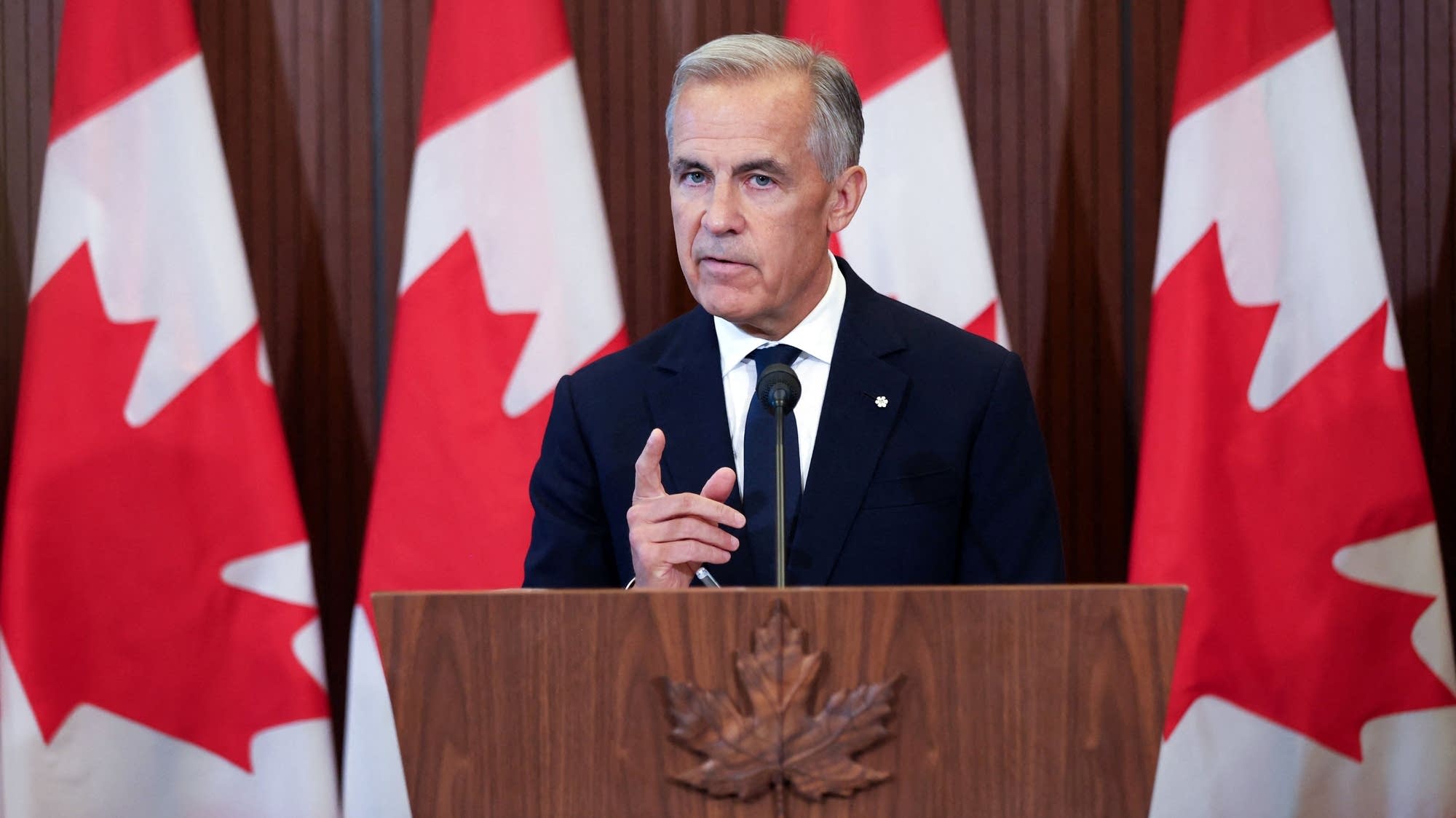
Trade talks between the two countries fell apart last weekend. President Donald Trump put 50% tariffs on about $20 billion of Canadian imports on Monday. Canadian Prime Minister Mark Carney responded with an equal amount of tariffs on U.S. products on Tuesday.
Now, on Friday morning, new economic data showed that Canada’s GDP grew 3.3% in the second quarter, the strongest growth the country has seen since 2023. Stronger economic growth up north might help Canada withstand the reignited trade war.
Canada’s economy basically stalled out when President Trump first started threatening huge tariffs on the country’s exports last year. And it has stayed that way since, according to Doug Porter, chief economist at BMO Capital Markets.
“I mean basically zero GDP growth starting at the end of the first quarter of 2025 to the end of the first quarter 2026,” Porter said.
Uncertainty around the trade relationship with the U.S. caused Canadian businesses to pause capital investments, said Nathan Janzen, assistant economist at RBC Economics. But they couldn’t hold off forever — eventually, businesses have to replace equipment.
“So I think we’re seeing some of that investment come off the sidelines,” Janzen said.
Plus, Canadian consumers spent more, and Janzen said the buildout of AI data centers is expanding north of the border.
Overall, Canada saw a pretty broad economic rebound in the second quarter. That could give Canadian leaders a psychological boost, said Julian Karaguesian, an economic lecturer at McGill University.
“The stronger growth in the midst of 18 months of trade tensions, I would say, gives them some courage to stick to their guns in negotiations,” Karaguesian said.
One other positive in Canada’s second quarter: Exports. Most of those go to the U.S., Karaguesian said — especially oil and natural gas. But a growing share heads to other countries, and that’s by design.
“The government of Canada is laying the diplomatic foundations for expanded relationships with Europe and with the entire global South,” he said.
And in turn, Canada is lessening its reliance on exporting to the U.S.