The USC U.S.-China Institute extends its sincere gratitude to the National Consortium for Teaching about Asia (NCTA) for sponsoring this professional development workshop. We also thank Lara Schilling, LACMA’s Manager of School and Teacher Programs, for her support in making this event possible. Finally, we are grateful to all of the teachers, educators, and community members who participated and contributed to the thoughtful discussions throughout the workshop.
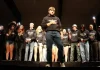
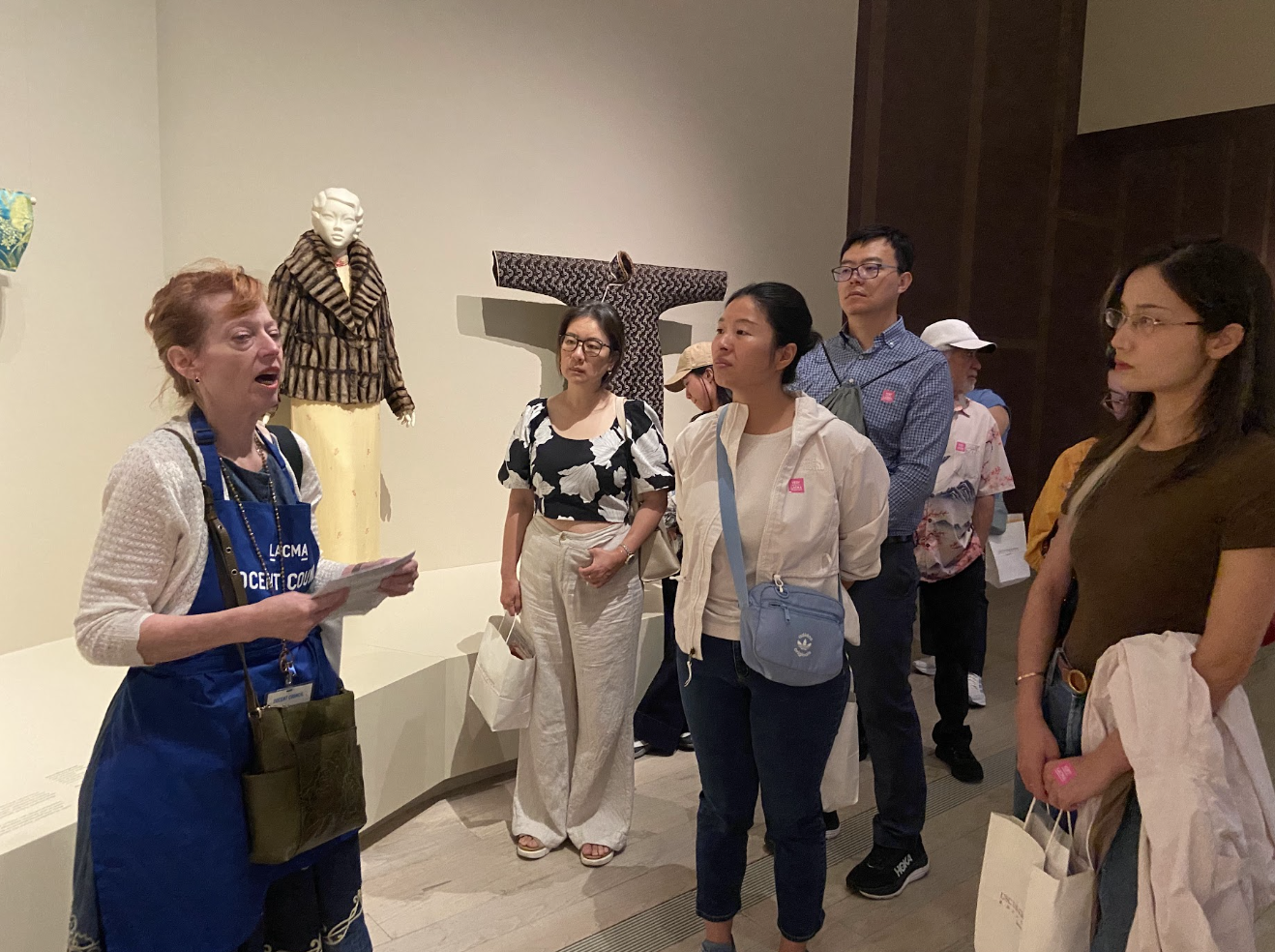
Teachers, educators, and community members from across the Los Angeles area gathered at the Los Angeles County Museum of Art (LACMA) on July 30 for the USC U.S.-China Institute’s special professional development program, Fashioning Chinese Women: Empire to Modernity. Centered on the exhibition Fashioning Chinese Women: Empire to Modernity, the workshop invited participants to explore how Chinese women used clothing and material culture to express identity, respond to changing social expectations, and navigate the profound political, social, and cultural transformations of modern Chinese history.

The program began with a guided docent tour of the exhibition, where participants examined garments, video installations, photographs, and other objects spanning the Qing dynasty through the 1960s. Through these materials, educators gained insight into the ways fashion reflected changing ideas about gender, identity, and modernization, and everyday life in China. The exhibition also demonstrated how material culture can serve as a powerful source for understanding history beyond what is typically presented in textbooks.

Following the tour, participants gathered in small groups for a facilitated discussion focused on classroom applications. They reflected on questions such as how museums can deepen students’ understanding of history, what stories clothing and material objects can reveal about a society, and how the exhibition’s themes could be incorporated into lessons across subjects and grade levels. The conversations encouraged educators to exchange teaching ideas, share perspectives, and consider new approaches to engaging students with Chinese history and culture.

By connecting museum resources with collaborative professional learning, the workshop equipped educators with practical strategies for bringing East Asia into their classrooms. Participants left with fresh perspectives, classroom-ready teaching materials, and inspiration for supporting students explore Chinese history through the lens of art and fashion.
Interested in learning more about the making of Fashioning Chinese Women: Empire to Modernity? Explore the exhibition’s behind-the-scenes story here.
Our next in-person NCTA professional development workshop, Teaching Japan Through Art: Contemporary Ceramics, Tea Culture, and Classroom Connections, will take place on September 9. To learn more about this program and explore upcoming professional development opportunities, please visit our website.