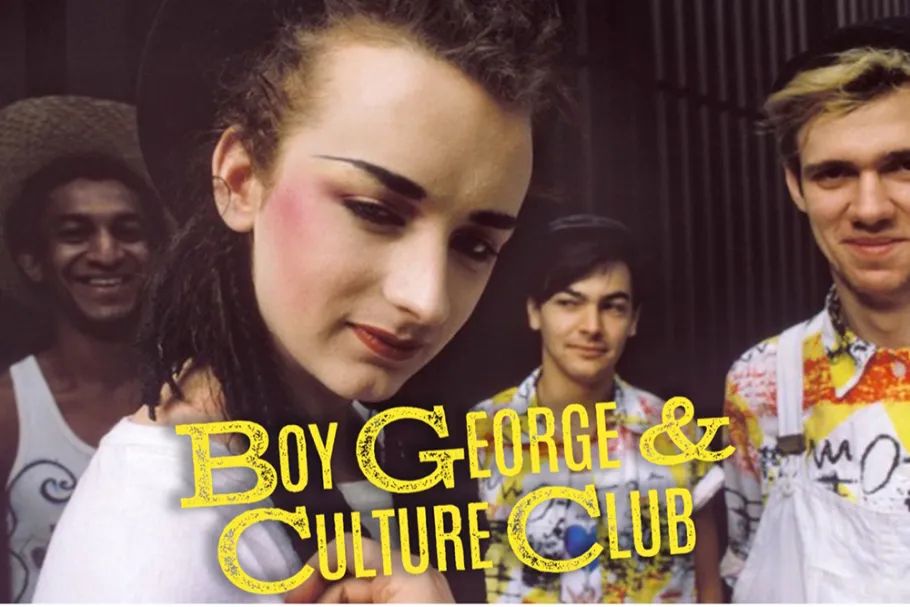
The modern music documentary tarries like the definitive, end-game statement on a musician’s public story. It looms, monolith like: the pipeline to The Rock And Roll Hall Of Fame or some similar institution. We expect our rock stars to reflect back with a mix of contriteness, humour and a Buddah-level of hindsight. It’s a big ask.
In Alison Ellwood’s new, fizzy film, Boy George & Culture Club (the clue’s in the title…), the audience is left to feast on emotional scraps. The band members banter, bitch and victim-blame with the same carefree energy they had in the 80s. InThe Go Go’s (2020), the viewers connected with the regrets of Jane Wiedlin and Belinda Carlisle: creating a sort of warm and fuzzy catharsis, leading the audience back to a troubled back catalogue with new insights and a deeper understanding. Elwood has her work cut out for her: Culture Club appear ossified, unwilling to access the clarity about the past that makes these films work. Mikey Craig (bass) is reticent in the interviews, like he is purposefully holding back. So is George, who comes across as brusque and impatient to brush over the band’s story. He never owns the idea that his fame ate the band, and in a way good for him; and yet these sorts of documentaries necessitate a kind of religious confessional and renouncing of what came before. Roy Hay (guitar) is chattier but doesn’t get enough screen time. Indeed, reading between the frames, one questions if the band wanted to make this documentary at all? Jon Moss (drums) is the only one who seems both appreciative of the band’s legacy and story, and understands the correct emotional note one has to hit in documentary interviews. He is also the member who is not touring with the current line-up of the band.
The film is also missing some key players: Marilyn who is painted as George’s villainous drug buddy and Helen Terry the soulful co-lead vocalist in the band. They are both cornerstones to the story and their absences read like gaping narrative voids.
Part of the problem is that the Culture Club story itself is spiky, non-linear and almost bigger than the medium itself. It’s hard to reverse engineer. Historically, caught between the anarchistic, freewheeling shadows of punk and the ambitious solipsism of the Thatcher years. And personally, back lit by a hidden queer love story and the acidic connection between the band members, it doesn’t fit in a simple box, there are layers of nuance in the tale. It seems like a one in a million chance that a queer-coded band born out of the London club scene would become one of the biggest groups in the country, not to mention win the Grammy for Best New Artist. Interestingly Ellwood’s good at the end of the band: George’s quick descent into heroin addiction and the disappointing third and fourth albums feel filled with new insights.
Still, the made for TV film Worried About The Boy, the doc Young Guns Go For It, the musical Taboo and even Mark Ronson’s Somebody To Love Me promo (featuring Diane Kruger trussed up like 80s era George) all worked better and left you basking in the power of those still bulletproof pop songs. Perhaps it is because they focused on shorter time frames than this film does.
For a band so driven by emotional power dynamics, Ellwood astutely centralises the George-Moss love affair: as the creative engine powering their songs and even now unrequited. It would have been both a Hollywood ending to have them meet up at the end. But this is not that film.