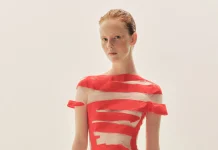
Clothes tell stories; history is embedded in cloth. If fashion is history made visible then the treasures being unearthed in Birr Castle, some 400 pieces so far, have fascinating appeal for fashion lovers and fashion historians.
“In this big, old house, the furniture and paintings were endlessly catalogued from the 1800s, but clothing as heirlooms were seen as personal to the individual and not listed in the inventory of contents and not valued,” says Lady Alicia Parsons, daughter of Brendan and Alison Parsons, 7th Earl and Countess of Rosse, who now runs the estate.
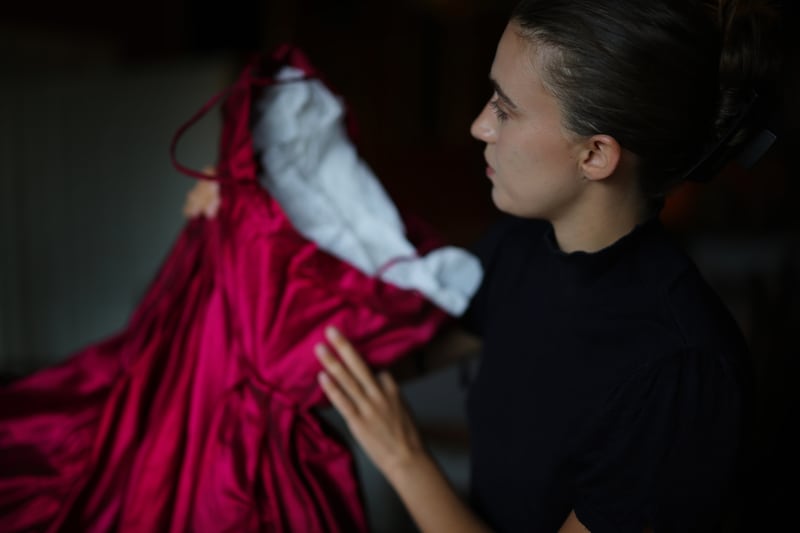
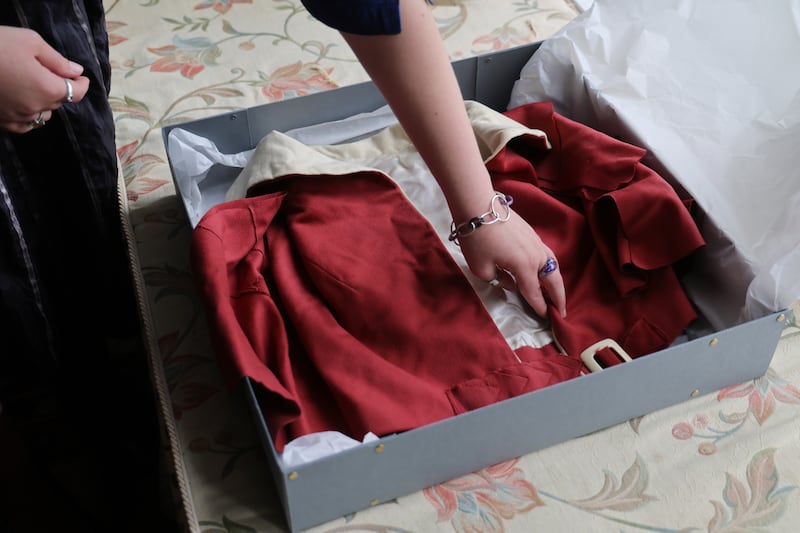
“The can of worms I have opened,” she says, as yet another storage box is opened and slipped out of tissue to reveal a wondrous dress. Some of these finds will be on display for the first time during National Heritage Week in August.
The archiving is taking place in what was Parsons’ childhood bedroom on the top floor of the castle, accessed via a lofty native yew staircase from the 17th century, passing the grandeur of tapestries, historic china cabinets and huge ancestral portraits. A big table covered in white cloth in the room serves to open and display what has already been examined and researched, with much more still in storage in just one of the wardrobes. Hats, shoes and bags decorate another table, and a strange dyed blue wig lies on a bed.
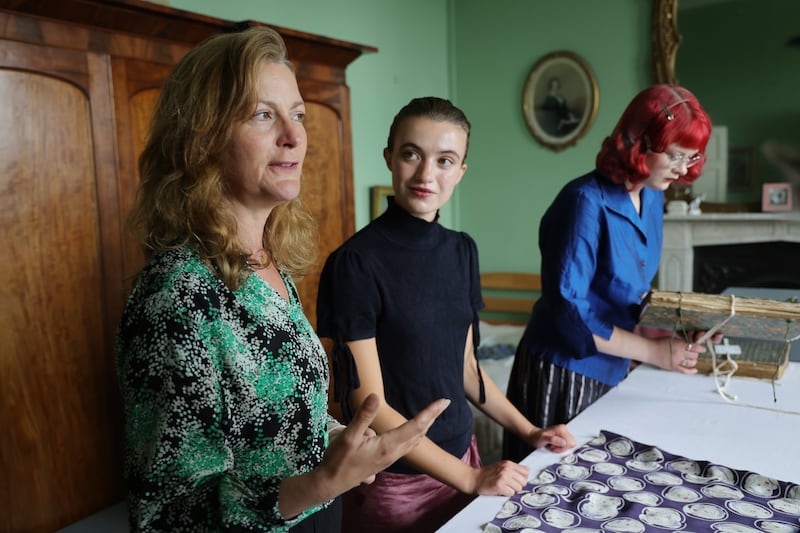
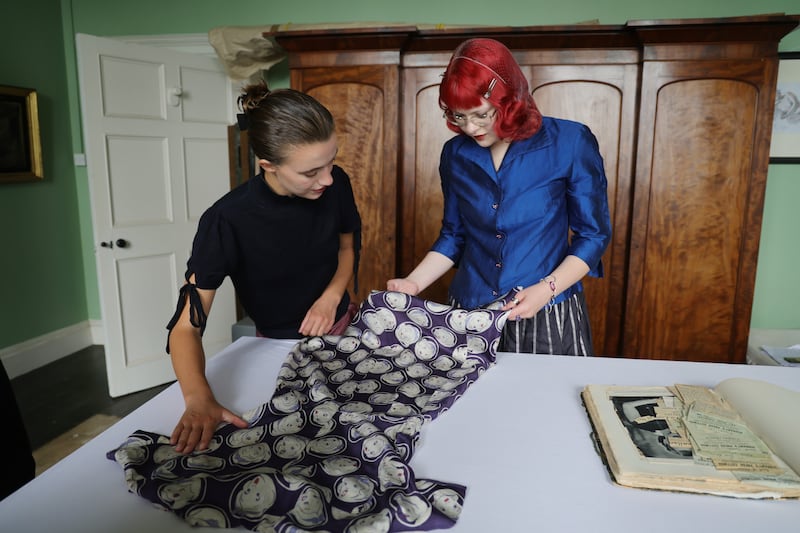
This is where, for the past year, archivists Eleanor Aitken and Lily Morgan, graduates of Central St Martins, have been working on examining an immensely rich mother lode of clothing, some of which dates back to the 17th century in a house lived in by the same family for 400 years.
“What is interesting,” says Morgan, “is how an object can tell us the story of relationships and something about the life lived that paper can’t.” Her thesis was on Anne Countess of Rosse, Alicia’s grandmother, known as Gúna, who was a leading socialite celebrated for her style and beauty. She was the mother of Anthony Armstrong-Jones, who married Princess Margaret in 1960. She controlled her image carefully and documented her whole life; many might call her an early influencer.
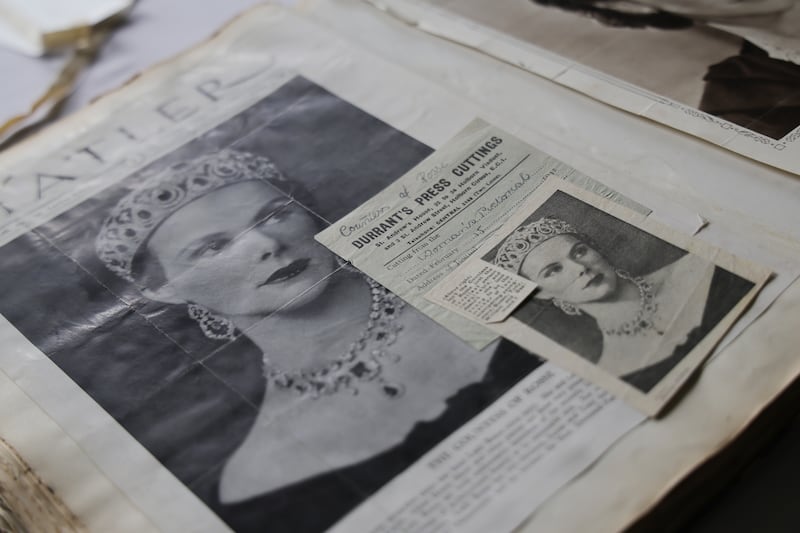
What has been uncovered so far is of international importance. Highlights include gowns by Charles James from the 1930s which are particularly significant as he was one of the most influential fashion designers of the 20th century. His taxi dress, a spiral design made without seams, was one of his most celebrated creations, and a similar dress in Birr made the same innovative use of zip fastenings. There is also previously undocumented correspondence between James and Anne, highlighting their close collaboration.
Morgan points out, as she displays one of his silk day dresses, how James was quite theatrical, even architectural, in his designs, which were based on structure rather than pattern. He called what he made shapes. “It’s a whole chapter of Anne’s life and how that relationship flourished – you can still see her make up [on the neckline]. She obviously loved this dress, and you feel as if you are touching the owner, which is something very special.
“You are also touching on the very creative world of the 1930s – creative designers, artists and her individual taste,” she says, unveiling the Cocteau print dress made in collaboration with Jean Cocteau, one of the foremost avant-garde artists of the 20th century. “She liked fluid necklines – this dress, custom made for her by James, has Cocteau’s signature on the print with a matching belt finished with a little handmade and hand painted clasp.”
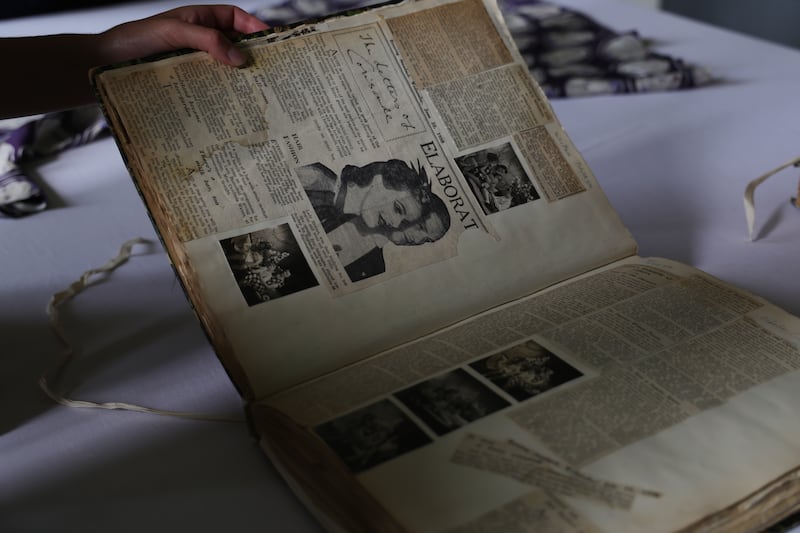
Another James collaboration is a candy-coloured ball gown called the bow dress, a frothy style favoured by Anne and later worn by Armstrong-Jones’s sister Susan in 1947 for her coming out.
This is just a fraction of what has been uncovered. “We know about my grandmother’s clothes, but oh my God, we haven’t even got into the linen cupboards, children’s clothes and early volunteer banners,” says Parsons. “You get the whole story here – the letters, the invoices, you can tell the whole story of what that piece was and the people who wore it.”
She also shows us the “dressing up boxes” in the ancestral hallway in which clothes and accessories were stored for fun and games. In one, there is a magnificent antique embroidered silk Ottoman gown from the 19th century casually stored down under hats, bags and shoes. (One on Etsy was recently priced at over €800).
Birr Castle has a groundbreaking history of science and engineering and is world renowned for its invention of a steam turbine that revolutionised the mass production of electricity, but mostly for its telescope completed in 1845, the largest in the world. This new project adds yet another attraction to the estate.
Other previously uncovered items from the recent archival research include a large selection of mid-century pieces by Irish designers – Sybil Connolly’s pleated linen dresses (as well as one gown in a brown print), a glorious sweeping shot silk dress by Irene Gilbert, its shade made to match the family rubies, crochet designs by Mary O’Donnell and others. One extraordinary piece is an elaborately decorated dress worn to the Duchess of Richmond’s ball in Brussels in 1815 just before the Battle of Waterloo, which Anne bought in 1937 and cut apart to have the pieces stitched and hung in a frame.

An aeronautical engineer, Alicia Parsons is not the first woman to run Birr Castle – “many wives have run the estate – and daughters,” she says. “Mary Rosse, a photographer, funded the work for the telescope and designed the metal gates of the castle which she had cast.”
One of the oldest pieces is part of a petticoat with elaborate silk embroideries, including an image of a crocodile, dating to the late 17th century and belonging to Queen Anne. It came from an ancestor of Alison Rosse, possibly either a wedding gift or a present for the birth of the first child.
The archive includes seven wedding dresses, bridesmaids’ dresses and Anne’s oyster silk jacquard dress and coat made for the wedding of Princess Margaret. There are also coronation robes, a capelet made by Anne that features in a drawing by Cecil Beaton and an extraordinary deep indigo silk velvet jacket and breeches from 1770 lined with silk. One of the Charles James gowns going on display as part of Heritage Week – the Snow White dress – is decorated with early Disney motifs.
“We get an awful lot of inquiries from institutions and researchers, but we don’t have a definite list of what we have. Once we have a database, we can share it,” says Parsons. ”The aim is a permanent collection. For me, this has been a fashion journey.”
A series of special events celebrating this remarkable collection will take place during Heritage Week with the support of the Heritage Council.
On the weekend of August 15th and 16th, an illustrated talk in the Copper Tree Gallery in Birr Castle presented by the collection’s archivists Lily Morgan and Eleanor Aitken will explore the stories behind the garments. The programme continues with four fashion tours on August 20th, 21st, 22nd and 23rd led by them, and providing the first public opportunity to view the recently conserved Charles James dresses in the Music Saloon and Yellow Drawing Room of the castle. There will be further events later in the year. Visit www.birrcastle.com and @birrcastledemesne on Instagram for information.