LANSING, MI – Former Democratic Gov. Jim Blanchard said he doesn’t believe the toothpaste is out of the tube when it comes to civility, and he thinks the country can recover from current political divisions.
“It doesn’t have to be this way,” he said.
But Michigan’s 45th governor, who served from 1983 to 1991, said “there may have to be more incidents before people, the leadership, brings us back.”
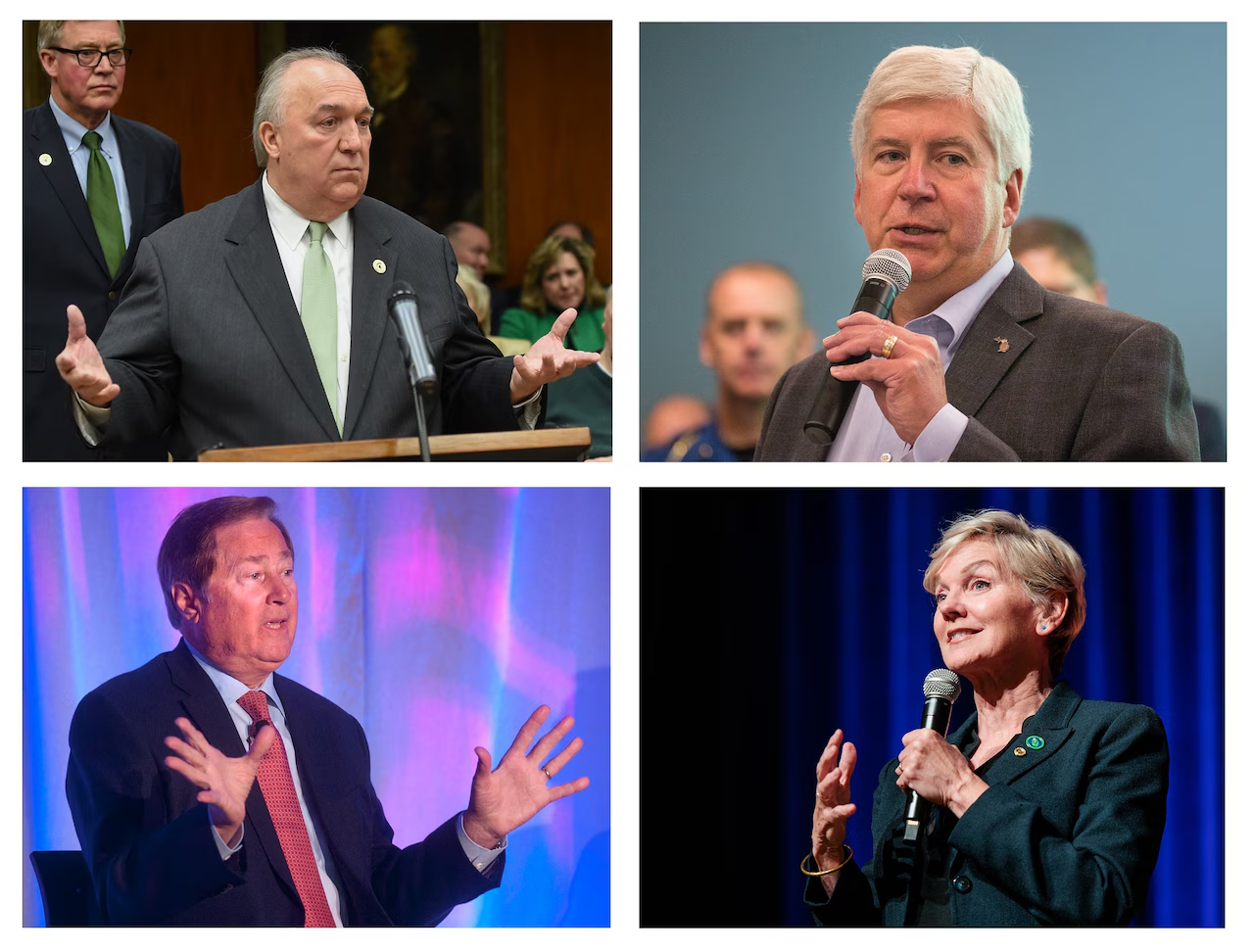
Blanchard was one of four former governors who spoke about election integrity, immigration operations in Minnesota, distrust of the media and social media divisions during a Lansing forum on Wednesday.
For those in attendance, the goal is to limit those incidents and bring more civility to Michigan politics.
Blanchard was joined by Democratic former Governor Jennifer Granholm, the lone participant who appeared via video call, along with Republican former Governors Rick Snyder and John Engler.
During the forum, all four spoke candidly about the state of politics today. Granholm, who served from 2003 to 2011, called it “a crisis on our hands.”
“The crisis is not a Republican one. It’s not a Democratic one. It’s not an independent one,” she said. “It’s a uniquely American crisis.”
Snyder, the state’s 48th governor from 2011 to 2019, said “we’ve been on a downward slope for over a decade.”
“The greatest threat to America, in my view, is us,” he said.
Engler said that regardless of background, “Michiganders don’t want to see politicians call each other names, spread disinformation and divide Americans.”
“As we approach the midterms this November, we expect to hear and see efforts from political operatives of every stripe trying to divide people, engage in personal attacks and even unfairly impact our elections.”
The forum was part of the launch of a new “Michigan Civility Coalition,” created by groups that say they’re concerned about the state of politics due to rising animosity.
During a first event, the coalition shared five pillars they think will begin to improve civility: presuming goodwill, showing respect, leading with humility, listening with openness and communicating clearly.
The group also promised to host events, hold training sessions and provide resources to individuals, organizations and businesses engaged in promoting civility.
During the forum, which was described as “historic,” the four former governors from two political parties headlined the same event for the first time.
They answered questions from Fox 2 Detroit anchor Roop Raj, shared concern for youth growing up in today’s political environment and talked about the effect of social media on politics.
“I think this algorithmic slicing, the silo-ing of people on social media is a big culprit,” Granholm said. “People aren’t swimming in the same pond at all. Their realities, their facts, are completely different, because their sources are completely different.
She said candidates are moving away from reliance on traditional news sources, and content creators are rewarded for extremism.
“Outrage gets clicked,” Granholm said.
Engler, governor from 1991 to 2003, said social media is a real problem that no one is innocent of, describing it as being “accelerant on the flames of division in the country.”
And Blanchard said he’s worried that the younger generations will grow up thinking what is going on in politics is normal and appropriate, and it is “not normal and appropriate.”
The speakers also expressed concern about the approach many take to campaigning now, limiting outreach to areas candidates need to win and running negative ads.
Granholm gave the example of battleground states that saw an outsized number of campaign visits during the 2024 presidential election.
“When candidates campaign in maybe seven states and they don’t hear how other people in small towns … think, it creates these siloes,” Granholm said. “And it’s easy to vilify people when we don’t see them.”
At the same time, research and polling show that negative campaigning still works, she said, but relying on that makes voters more skeptical about politics and the information they receive.
With this in mind, the governors came with a message for Michiganders, including elected officials, youth and the media.
Engler spoke to both the media and a crowded field of candidates now running to be the state’s next governor. He believes consensus needs to be reached on holding and attending debates early, before voting begins.
With both an open governor’s race and U.S. Senate seat, which Engler predicted would bring in tens of billions on TV ads, he said networks have an obligation to get together now and pick debate dates before primary and general election voting.
Candidates have an obligation to show up.
The state Republican party has so far held three GOP pre-primary debates in 2025, while Democrats have yet to debate.
Granholm encouraged candidates and elected officials to focus on the younger, ”discouraged generation.”
Blanchard suggested politicians move away from the argument that bipartisanship means “selling out” one’s own party.
And Granholm also asked Republican leaders specifically to be united in “condemning behavior that poisons democracy.”
“Since we have a Republican president, it will take more courage for lifelong Republicans to speak up,” she said.
When asked what he thinks could help the state of civility, Snyder – known for his catchphrase of “relentless positive action” – said Michiganders should tune out negative messages, and candidates should put aside constant criticism of Washington in favor of a focus on how they want to make Michigan better.
When asked if that strategy is effective, Snyder said it “worked twice” for him.
He encouraged Michiganders to look at their approach to politics and see if it would be acceptable in “any other part of your life.”
“Would it be accepted in the workplace? Would it be acceptable at your family dinner date? I believe we can’t control what everyone else does, but we can control ourselves,” he said.