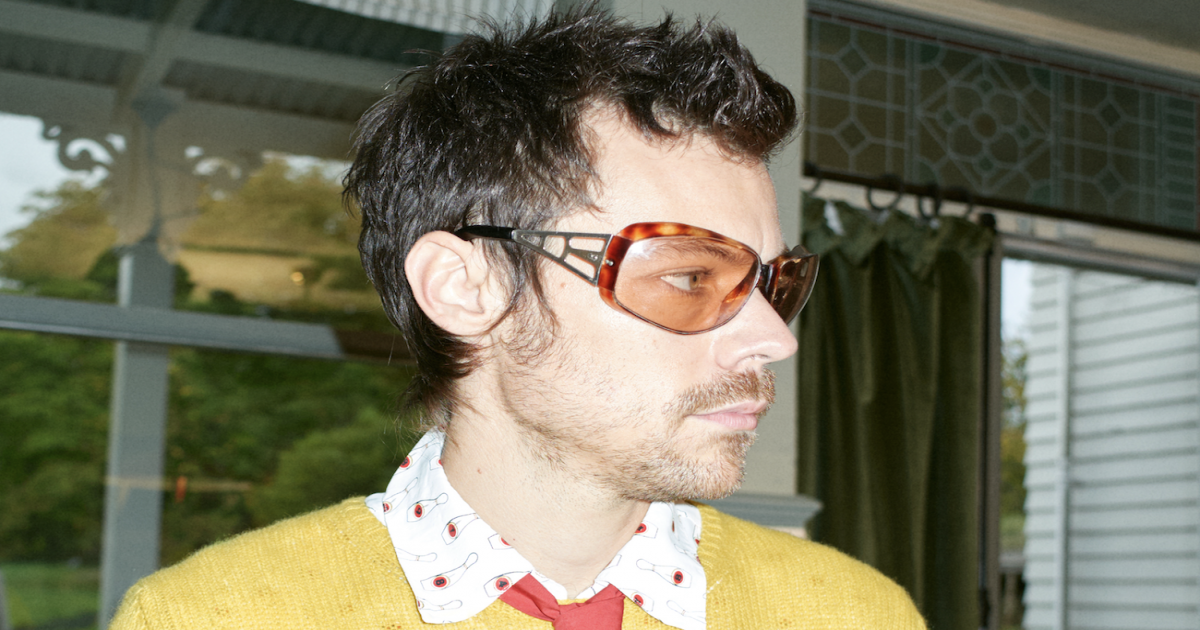
In the liner notes for his fourth album, Harry Styles writes, ‘Oh what a gift it is to be noticed. But it’s nothing to do with me.’ Now, far be it from Music Week to disagree, but respectfully, Harry, we do. And the reasons why can be summed up by the 12 tracks on Kiss All The Time. Disco, Occasionally.
You see, this record, arriving four years after its chart-topping predecessor Harry’s House, offers plenty of cause to notice what Styles is doing. And it is precisely because of the ways in which he is cultivating his own gifts as an artist that he continues to command the attention.
Manager Jeffrey Azoff touched on this when he called Styles “a unicorn” when speaking to Music Week for our cover feature ahead of Fine Line’s release in 2019, alongside Sony Music Entertainment CEO Rob Stringer and Styles himself.
“It couldn’t be more important to have someone with the platform Harry has who’s willing to take risks and put music out that would be considered untraditional,” Azoff told us.” I can’t applaud him enough for putting music out that people didn’t see coming.”
 The Kiss All The Time. Disco, Occasionally sleeve
The new album unfolds as a thorough exploration of Styles’ capacity as a musician. Throughout it, the sense persists that he is pushing himself to broaden the boundaries of his creativity. Everything is cranked to the extreme. The singer’s fans, with their overflowing passion and sloshing dedication, can look forward to the following prospect: imagine everything you already loved about Harry Styles, only magnified, multiplied by 100.
Choruses, euphoria, self-analysis, lyrical strangeness, moments of undeniable community, melodic passages engineered for giant crowds. Oh, and basslines, enormous, wild basslines. And an orchestra. Add to that the heavily trailed influence of Styles spending time melting into a mass of bodies on various dancefloors. Here, he seeks to conjure that sense of union throughout. ‘We belong together,’ as he sings on Aperture.
Working once again alongside executive producer and co-writer Kid Harpoon, with additional writing and production from Tyler Johnson, another longtime collaborator, Harry Styles has made his most Harry Styles album yet. Parts of these songs unfold in ways that will be familiar to anyone who has spent time with his back catalogue, the interplay between Styles and his collaborators similar to that of a band. Some will still busy themselves with trying to decipher new musical influences, but the most fun to be had is in detecting tricks and flourishes deployed on his previous output and observing how they’ve been bent into new shapes.
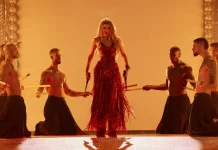
It begins with the pulsing synths of Aperture, which hit No.1 on debut in the UK and America and with which he opened the BRITs, throwing shapes in a shirt and tie, high waisted Chanel suit trousers and ballet flats. It’s a clever song, the spaces, builds and drops of its five minute runtime allowing for reckless abandon or being quietly lost in thought, depending on your preference.
 Harry Styles celebrates Aperture, his third No.1 single, which has 153,497 sales to date, according to the Official Charts Company
Styles has predilections for both and indulges them here. The anthemic American Girls is more thoughtful, a pure pop song that is all about the chorus, yet stands out as quintessentially his simply because of the way he sings the word ‘ages’.
Coming Up Roses, with music and lyrics credited solely to Styles, emerges as the record’s centrepiece, as he attacks tropes of singer/songwriter balladry, using an orchestra – arranged by Styles, Kid Harpoon and Jules Buckley – to craft a full-blown symphony. This song, as his eagle-eyed fans uncovered and feasted on, was aired by Fred Again.. during one of his recent Alexandra Palace shows.
That was another notable move in a campaign that has already taken an interview for Brittany Broski’s Royal Court!, a somewhat existential conversation with author Haruki Murakami for Runners World and a Q&A with his friend and stylist Harry Lambert, accompanied by photography by the late Martin Parr for The Sunday Times Magazine. Not to mention a forthcoming Netflix special, curating Meltdown Festival and a record-breaking tour.
Waiting Game finds Styles concerned about ‘romanticising your shortcomings’ and ‘being over honest lately,’ while Paint By Numbers presents another pensive interlude, the kind of thing thousands of people will jointly weep to, with Styles singing, ‘It’s a lifetime of learning to paint by numbers, watching the colours run.’
These relief offered in such moments is intensified by the fact that, elsewhere, this record is a whirlwind. The rapid Ready, Steady, Go! slathers noise and effects on Styles’ vocals, gentle instrumentation grows muddy and distorted while he utters the title in Italian and sings abstract lines about ‘calling Leon only in my head,’ ‘coming up’ and ‘skipping sleep with dirty feet.’ Are You Listening Yet? offers wall-to-wall percussion, intense, confusing and immersive.
 Harry Styles plays The BRITs
Season 2 Weight Loss (which, along with Taste Back and Aperture features Wolf Alice’s Ellie Rowsell on backing vocals) submerges lyrics in more bass, reverb and synths and asks ‘Do you love me now?’. Closer Carla’s Song (synthy, bassy and club-geared like fellow bookend Aperture) uses a similar device as Styles exclaims, ‘I know what you like, I know what you’ll really like.’
Pop, meanwhile, has the air of a old school Harry Styles hit, cleverly utilising a long chorus seemingly about misbehaviour amidst temptation to make the ‘It’s meant to be, pop’ payoff all the more indelible, all the more epic. Pop appears to be battling with Dance No More for the crown of best bassline on the album, and it’s a fight to the death. The latter channels the disco ball on the album’s cover, complete with ambient nose, call and response vocals and Styles using his mouth to make the noises an instrument might (‘Dun duckerr dun dun!’). It’s a colossal ode to dancing and the feeling of there being ‘no difference between the tears and the sweat.’
It’s a fitting image for the Kissco era: many, many people will cry while sweating profusely, moving to this music. Styles points to this himself in the liner notes as he signs off, ‘For all my friends to dance to, thank you’.
PHOTOS: Johnny Dufort, Karwai Tang/WireImage/Getty, OCC