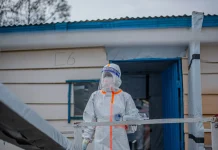
Front-line healthcare workers at the epicenter of the Ebola outbreak in the Democratic Republic of Congo went on strike over a lack of pay and poor working conditions, Reuters reported July 7.
Workers from in and outside hospitals said they have worked with little rest, been attacked by angry residents, are treating patients without adequate supplies and have not been paid benefits since the outbreak began, according to a 24-hour notice of strike sent to the government. The strike happened July 6, and most of the healthcare workers have restarted work, Anne Ancia, a World Health Organization representative in Congo, said.
Here are six Ebola updates to know.
1. The outbreak is still expanding due to workers in a mining town seeking treatment in other cities instead of locally, which is fueling transmission, the WHO said. Congo has 1,561 confirmed cases and 506 confirmed deaths, making it the worst outbreak of Bundibugyo Ebola. Some Ebola treatment centers are 90% full.
2. Thirty-six health zones have reported Ebola cases, with 21 zones having active cases reported in the past 21 days, the WHO reported. As of July 1, 10,821 contacts have been identified and are under follow-up across Ituri and North Kivu provinces. Of these, 8,954 contacts have been followed up, giving follow-up rates in Ituri of 83.2% and 81% in North Kivu. In Uganda, the last reported case was found June 21. More than 200 people have recovered so far.
3. The first clinical trial of an antiviral drug started in Congo on July 5, PBS News reported. The trial focuses on providing confirmed Ebola patients with the antiviral remdesivir, antibody treatment MBP134 or a combination of both. Survival will be tracked for 28 days after starting treatment. The second phase of the trial will include healthcare workers, close contacts and others at high risk of infection. The research could continue for three to six months.
4. A French physician, who was the first person from the country to contract Ebola amid this outbreak, has recovered and was released from the hospital July 4, France 24 reported. The physician was “almost asymptomatic” when they had arrived in the country on an Air France flight. Five other passengers on that flight were identified as possible contacts and put in isolation as a precaution.
5. The WHO added the first diagnostic test for the Ebola Bundibugyo virus to its emergency use listing, according to a July 2 news release from the organization. The test can quickly confirm infection in blood samples. In mid-May, Congo had a capacity of 200 to 400 tests per day; it now is conducting more than 2,000 tests per day across 10 labs.
6. Yale New Haven (Conn.) Health medical and hospital staff ran an Ebola preparedness drill after receiving a $500,000 grant from the National Emergency Special Pathogens Trading and Education Center. The three-day drill included a staff member coming to the emergency department and reporting symptoms of Ebola. Staff quickly diagnosed him and learned he was an actor, but they continued hospital protocols to complete the drill.
At the Becker’s 11th Annual IT + Revenue Cycle Conference: The Future of AI & Digital Health, taking place September 14–17 in Chicago, healthcare executives and digital leaders from across the country will come together to explore how AI, interoperability, cybersecurity, and revenue cycle innovation are transforming care delivery, strengthening financial performance, and driving the next era of digital health. Apply for complimentary registration now.