River trips require car and truck shuttles to get floaters from the end back to where they started. High gas prices have some cancelling their plans.
SCOTT DETROW, HOST:
High gas prices due to the Iran war are making summer travel more expensive, even for people traveling on rubber rafts. From the Grand Canyon, Chris Clements with member station KNAU reports.
CHRIS CLEMENTS, BYLINE: Boat trips down a river are, by nature, one-way journeys. When your boat reaches the end, you need a shuttle to drive you back to where you started. For a Grand Canyon river trip, that’s about a 250-mile drive, often in a bus like this one that Arizona Raft Adventures, or AzRA, uses to transport their clients.
(SOUNDBITE OF BUS BRAKING)
CLEMENTS: It’s rumbling down to the Grand Canyon launch point at Lees Ferry.
(SOUNDBITE OF DOOR CLOSING)
CLEMENTS: AzRA general manager Dennis Smoldt.
DENNIS SMOLDT: We really don’t have the luxury of being reactive in the moment and increasing costs when our costs go up.
CLEMENTS: That’s because AzRA sells trips years in advance and can’t raise prices now that gas here is now about $1.20 higher than the same time last year.
SMOLDT: We can’t change that, so we just have to absorb it.
CLEMENTS: Flights, groceries and gas are all more expensive. AzRA’s higher costs include more expensive liability insurance and the food they pack into coolers for clients.
SCOTT DAVIS: We’ve had to implement gas surcharges for our shuttles.
CLEMENTS: Scott Davis is co-owner of Ceiba Adventures, which rents boats out for private trips on the Colorado. We spoke in May.
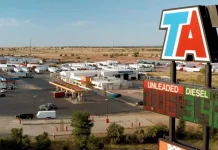
DAVIS: Diesel is up to $6 a gallon, you know? Our prices are based on $4 a gallon, and our trucks are big trucks that are not known for gas mileage (laughter) – good gas mileage.
CLEMENTS: Ceiba is passing these costs on to clients as an additional charge, which Davis says he wishes he didn’t have to do. His company will adapt, he says, but…
DAVIS: The reason for it just disturbs me to no end.
CLEMENTS: People who have their own boats are feeling the pressure, too. Flagstaff resident Harlan Taney is headed to a reservoir about 70 miles from town.
HARLAN TANEY: The cost of the trip is the gas it takes to get there. So, you know, when the cost – or the increase of gas goes up exponentially like it has been, that factors in pretty heavily.
CLEMENTS: Analysts say, even if the war ends, high gas prices aren’t likely to come down anytime soon. For NPR News, I’m Chris Clements.
(SOUNDBITE OF MUSIC)
Copyright © 2026 NPR. All rights reserved. Visit our website terms of use and permissions pages at www.npr.org for further information.
Accuracy and availability of NPR transcripts may vary. Transcript text may be revised to correct errors or match updates to audio. Audio on npr.org may be edited after its original broadcast or publication. The authoritative record of NPR’s programming is the audio record.