This column originally appeared in The Politics Brief, our weekly newsletter on the people, power and policies that shape New Yorkers’ lives.
Sign up to get the full version where you can ask questions, share news tips and weigh in on the conversation. Hits inboxes on Wednesdays.
U.S. Rep. Mike Lawler and Gov. Kathy Hochul don’t agree on much, but they’ve both concluded that supporting AI data centers is bad politics.
Lawler’s campaign is airing a new ad blasting his Democratic challenger Cait Conley, a former counterterrorism official, for doing consulting work for AI companies and saying “we need data centers” during a candidate forum this year.
Conley has fired back that multiple data centers came to the battleground Hudson Valley district since Lawler was elected in 2022, and that she supports responsible regulations to make sure these developments don’t drive up utility costs for nearby residents.
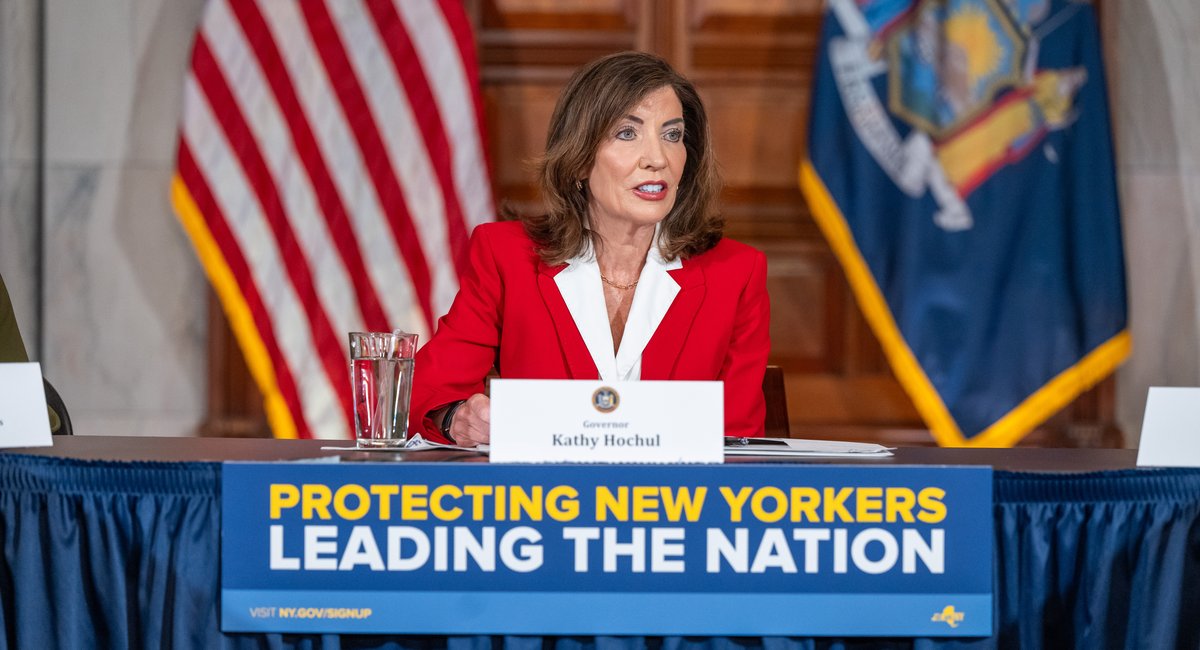
Hochul in July signed a one-year moratorium on large data center development, saying she was concerned about the effect projects have on the state’s electrical grid.
Polls show that voters across the political spectrum are concerned about server farms guzzling water and power in their communities – as well as the AI models they power. In New York, majorities of Democrats and independents as well as a plurality of Republicans support Hochul’s pause. This week both Steve Bannon and U.S. Sen. Bernie Sanders spoke at a “Pro-Human” conference and called for more AI regulation.
“It’s hard to say how this breaks down between the parties,” said Michael Dawidziak, a Long Island-based political consultant. “It’s very clear that this is something people are very, very concerned about.”
There’s opposition around the state. State Sen. Kristen Gonzalez, a democratic socialist from Queens, recently concluded a nine-day tour including stops in Buffalo and the Finger Lakes, and met with people who are opposing data center developments in their areas.
“We went to areas that are deeply red and Republican and sat in living rooms of Trump voters and yet had the same conversation about how big tech has been bullying these local communities and trying to steamroll them,” she said.
Top of mind for people was what these centers would mean for their electricity bills, Gonzalez said. Hochul says developers are proposing data centers that would require about a third of the state’s total generating capacity. Activists and residents also worry about what an AI revolution driven by private companies could mean for jobs.
Gonzalez said she believes Hochul, a moderate, took an important first step with the moratorium. The Democratic governor reiterated this week that she wants to implement more restrictions on data centers if she’s re-elected in November.
“Clearly the federal government has failed – turned their back on the leadership responsibility they have to protect all Americans,” Hochul said Tuesday.
Republican Nassau County Executive Bruce Blakeman, who is running against Hochul, has said he would rescind the governor’s moratorium and that he would work directly with tech companies to limit their water and energy demands.
“It seems to me that that industry is fully willing to come to the table with the state and local government and come up with solutions to problems,” Blakeman said in August, pointing to a study by the right-leaning American Legislative Exchange Council. “But just to bury your head in the sand with the fastest-growing industry in the world – this is the reason why we’re 50th in economic development.”
Blakeman uses AI to generate attack ads, something Hochul’s campaign has mocked and complained about.
As the Nov. 3 Election Day nears, Dawidziak said voters will likely be hearing a lot more about data centers.
“Anytime you have an issue that generates fear in the voters,” he said, “you have a potent political issue to use.”
Listen
We want to hear from you
Are data centers a top political issue for you this November?
We’ll share responses in next week’s newsletter. (Sign up!)