
The Long Night of Museums is an initiative that began in Germany in 1997. This initiative has been held in the city of La Paz since 2007, and as of 2026, seven cities across Bolivia have joined in (El Alto, Santa Cruz de la Sierra, Tarija, Sucre, Cochabamba, as well as activities in Potosí and Beni).

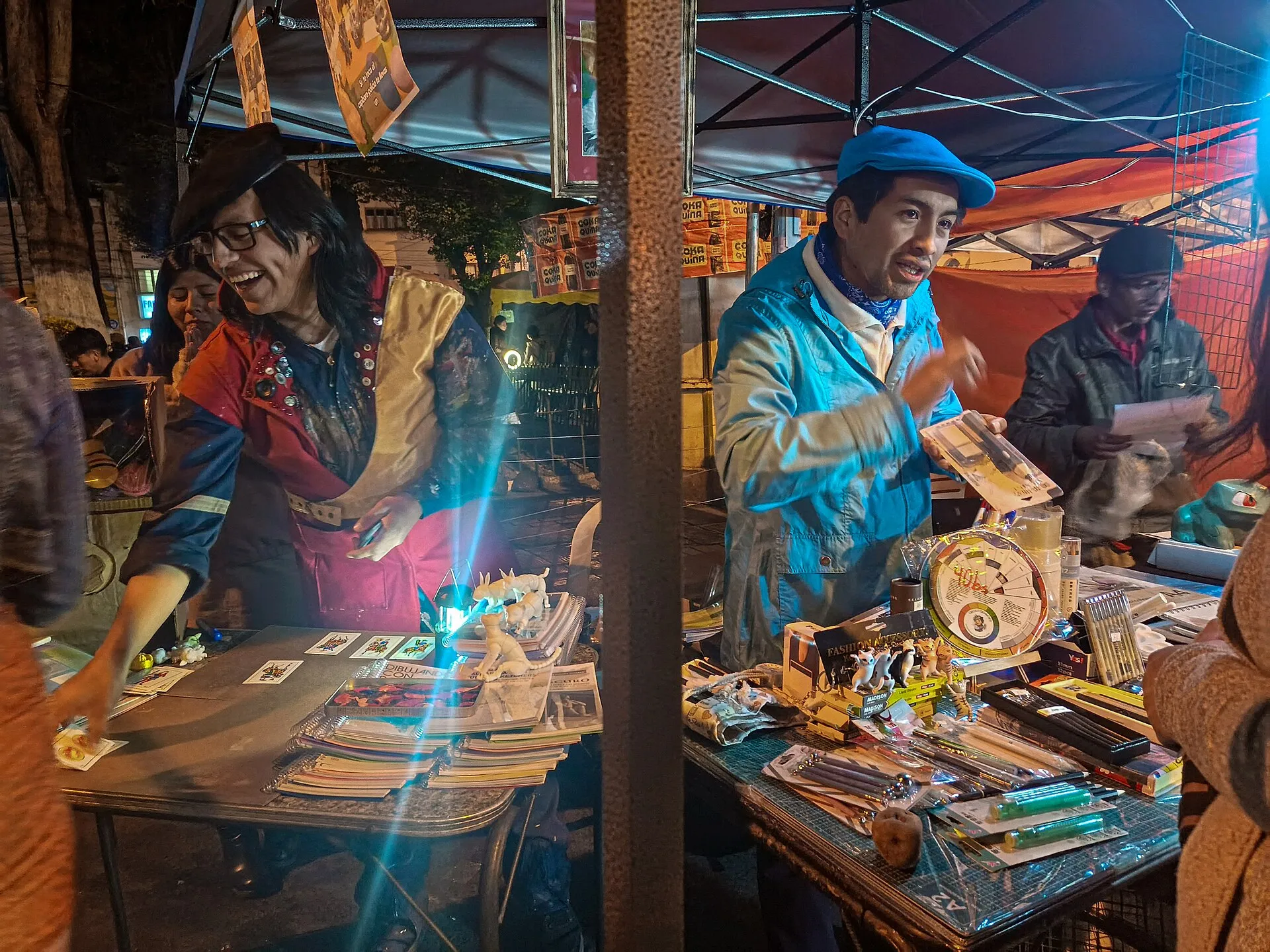
The Bolivian Wikimedia team has been participating in this event for the past two years thanks to strategic coordination with the Flavio Machicado Viscarra Foundation. Through this collaboration, we have fostered the spirit of the event by organizing games, challenges, snacks, and activities that highlight Wikipedia as an open educational resource and introduce visitors to figures from both contemporary and traditional Bolivian history.
Usually, this is a night when the whole city comes alive, with a wide range of cultural activities on offer. Movie theaters, museums, bookstores, cultural venues, restaurants, and independent artists take to the streets and organize events such as fairs, concerts, and performances. It goes without saying that this day has a significant economic and social impact—cities simply feel more alive.
This year, social unrest and turmoil stemming from demands by various sectors coincided with the date set by the La Paz municipal government. This situation, which was also unfolding in other cities, had its epicenter of conflict at the seat of government. Despite the initial change to the scheduled date, pressure tactics intensified, and no new adjustment was agreed upon. After 53 days of the blockade, La Paz gradually returned to a cautious sense of normalcy.

During this time, it was impossible to meet or organize activities without being weighed down by the daily conflict. The team’s strategy was to understand the context and continue with virtual initiatives; the “Long Night of Museums” photography challenge shifted its focus to other cities where normal life was still possible. We turned to collaborators, volunteers, and the community in other cities to publicize the initiative and the extended dates. These changes in the event’s planning made it possible to include images from Tarija and Cochabamba.
Continuing with the initiative also meant fighting against pessimism in the face of the current situation. And we believe that this, along with other initiatives, aligned with the collective desire to return to normalcy. Two months later, the Long Night of Museums took place in La Paz as a breath of fresh air. The winning photograph from the challenge launched by the team was a photo of director Jorge Sanjinés, an icon of socially conscious cinema in Bolivia.
We reviewed the achievements of this activity, and even though it wasn’t the challenge that yielded the best results, it was carried out with optimism—and that is always a positive thing. We hope to repeat the same challenge next year and that the results will better reflect how this night is experienced in different cities across the country.
Can you help us translate this article?
In order for this article to reach as many people as possible we would like your help. Can you translate this article to get the message out?