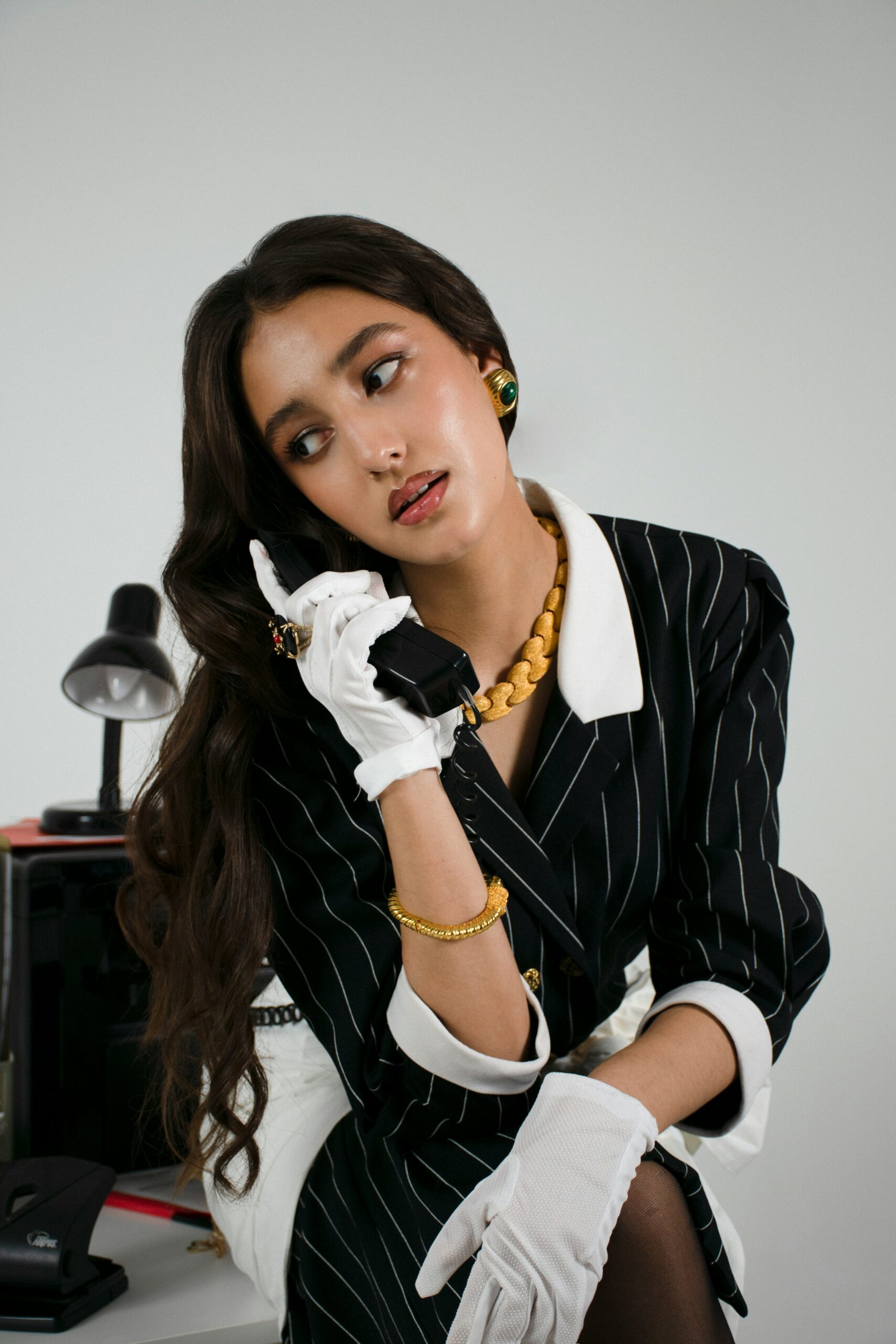
Strong shoulders, structured suits, a commanding presence: the Boss Lady doesn’t just dress – she asserts herself. From 1980s tailoring to today’s icons, power dressing turns clothing into a manifesto of authority.
The Boss Lady trend, also known as power dressing, refers to a B style of dress associated with authority, confidence, and professional success. Emerging in the late 1970s and popularized in the 1980s, it accompanied women’s entry into the political, economic, and media spheres. Clothing thus becomes a means of asserting one’s legitimacy and power by playing with masculine codes… without going too far.
The hallmarks of the Boss Lady
Visually, the style is based on structured silhouettes inspired by men’s tailoring. Shoulders are defined, cuts are clean, and colors are understated: black, gray, beige, or navy blue dominate. The goal is to convey an image of seriousness, poise, and elegance, like an armour of soft power.

Certain pieces have become emblematic of this aesthetic. The structured blazer is the centerpiece of the Boss Lady wardrobe. Paired with wide-leg pants or a straight skirt, it instantly creates an authoritative and sophisticated look. The pantsuit is also a key piece. Once reserved for men, it has become a symbol of female empowerment. Added to these elements are the white shirt, the silk blouse, pumps, loafers, and structured bags, which complete an elegant and assertive silhouette. The whole look is accompanied by precious jewelry (a sign of a certain level of success) that is more or less discreet, without being ostentatious.
But the Boss Lady trend is not limited to a question of style. It also represents a social transformation: the conquest of positions of power by women. Clothing becomes a strategic tool for projecting an image of competence and authority.

Click here to read the full article on Luxus Magazine.
Featured photo : © Diana Akhmedova/Unsplash