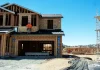
New home construction in the Greater Toronto Area is set to decline for the next two years amid higher building costs, weaker demand and more unsold homes, a new housing forecast states.
The Canada Mortgage and Housing Corporation published their report on Tuesday, saying that new home construction is set to decline through 2028, but the impact will vary regionally with Toronto and Vancouver most impacted.
“It was the result of a perfect storm,” Jordan Nanowski, CMHC’s lead economist for the GTA, told CTV News Toronto on Tuesday. “We’re expecting less starts going forward simply because there was a supply kink, we saw a lot of supply get pushed at once and that’s kind of offsetting. The market has to work through that supply.”
At the national level, the report states that housing demand is expected to remain low, with sales staying below historical averages. Construction and home sales in Ontario and British Columbia are expected to be weaker than their 10-year-averages.
“We expect Canada’s economy to grow slowly in 2026, as many households and businesses remain cautious because of geopolitical and trade uncertainty,” Kevin Hughes, CMHC’s deputy chief economist said.
“These pressures will affect housing markets differently across the country. Stronger local conditions may help support housing market activity in Montreal and Calgary for example, while weaker conditions could further slow housing demand and construction in Toronto and Vancouver.”
The slowdown, the report says, is fueled by the geopolitical and trade uncertainty, slow population growth, soft labour markets and modest income growth.
In Toronto, the report states that new housing starts are projected to remain low in 2026 especially as condo starts continue to slow down. The report states that the decline will be partly offset by strong rental starts.
Nanowski said that much of the slowdown for housing starts is primarily caused by the large inventory of under construction condo units that began being built throughout the pandemic when interest rates were very low.
“There was just this absolute surge in condo unit construction during the pandemic and shortly following until rates started rising,” he said. “That created a supply glut in a specific unit type.”
“That’s kind of made preconstruction sales go extremely low, especially from an investor perspective, which is a large portion of the demand for these preconstruction condo units.”
Nanowski said purpose-built rental construction will remain the main driver of housing starts in the Greater Toronto Area.
Many rental projects already approved by government programs will be completed between 2026 and 2028, the report said, adding that the pace of new rental construction will moderate as rental markets become more balanced and immigration-driven demand slows.
“Rental has seen a bit more resiliency. there’s a lot of kind of incentives and programs supporting this rental housing construction,” he said. “Amid an affordability challenges, rental housing is kind of relatively the most affordable housing choice and there is a lot of demand for that.”