Watching Hollywood cinema in 2026 can make for a curious experience. Take a look out the window, and you’ll notice that the US, and indeed the world, is in a polycrisis – though you’d hardly know it from the films at the multiplex. The odd timely picture aside, Hollywood today directly engages with the present moment only rarely; more Minecraft Movie than One Battle After Another.
In the 70s, when things were arguably last in a comparably sorry state – Kent State, Vietnam and Watergate for the US, economic crises and violent acts of world revolution globally – popular cinema responded very differently. Out of the establishment-sceptical New Hollywood that emerged after the demise of the Hays code, there came a wave of confronting social and political dramas, strongly allegorical sci-fi, and paranoid thrillers, including one of the most deliriously entertaining examples of the latter ever made: The Parallax View.
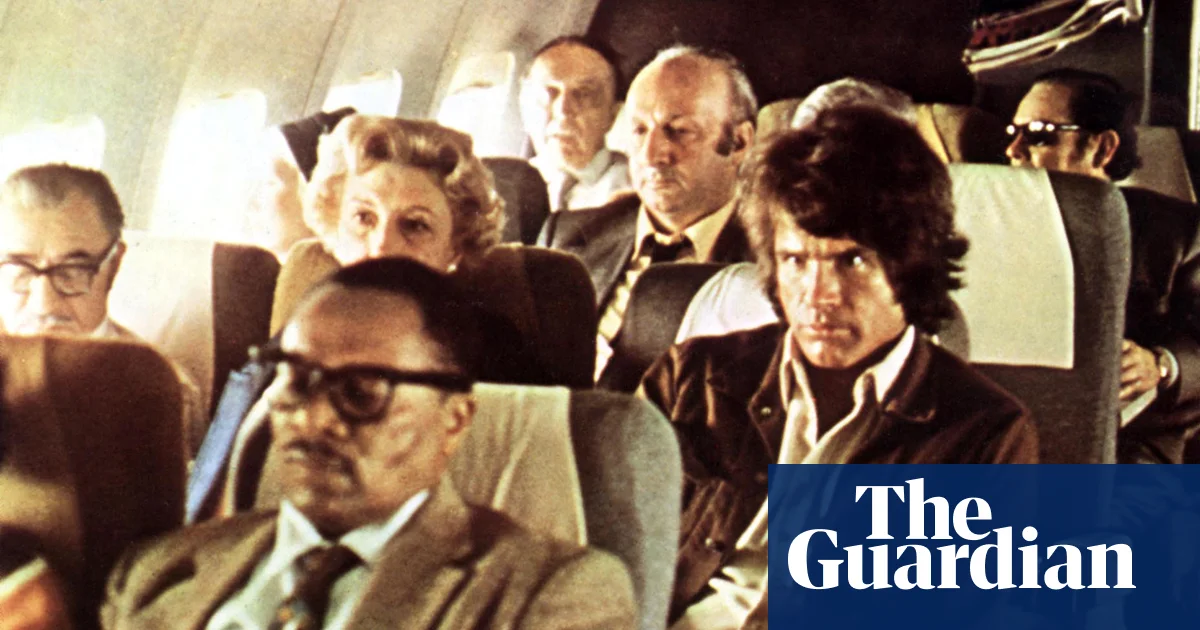
It plays like an airport novel that’s been deep-fried in conspiracy theories and post-counterculture cynicism. While investigating the murder of an RFK-like presidential hopeful, reporter Joe Frady (Warren Beatty) discovers that a mysterious corporation, Parallax, is operating seemingly in league with or even above the government, recruiting political assassins through psychological tests with shades of mind control experiments like the CIA’s MKUltra. Along the way, our hero survives explosive acts of terrorism, has a run-in with a murderous bent cop and gets into a fistfight with a good ol’ boy.
It’s a potent brew that puts all the anxieties and tensions of the day into a blender. Using its pulp mystery plot as a Trojan horse, The Parallax View takes a good, hard look at the US in the Nixon age, and the roots of the corruption, aggression and malaise that defined the country in the 70s.
The film abounds in images rich with suggestion: sparkling pageants and towering US landmarks framed alongside totem poles, tacky Tiki trinkets and American frontier iconography. The point is crystallised in the film’s disturbing centrepiece montage, the Parallax training film, in which images of smiling Americans and sunlit farmsteads, of presidents and Uncle Sam are contrasted with pictures of police brutality and lynched bodies, of atrocity in Vietnam and beyond: the US built on violence at home and abroad.
In every frame, The Parallax View challenges the apple pie myth of the US. Cinematographer Gordon Willis drowns the film’s parade of Americana in sinister shadow, or shoots it in the visual language of fascist cinema – the compositions precise, and the characters made to appear almost insignificant next to imposingly vast structures – as though this were the US viewed through the diseased lens of Leni Riefenstahl herself.
It’s hard to imagine that Hollywood could again plug into the moment and offer up the kind of penetrating commentary that it so freely did in the New Hollywood era, at least not soon. US studios today produce relatively little mid-budget cinema – traditionally Hollywood’s home for stories for adults and about contemporary concerns – as they instead court dwindling audiences with reheated IP and broad-appeal blockbusters.
Many of Hollywood’s power players seem set on appeasing the current US administration. Paramount, the studio that made The Parallax View, is now owned by Hollywood’s chief Trump supplicant, David Ellison, whose moves to suppress critical voices and pander to the president bode ill for American cinema, should he succeed in taking over Warner Bros next.
Thankfully, we still have The Parallax View – a relic of a different kind of US cinema, and a film made for another turbulent period in history, perhaps, but all the same a film frazzled by conspiracy theories and soaked in the threat of political violence, with bubbling fascism, the erosion of democracy in an increasingly corporate age and America’s legacy of brutality all on its mind. A film, then, which still speaks to us in 2026, as it spoke to audiences who looked to the film to help process the moment five decades ago.
-
The Parallax View is available to rent in Australia, the UK and the US. For more recommendations of what to stream in Australia, click here