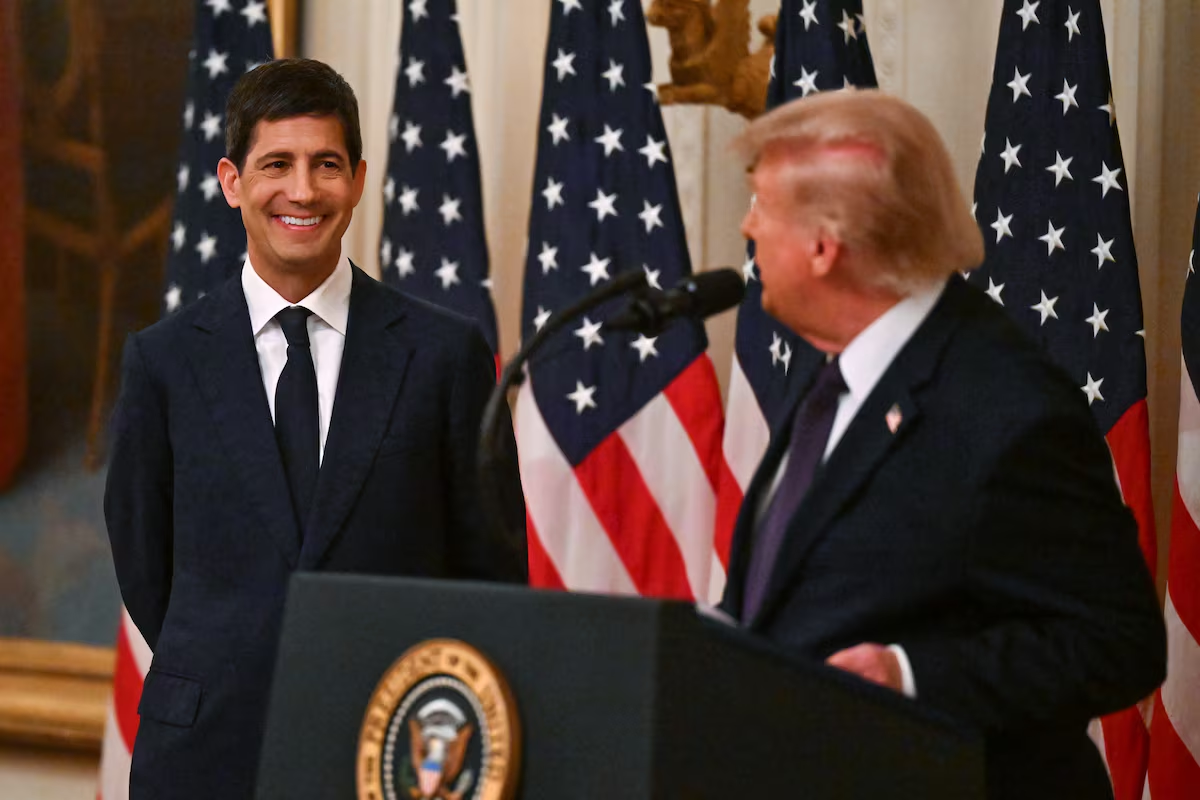
Federal Reserve Chair Kevin Warsh’s battle to keep the central bank out of politics just got harder. Any hope that U.S. President Donald Trump would give him breathing room evaporated last week when the White House targeted Fed Governor Lisa Cook, thrusting the central bank’s independence back into the spotlight.
Trump’s renewed effort to remove Cook over unproven mortgage fraud allegations suggests two things: the administration is anxious that the Fed could raise interest rates as soon as next month, and the president realizes his appointee as chair may be unable to stop it, even if he wants to.
While public pressure on Cook could backfire and embolden her to side with the hawks if Trump fails to remove her, there may also be a calculation that it offers the president a scapegoat if policy tightens at either of the two remaining meetings before November’s midterm elections. His counterpunch would then be that any rate hike was a politically motivated move to defy him.
Futures markets see about a 75-per-cent chance of a quarter-point rate increase by the midterms. Regardless of soft payrolls in July, the main drivers are nearly six years of above-target inflation and elevated core price rises, alongside the Iran-related energy shock of the past six months. The outcome at the September 15-16 meeting is basically seen as a coin toss.
Friday’s political swipe at Cook was likely mindful of exactly that.
Trump’s renewed effort to remove Cook took the form of a White House letter saying he was “considering” her removal and demanding a response within three weeks to what her attorney has called “baseless” mortgage fraud allegations. The move came despite a June Supreme Court ruling that recognized the Fed’s special statutory protections and left unresolved whether the allegations constituted grounds for removal.
After a year of beating this drum, and even after the Supreme Court pushback, Trump’s deadline for Cook to clear her name is just about three weeks before a critical Fed meeting where every vote counts in the increasingly split committee.
“The issue of Fed independence has not yet been resolved,” wrote SGH Macro Advisors chief U.S. economist Tim Duy, adding that this suggests Warsh is either unwilling or unable to back Trump’s long-standing push to slash rates in the face of elevated inflation.
Warsh himself probably wishes he’d be given more room to complete his reforms and make his own policy case both internally and externally, especially given market disquiet over his vague inflation targets and his preference for less public communication.
However, keeping his distance may prove difficult. The Wall Street Journal reported last week that Trump has called the Fed chair repeatedly since Warsh took the top job in May.
Late last month, Trump called Warsh “brilliant” and blamed the rest of the board for not lowering rates immediately: “I know he’d love to see lower interest rates, but he’s got a board, and it’s a political board, and they want to keep rates up.”
Sorting out that board now seems to be a priority again at the White House.
“If Trump succeeds and ultimately only the accusation of wrongdoing and the ability to reply are all that is necessary to replace Fed governors, expect appointees who are willing to sharply lower rates like former Fed Governor Stephen Miran,” Duy said, explaining the upshot for markets and the economy.
As it stands, three members of this year’s Federal Open Market Committee (FOMC) voted to raise rates last month, while governors Chris Waller and Cook voted to hold rates steady, though both have indicated the Fed may have to tighten to get above-target inflation back to its 2% long-term goal.
If they were both to vote for a hike next month, the previous 9-3 split in favor of holding rates would become 7-5.
That would leave former Fed Chair and Trump nemesis Jerome Powell — who remains on the board until his term ends in early 2028 — with the potential to divide the FOMC right down the middle by switching from his previous vote to support a rate rise.
Another big question is whether Warsh will publicly back Cook, as Powell did in the absence of proven guilt.
How should markets react? Ahead of this week’s consumer and producer price inflation reports, the biggest influences on Fed thinking, it is hard to get a clean view. Higher long-term Treasury yields and a weaker dollar have periodically emerged during intense bursts of the Fed independence saga over the past 18 months, although it’s unclear whether investors see the issue as corrosive or a passing storm.
The most straightforward approach is to consider the impact of fuzzier inflation goals from Warsh with renewed political pressure to load the board with rate-cut advocates — a combination that could aggravate long-term inflation risk premiums in bond markets.
“If July marked the beginning of a deterioration in confidence about the Fed’s willingness to defend the inflation target, the long end is dramatically under-pricing the risk,” Barclays strategists noted this week, pointing to a noticeable move in long-dated bond yields and inflation expectations after Warsh’s most recent press conference.
“We think that makes the next couple of weeks unusually important. Medium- and long-term inflation compensation should be watched closely to gauge how much damage, if any, was done to the Fed’s market credibility and confidence over the past week,” they wrote, highlighting the five-year, five-year forward inflation-linked swap.
Warsh could, of course, stamp his independence on the next meeting by voting with the hawks. Without that unlikely outcome, doubts about the Fed under his leadership — its commitment to price stability and its distance from White House political imperatives — will smolder at a dangerous time for the bond market.