Updated May 21, 2026, 5:04 p.m. ET
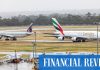
- The U.S. travel ban forced an Air France plane en route to Detroit from Paris to be diverted May 21 to Montreal because there was a passenger onboard from the Democratic Republic of Congo.
- An Ebola outbreak in central Africa has killed about 140 people and sickened roughly 600, triggering U.S. leaders to institute a 30-day travel ban on non-U.S. citizens from affected areas of Africa.
- The U.S. also is screening airline passengers who traveled through or in the Democratic Republic of Congo, South Sudan and Uganda in the last 21 days. Infectious disease experts weigh in.
Infectious disease experts say the temporary U.S. travel ban on people from the Democratic Republic of Congo, Uganda and South Sudan isn’t an effective strategy for stopping the spread of Ebola across international borders.
“Policies that single out individuals, not for any scientific or medical reason, but because of their citizenship won’t prevent outbreaks from spreading,” said Dr. Jeanne Marrazzo, chief executive officer of the Infectious Diseases Society of America, during a news conference Thursday, May 21.
The U.S. Department of Homeland Security and the U.S. Centers for Disease Control and Prevention imposed a 30-day ban beginning May 18 that prohibits non-U.S. passport holders from those central African countries from entering the U.S. because of a quickly growing outbreak of the Bundibugyo strain of Ebola.

The often deadly type of viral hemorrhagic fever has infected about 600 people in central Africa and killed about 140 as of May 20 in an outbreak that had been spreading unknowingly for weeks in the Democratic Republic of Congo. The World Health Organization classified the outbreak as a public health emergency of international concern on May 17.
The U.S. travel ban forced Air France Flight 378 en route to Detroit from Paris to be diverted Wednesday, May 20, to Montreal because there was a passenger onboard from the Democratic Republic of Congo.
Craig Currie, spokesman for the Public Health Agency of Canada, said American authorities notified their Canadian counterparts at about 4:30 p.m. Wednesday that the flight was refused entry. It later landed at Montreal Pierre Elliott Trudeau International Airport.
“A Public Health Agency of Canada (PHAC) quarantine officer assessed the traveller and determined they were asymptomatic,” Currie told the Detroit Free Press in an email. “The traveller has departed back to Paris.”
In a statement released to the Free Press Wednesday evening, U.S. Customs and Border Protection said: “Air France boarded a passenger from the Democratic Republic of Congo in error on a flight to the United States. Due to entry restrictions put in place to reduce the risk of the Ebola virus, the passenger should not have boarded the plane. CBP took decisive action and prohibited the flight carrying that traveler from landing at Detroit Metropolitan Wayne County Airport, and instead, diverted to Montreal, Canada.”
Air France did not respond to email messages from the Free Press.
Ebola health screenings begin at U.S. airport
In addition to the travel ban, the CDC and Homeland Security announced they would begin health screenings May 21 for all travelers to the U.S. who have been physically present in Democratic Republic of Congo, Uganda or South Sudan in the past 21 days, including U.S. citizens.
The Department of Homeland Security said it is routing airline passengers to Washington-Dulles International Airport, where they will undergo health screenings that include a temperature check, fill out a questionnaire detailing travel history and symptoms, and provide information so they can be contacted later, if necessary.
The CDC said U.S. citizens and other passengers returning to the U.S. after traveling in or to those central African countries will be contacted by the airlines and asked to rebook their flights so they arrive first in Dulles for the health screening.
“To date, no suspected, probable, or confirmed cases of Ebola have been reported in the United States, and the risk of Ebola domestically is low,” the CDC said in a statement. “However, public health entry screening is part of a layered approach that, when used with other public health measures already in place to detect symptomatic arriving travelers, can slow and reduce the spread of disease into the United States.”
Travelers who do not have symptoms will be given information about monitoring their health and what they should do if Ebola symptoms appear.
Will health screening work to keep Ebola from spreading to the U.S.?
Although he doesn’t support the travel ban as an effective health strategy to keep Ebola out of the U.S., Dr. Jay Butler, the former deputy director for infectious diseases at the CDC, said conducting health screenings of airline passengers is an effort that could pay off, especially when it comes to Ebola.
“The idea is to be able to identify people who are symptomatic to avoid the risk of transmission on the airplane,” said Butler, who now serves as the dean of the College of Health at the University of Alaska, Anchorage. “How effective it is depends on the type of infection we’re talking about, and certainly there are certain types of infections where infectiousness can begin prior to the onset of symptoms.

“In the case of Ebola virus, the evidence is that the risk of transmission is really pretty much nil prior to the onset of symptoms. So in this instance, screening for symptoms is likely to provide some degree of benefit.”
Dr. Krutika Kuppalli, an associate professor in the division of infectious diseases at the University of Texas Southwestern, said the challenge will be funneling all travelers who have been to the Democratic Republic of Congo, South Sudan and Uganda to a single U.S. Airport for screening.
She envisions bottlenecks, along with “more confusion and chaos.”
“Screening people is helpful,” said Kuppalli, who served as the medical director of an Ebola Treatment Center in Sierra Leone during the West Africa outbreak in 2014 to 2015. “You can catch people who may be symptomatic and again figure out who your high-risk contacts are and implement the appropriate measures, right?
“And so I think that’s important, but I’m not sure that funneling them all through one airport will actually make things easier and more efficient.”
During that 2014-15 outbreak, the U.S. also conducted health screenings for airline passengers returning from affected countries, but, she said, multiple airports were used as entry points for screening.
“Having it at one airport also causes a lot of logistical challenges for people who are coming back into the country,” Kuppalli said.
“Ultimately, infectious diseases don’t respect borders, so investing in global health preparedness, supporting international coordination through organizations like WHO, and strengthening local health systems are not acts of charity,” she said. “They are essential components of global health security and collective strategy.”
What will the CDC do if travelers have symptoms?
Any traveler with Ebola symptoms or fever “will be evaluated by a CDC public health officer,” the agency said. “This evaluation includes a review of the traveler’s signs and symptoms and questions to assess the traveler’s risk of exposure to the disease.“
Those who are sick will be transferred to a hospital for assessment, isolated and provided medical care, and the CDC said it will work with state/local health departments on contact tracing to notify other passengers who were exposed to that person.
What are Ebola symptoms?
The incubation period for Ebola disease from the time of infection to when symptoms appear can range from two days to 21 days, according to the World Health Organization, and symptoms initially can include fever, fatigue, malaise, muscle pain, headache and sore throat.
Those early symptoms typically are followed by vomiting, diarrhea, abdominal pain and rash, along with impaired kidney function and liver function.
The WHO reports that bleeding tends to be a less common symptom that can occur later in the disease process, and some patients might experience bleeding from the nose, gums, vagina as well as blood in vomit and feces.

There are no vaccines or therapeutic treatments for the Bundibugyo type. The average fatality rate for all types of Ebola is 50%, but the WHO reports that it has varied from 25% to 90% in previous outbreaks.
How does Ebola spread?
Ebola disease can spread to humans if they have contact with the blood, body fluids or organs of infected animals in central Africa, such as fruit bats, chimpanzees, gorillas, monkeys, forest antelope or porcupines, according to the World Health Organization.
It also can spread from person to person with direct contact with the blood or body fluids of someone who is sick with Ebola disease or someone who has died of the disease. People also can contract the virus after touching objects or surfaces that have been contaminated with the blood or body fluids of an infected person and then touching mucous membranes or open wounds, as well.
Contact Kristen Shamus: kshamus@freepress.com.
Contact John Wisely: jwisely@freepress.com.