Nathan VanCleave, a sergeant with the Evansville, Indiana, police department, was in the back room of a local gas station reviewing security footage for a case when a clerk asked if VanCleave could come up front.
A woman in her 60s was on her cellphone, feeding a stack of $100 bills into the store’s cryptocurrency kiosk. VanCleave convinced the woman to stop depositing money, but he was unable to cancel the transaction. “All there was was a ‘send money’ button,” VanCleave says.
That was the moment he realized he needed to do something about crypto kiosks in his city. His advocacy work with AARP helped push Indiana lawmakers to pass the nation’s first statewide ban on crypto kiosks earlier this year. The morning after the ban went into effect, VanCleave celebrated by visiting every kiosk location in Evansville to make sure the machines were switched off. Since then, Tennessee and Minnesota have instituted their own statewide bans. Twenty-eight other states have passed measures to protect consumers at crypto kiosks.
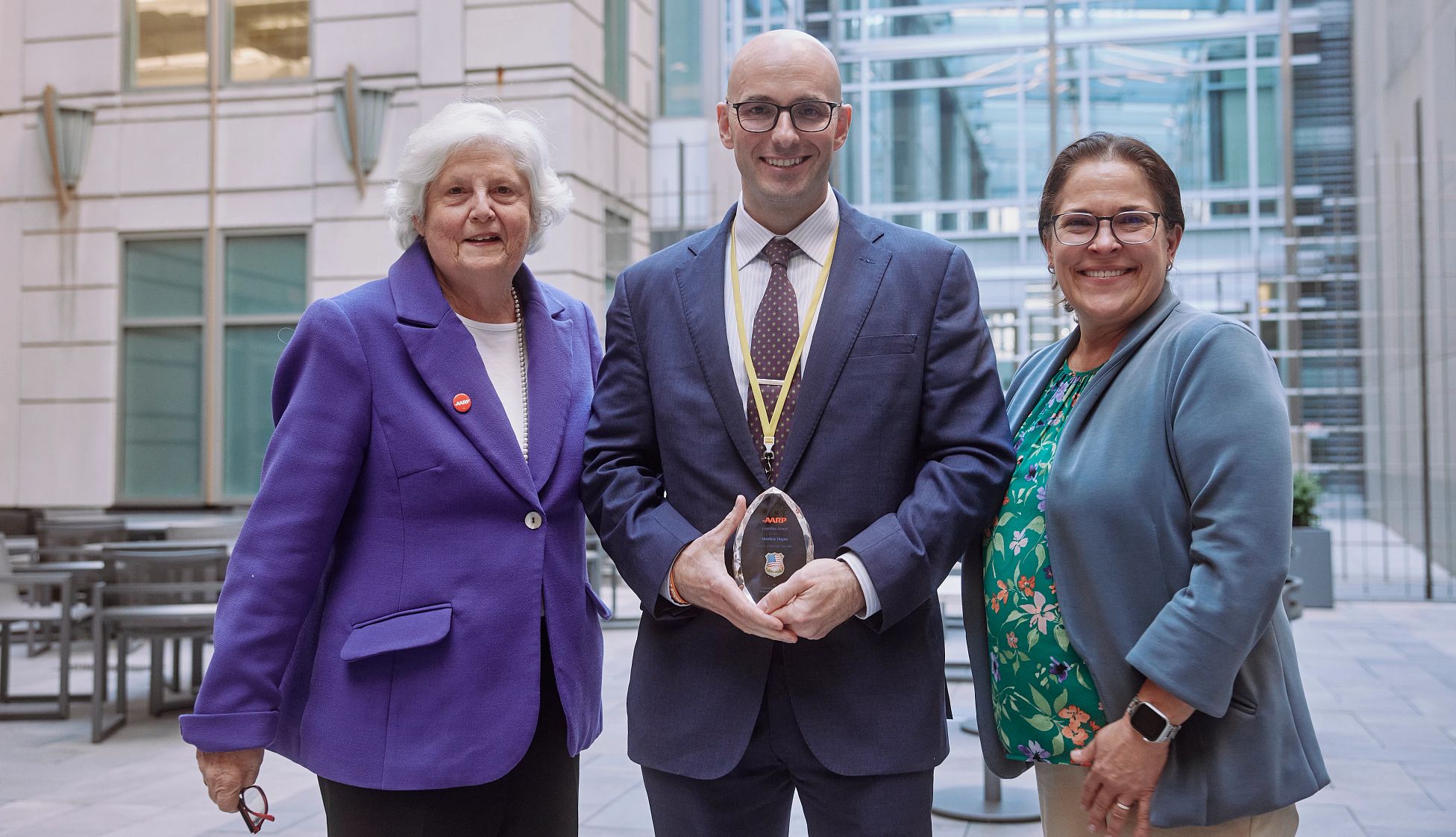
VanCleave and Matthew Hogan, a detective with the Connecticut state police, were honored May 12 with AARP’s inaugural Guardian Award. The award recognizes law enforcement officers who have gone above and beyond to protect older Americans from fraud, scams and financial exploitation.
Last year, adults 60 and older accounted for 76 percent of the $389 million in losses in cryptocurrency kiosk scams alone, according to FBI crime statistics. That’s just a portion of the nearly $8 billion that was stolen from older adults through other types of scams.
Before the awards were presented at AARP’s Washington, D.C., headquarters Nancy LeaMond, AARP executive vice president and chief advocacy and engagement office, spoke about the growing threat of scams targeting older Americans and the impact of law enforcement officers working to foil scammers and educate the public. “Time and again, we’ve seen the difference that one committed, passionate officer can make. And tonight, we honor two of the very best,” she said. “They’ve made it their mission to stand up for and protect older Americans. “

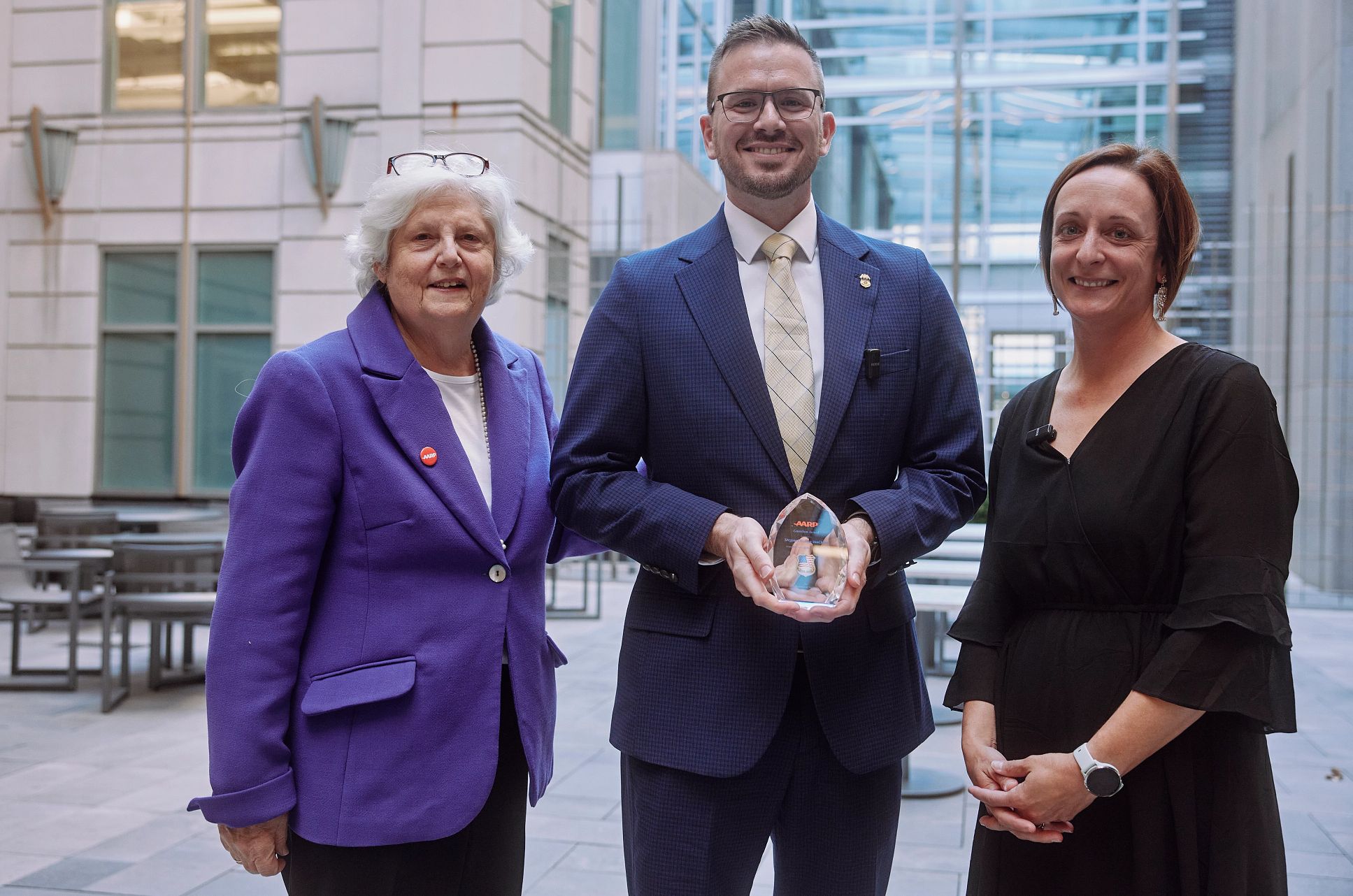
Sgt. Nathan VanCleave (center), with AARP Chief Advocacy Officer Nancy LeaMond (left) and AARP Indiana State Legislative Director Ambre Marr, was honored for his work preventing fraud and scams.
Jared Soares for AARP
Educating fellow officers in Connecticut
When Hogan first encountered cryptocurrency around 2016, “no one knew what crypto was,” he says. Hogan and his partner taught themselves to trace and confiscate stolen money by turning to the U.S. Marshals, the Secret Service and the National Computer Forensics Institute for help.