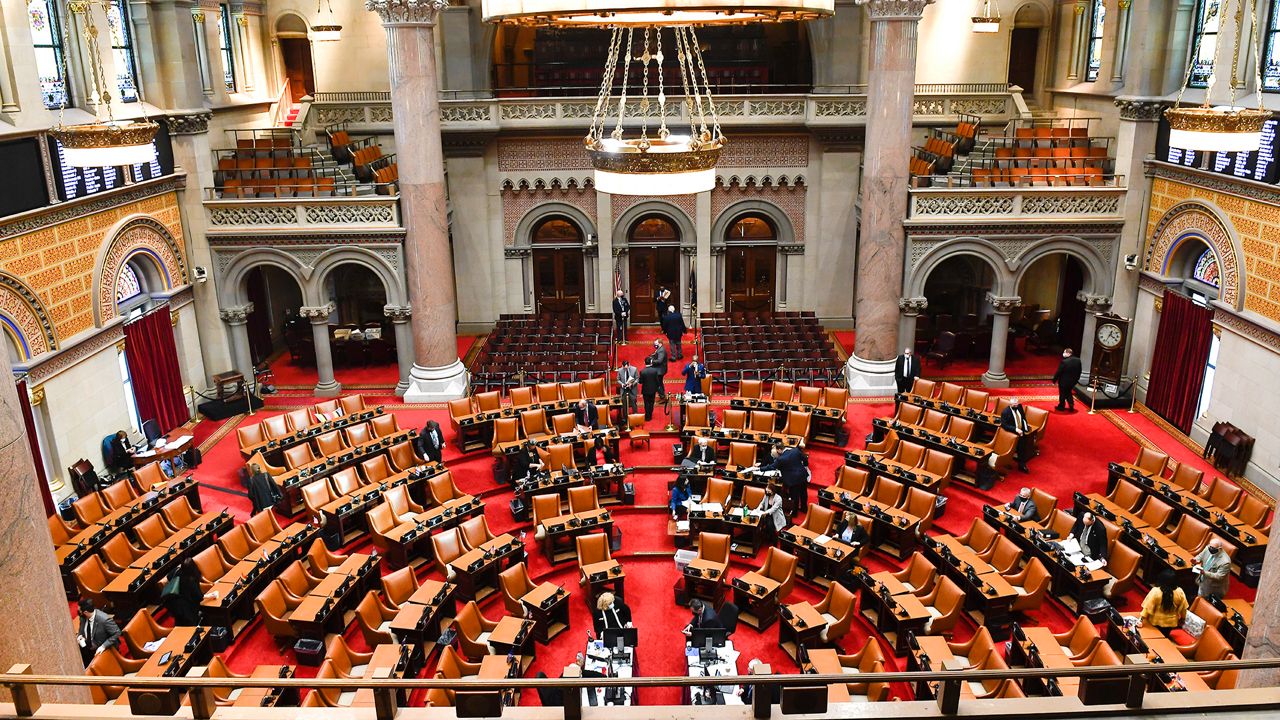
ALBANY, N.Y. — Just before midnight Wednesday, the New York state budget passed both houses of the Legislature. Gov. Kathy Hochul signed into law on Thursday afternoon.
The $268 billion spending plan is the latest one in 16 years. The timeline to get this done was tight, as the Legislature is scheduled to leave Albany for the year on June 4.
Hochul signed two state budget bills into law Wednesday. Included are changes to the 2019 climate law; pensions for more than 830,000 government employees; speeding up the state’s environmental review process tied to development, known as SEQRA; and car insurance reforms.
State Senate Majority Leader Andrea Stewart-Cousins, a Democrat, touted on the Senate floor late Wednesday night.
“We are expanding childcare, supporting our healthcare systems’ safety at hospitals,” said Stewart-Cousins. “We are delivering direct, utility relief to working families. We are fully funding the thing that you voted for, every level of public education or advancing, clean energy initiatives, creating more affordable housing opportunities, and yes, jobs across New York.”
But it’s not all celebrations in Albany. Senate Republican Minority Leader Rob Ortt says the budget failed on timeliness and fiscal affordability. On the Senate floor Wednesday night, he pointed to his disappointment with the failure to crack down on what he calls “the fraud, waste and abuse” that continue to plague New York’s Medicaid system, and green energy mandates that he says continue to drive up utility bills.
“What this body did on the CLCPA will not lower your energy bills as long as the CLCPA remains enforced,” Ortt said. “In statute, your energy bills will continue to be higher, in fact, 70% higher than the national average. And don’t forget, the majority did not even want to do it.”
Also in the enacted budget is an extension of the state’s electric school buses mandate. It extends the zero-emission bus mandates by five years. This gives districts until July 1, 2032, to purchase only zero-emission buses and until July 1, 2040, to operate and maintain only zero-emission buses.
Despite only a few days left in the session, state lawmakers still have a lot to do. Sources say lawmakers will introduce two constitutional amendments to change the redistricting process.