Cyclosporiasis cases have seen a major rise in recent days, particularly in the Midwest, and Illinois health officials said the number is unusual.
As of Wednesday, Illinois health officials said the state has seen 150 cases of the parasitic infection known for causing “explosive diarrhea.” That number, according to the Illinois Department of Public Health, is higher than normal for this time of year.
Of those, 66 people reported traveling outside of the United States, but 68 were “domestically acquired.” Another 16 were pending investigation.
“IDPH continues to investigate cases and has not identified a single source. The Department continues to work with the CDC and other public health partners to look for trends, as states across the country are seeing a rise in seasonal cases,” the department told NBC Chicago in a statement.
Dr. Stockton Mayer at UI Health said the healthcare group has seen 33 cases since May 1, with 29 of those cases detected in June alone. By comparison, Mayer said 10-13 cases are typically reported each year in June.
“The numbers are considerably higher. So we’re seeing numbers that are maybe well beyond what we’ve seen in years prior. And I think that … public health departments have reason to be concerned,” Mayer said. “That, you know, is something, as healthcare providers, we need to be aware of when it comes to ordering diagnostics on patients and looking for possible treatments for diarrhea and it’s things that patients need to be aware of.”
Illinois is among the states with some of the highest numbers as of July, but the Midwest outbreak centers largely on Michigan, where 1,251 cases were confirmed by Thursday.
Cases in Michigan continue to surge, with hundreds of new reports daily. On Wednesday, Michigan health officials reported 992 confirmed cases since June 22. Just two days earlier, numbers sat at 681.
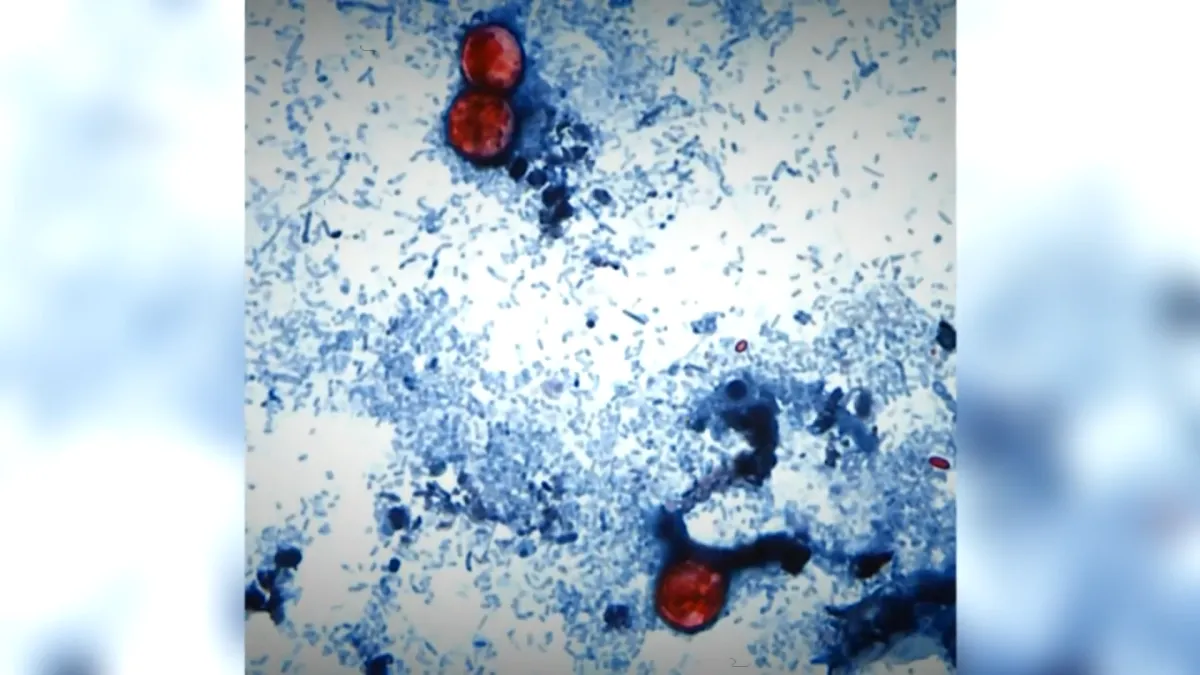
Health officials are investigating a spike in cyclosporiasis, a parasitic illness nicknamed the “explosive diarrhea parasite.” Here’s how it spreads, the symptoms to watch for and what the CDC says so far.
Symptoms of cyclosporiasis
While the most common and notable symptom of the infection is known as “explosive diarrhea,” there are numerous other signs of infection.
“[The diarrhea] can be really frequent, pretty severe. People talk about explosive diarrhea,” said Dr. Kiran Joshi with the Cook County Department of Public Health. “You can get all kinds of other abdominal symptoms as well, including loss of appetite, nausea, vomiting, sometimes a low grade fever. Now, those symptoms can certainly cause quite a bit of distress. The good news is that this is typically not a life-threatening illness, though if untreated, it can last for a month or longer, so it’s really important.”
Experts say diarrhea itself isn’t a distinctive symptom, but knowing the outbreak is growing could lead more practitioners to testing for cyclosporiasis.
“There are a lot of different causes of diarrhea, and cyclosporiasis is not one of the higher causes of infectious diarrhea. But when cases do surge in the way that they are, it’s important to pay attention to it,” Mayer said.
One of the larger indications of cyclosporiasis is likely the timing of infection and symptoms.
While many other foodborne illnesses will show symptoms within hours, cyclosporiasis can take days or even up to two weeks to appear. The most common time frame is around one week, according to the Centers for Disease Control and Prevention.
“The first thing is explosive diarrhea, bloating, cramping, loss of appetite,” Dr. Sharon Welbel, chair of infectious diseases for Cook County Health, said. “Some people have a low-grade fever but that’s pretty uncommon.”
The infections can also last much longer than other foodborne illnesses.
“The symptoms are a bit less, but they go on longer. Noroviruses kind of hits you hard and then it’s done. This kind of just drags on for a longer period of time,” Dr. Irfan Hafiz, an infectious disease physician at Northwestern Medicine, told NBC Chicago.
The CDC notes that the illness can last anywhere from a few days to over a month and, in some cases, may even seem to go away but then return one or more times.
Here’s a look at how it compares to other illnesses.
Cause of infection
Health officials have noted that U.S. cases of cyclosporiasis have previously come from contaminated produce and are urging residents to take extra precautions when cleaning fresh fruits, vegetables and herbs.
Michigan has reported more than 680 cases of cyclosporiasis — up dramatically from a week ago — and Illinois is seeing an increase, too. Kate Chappell reports.
Infections do not spread from human to human, but can spread via contaminated food or water.
“I want to be clear, this is not a virus,” Joshi said.
Health officials said the parasite is most common during the spring and summer months, leading to a potential spike in cases, however the recent surge is unusual.
According to Michigan health officials, the following foods have been linked to outbreaks in the past in the U.S. and Canada:
- Bagged salad mixes and kits (pre-cut lettuce blends with romaine, iceberg, red cabbage, carrots)
- Fresh cilantro (coriander leaves)
- Fresh basil
- Raspberries
- Snow peas
- Green onions (scallions)
“Some of the common things that have been implicated in the past are certain herbs like garlic, cilantro, probably because it’s harder to clean those,” Welbel said. “Berries, particularly raspberries, again harder to clean them because they’re so fragile, as well as mixed greens.”
The health department issued an alert asking “entities in Southeast Michigan who are preparing, processing, or serving raw produce, including restaurants and other commercial kitchens” to take the following precautions:
- Lettuce/leafy greens: buy whole heads of lettuce (rather than prewashed, bagged lettuce or salad mixes), throw away the outer 2–3 layers of leaves and wash the inner leaves under running water. For leafy greens that can be cooked, cooking is the safest option.
- Cilantro, basil: Wash thoroughly under running water, separating the leaves. Safest when cooked.
- Green onions: Trim the root end and remove the outer layer, wash thoroughly under running water. Safest when cooked.
- Raspberries: Their bumpy surface makes them especially hard to clean; the parasite can hide in the tiny crevices. Safest when cooked (pies, jams etc.). Consider frozen raspberries as an alternative (freezing may reduce but does not guarantee elimination of the parasite).
- Snow peas: Wash under running water and rub the surface. Safest when cooked.
“[Washing produce] can reduce, it’s not gonna fully eliminate the risk of getting cyclosporiasis, but it can reduce the possibilities of it. It’s good practice,” Mayer said.
Welbel suggested people soak “delicate things” like basil or cilantro for a while.
Other suggestions from officials include:
- Cook when you can. Heating food to 158°F or higher kills cyclospora.
- Wash all fresh produce under clean running water, even if you plan to peel it.
“Cooking effectively kills the organisms that cause cyclosporiasis, and it’s the most reliable prevention strategy,” Joshi said.