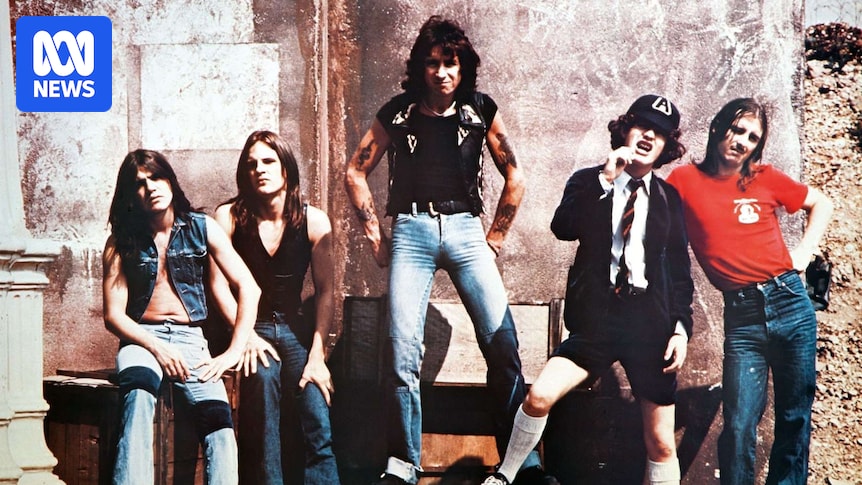
The music industry is always in a state of flux, but what was happening in 1976 was akin to the dinosaurs looking up and seeing a meteor on the way.
Of course, that’s in hindsight. No-one really expected that meteor, aka the advent of punk rock, to be as seismically influential as it was, with its ripples extending out for decades to come.
Punk had been bubbling away in seemingly unconnected scenes around the world (New York, England and Australia among them) and in 1976 it began to boil over. The Saints’s (I’m) Stranded, The Damned’s New Rose, and Sex Pistols’s Anarchy In The UK were all released in the space of three months towards the end of 1976, while the first album by Ramones set a blueprint that lasted decades.
But the emergence of punk is not the full story of 1976 in music. Here’s a fuller tale, as told by the albums turning 50 this year.
Rock and pop
As much as punk set out to destroy the musical excesses of prog rock (more on that later) it was also a reaction to the increasing pageantry, pomp and pretence of rock and pop music.
Long flashy guitar solos, highly produced/expensive records, and arrogant rock-star entitlement were par for the course (and admittedly some of it is amazing) but punk’s stick-it-to-the-man attitude and DIY approach were very much in response to rock music having grown into a big bloated beast with little connection to the people on the street or the teens in their bedrooms.
Pop music was also about to have a reckoning. Disco was making its way out of the clubs and into the light, while pop itself was on the verge of asserting itself as the dominant force of music as the 80s drew nearer.
Having said all that, nothing was ever going to kill rock. It morphed, evolved and grew, but in 1976 it was the biggest thing around.
Peter Frampton: Frampton Comes Alive
When the end of 1976 rolled around, the biggest-selling album of that year was this live LP, which made UK guitar wizard Peter Frampton into a superstar.
Recorded mostly in San Francisco (with some minimal studio overdubs), it was a huge breakthrough for Frampton, who had released four albums with little success prior to 1976.
The album is one of the biggest-selling live records ever (17 million copies worldwide and counting) off the back of Frampton’s guitar acrobatics and such soft-rock classics as Show Me The Way and Baby, I Love Your Way, as well as the epic 14-minute-long talk-box guitar climax that is Do You Feel Like We Do.
Kiss: Destroyer
The fourth of five albums released by the New York band in just three years, this was Kiss’s big break, going double platinum in the US and cracking the top 10 in Australia.
Made to work hard by producer Bob Ezrin (who behaved like a crazed drill sergeant), the band put together what’s generally regarded as one of its best records.
It’s a cartoonish, overblown rock record with dark moments amid the party-till-you-die bangers; that is, quintessential Kiss, and yet somewhere in among the bombastic bravado is Beth, their iconic ballad about having to stay out late to fulfil their rock duties.
Led Zeppelin: Presence
Arguably the least successful Led Zeppelin album, it’s also one of the band’s most underrated (if such a thing exists).
Led Zep eschewed the keyboards, mandolins and acoustic guitars that had dotted previous albums, and instead went for a straight-up-and-down rock record that successfully veers into prog, blues and metal territory.
While the endless solos and 10-minute excess of killer opener Achilles Last Stand was exactly the kind of thing punk set out to kill, it remains one of Zep’s best songs, alongside other great Presence cuts Nobody’s Fault but Mine and Hots on for Nowhere.
The Rolling Stones: Black and Blue
The Stones were, by their own admission, a bit lost around 1976, and it shows on Black and Blue, the most forgettable album of their 70s output.
Guitarist Mick Taylor quit at the start of recording, and was replaced by Ronnie Wood, though the band was literally auditioning guitarists during the making of the album. Canned Heat’s Harvey Mandel and session guitar legend Wayne Perkins feature on a couple of tracks.
Fool to Cry was a minor hit, and there are some cool songs, such as Memory Motel, but Black and Blue feels like The Stones were trying out a bunch of stuff (and guitarists) and not everything works.
Aerosmith: Rocks
If you only know Aerosmith from Walk This Way or the bombastic Armageddon ballad I Don’t Want to Miss a Thing, then their fourth album Rocks might surprise you.
Verging on heavy metal and punk on tracks like Nobody’s Fault and Rats in the Cellar respectively, the record lives up to its title and became the Boston band’s first top five record in the US and first top 50 in Australia.
Its hard-rocking manifesto would go on to inspire Metallica’s James Hetfield to become a singer and a guitarist, and was among the favourite 50 records of Nirvana’s Kurt Cobain.
Tom Petty & The Heartbreakers: Tom Petty & The Heartbreakers
For someone so integral to American rock ‘n’ roll in the 70s and 80s, it’s odd to think Tom Petty’s debut with The Heartbreakers struck more of a chord in the UK and Europe than the US.
The band formed out of the ashes of Petty’s failed outfit Mudcrutch with the goal of playing “the kind of rock that used to come blasting out of the AM radio” in the mid-to-late 60s and turn back the tide of “disco trance music”, as he told Rolling Stone in 1978.
And while it took time for the band to be accepted as heartland rock pioneers in their home country, this album shows The Heartbreakers were just that, right from the start. Breakdown and American Girl from this record are bona fide classics of the genre.
Boston: Boston
While the likes of Aerosmith and Tom Petty and The Heartbreakers were making raw-sounding rock ‘n’ roll records, at the other end of the 70s rock spectrum were Boston, who were making hyper-produced, meticulously arranged music that flew up the charts on the back of harmonised lead guitar lines.
Ironically, Boston’s record label thought the band’s mastermind Tom Scholz was making this radio-ready rock in a flashy Los Angeles studio, when in fact he recorded almost all of their debut in his homemade basement studio.
Spurred on by hit single More Than a Feeling and the epic Foreplay/Long Time, the self-titled album sold approximately 20 million copies worldwide, making it the biggest-selling debut ever at the time.
Queen: A Day at the Races
A Night at the Opera and A Day at the Races, aside from being classic Marx Brothers comedies, could well have been combined to make one of the greatest double albums of all time.
While the former has more hits, the latter has just as much fascinating experimentation, as Queen continued to push their art-rock eclecticism in as many different directions as possible.
Highlights include opening rocker Tie Your Mother Down, the pop perfection of Somebody to Love, and the old-timey Good Old-Fashioned Lover Boy, helping Queen to continue operating at the peak of their powers.
ABBA: Arrival
Boasting Dancing Queen, perhaps the song that most personifies 1976, ABBA’s fourth album took the Swedish pop group to new heights, giving them their first #1 album in the UK and their first top 20 in the US.
Knowing Me, Knowing You and Money, Money, Money were mega-hits too, showcasing the songwriting ingenuity of Benny and Bjorn, who were increasingly pushing pop music into innovative places with unique song structures and wild chord progressions.
Arrival remains one of the biggest-selling albums ever in Australia, where it was boosted by the inclusion of Fernando, which spent 14 weeks atop the pre-ARIA Kent Music Report charts prior to Arrival’s err … arrival.
Wings: Wings at the Speed of Sound
While Ringo Starr and George Harrison also released solo albums in 1976 (Ringo’s Rotogravure and Thirty-Three & 1/3 respectively), it was Paul McCartney’s fifth album with his post-Beatles outfit Wings that stormed the charts and sold by the truckload.
Wings at the Speed of Sound was a vague attempt at presenting Wings as a more egalitarian operation as opposed to a McCartney solo project by another name, with other members taking lead vocals on five songs, and two of the songs written by someone other than the former Beatle.
But it was McCartney’s contributions that dominated, notably the album’s hit singles Let ‘Em In and his fantastic kiss-off to critics, Silly Love Songs, which was the biggest-selling single of the year in the US.
Electric Light Orchestra: A New World Record
In an impassioned love letter in The Guardian in 2008, music guru Alan McGee asked rhetorically whether we should “accept that, yes, ELO were just as good as the Beatles during their own classic run in the 1970s?”
ELO’s driving force Jeff Lynne would certainly hope so, having positioned his band as successors to the Fab Four’s throne with a unique sound combining light classical with guitar rock, a sound that peaked on their sixth album A New World Record.
The English band had hits before, but nothing on the scale of Livin’ Thing, which helped take A New World Record to #1 in Australia, and their first top 10 in the UK and first top five in the US, and genuinely making ELO one of the biggest rock bands on the planet.
Eagles: Hotel California
The Big Lebowski helped make it cool to hate Eagles, but there is no denying the hugeness and impact of the Los Angeles rockers and their 42 million copy-selling landmark Hotel California.
The record is a surprisingly dark one, with founding member Don Henley telling Rolling Stone in 2016 that the album’s themes included “loss of innocence, the cost of naiveté, the perils of fame, of excess … the dark underbelly of the American dream … [and] the fading away of the sixties dream of ‘peace, love and understanding'”.
From its mythical title track through the hedonistic riffage of Life in the Fast Lane, to the beautiful heartbreaker Wasted Time and the sad lament for the environment in The Last Resort, this is Eagles at the height of their abilities.
The songwriters hone their craft
The 70s was the last era when singer-songwriters ruled supreme. It was a time when they were given full creative licence to follow their muses, and sold millions of records in the process.
The breadth of the music they were creating is a good example of how that freedom led to innovation, and created so many albums that still resonate and are influential today.
Bob Dylan: Desire
Dylan’s 17th album has a fresh spark to it largely thanks to the haunting violin work of Scarlet Rivera and the powerful harmonies of Emmylou Harris and Ronee Blakley.
Aided in part by co-writer Jacques Levy, the album includes some of Dylan’s best tracks: the epic editorial Hurricane, the cryptic adventure Isis, his impassioned ballad Sara, and the ominous One More Cup of Coffee, which features one of Dylan’s best vocal performances.
A #1 record in Australia and the US, some consider this to be his last classic record.
David Bowie: Station to Station
Bowie had little memory of making his 10th album. At the time he was surviving on capsicums, milk and cocaine, fuelling recording sessions that would run for 24 hours or even longer.
Remarkably Bowie and his band churned out one of his greatest albums: a six-song opus that merges the then-fledgling genre of disco with pop, art-rock, and funk.
Every song is a highlight, including hit single Golden Years, but it’s hard to go past the sprawling 10-minute title track, which introduces Bowie’s new character The Thin White Duke via Berliner Krautrock and ends in a Detroit disco-funk jam.
Laura Nyro: Smile
After releasing five albums in five years, New York singer-songwriter Laura Nyro effectively quit the music industry in 1972, before finally returning in 76 with Smile.
Filled with jazzy chords and beautiful wandering melodies that showcase Nyro’s stunning voice, Smile’s range from sax-filled jams (Money) and soaring late-night sadness (I Am the Blues), to a pop-groove sung from the point of view of a cat named Eddie (The Cat-Song).
A true songwriters’ songwriter, Nyro was under-appreciated in her lifetime (she died in 1997, aged 49), but was posthumously inducted into the Songwriters Hall of Fame and the Rock and Roll Hall of Fame, and counts Elton John, Todd Rundgren, Rickie Lee Jones, and Bette Midler among her fans.
Billy Joel: Turnstiles
Having tried his luck in Los Angeles, 1976 found the Piano Man saying goodbye to Hollywood and getting back to the east coast to fully embrace his New York state of mind.
It’s all there on Turnstiles, an album of transition for Joel that bombed in the US, but was a hit in Australia.
It was only much later that this record has been recognised as one of Joel’s best, containing re-evaluated classics such as the rapid-fire Prelude/Angry Young Man, the gorgeous I’ve Loved These Days, the LA kiss-off Say Goodbye to Hollywood, and his two love letters to his home city of New York: the rousing Miami 2017 (Seen The Lights Go Out On Broadway) and perhaps his greatest anthem, New York State of Mind.
Tom Waits: Small Change
Waits was still a few years away from becoming the full-blown magnificent kook of his 80s albums, but in 1976 he made his first truly great record.
His fourth album sees him tap dance his way between forlorn strip-club piano player and finger-snappin’ beat poet, throwing out tales of hard luck and heartbreak amid jazz scats and wisecracks.
Waits biographer Barney Hoskyns called opener Tom Traubert’s Blues Waits’ greatest song, but there is so much quality. The ad-man patter of Step Right Up, the Tin Pan Alley sadness of I Wish I Was in New Orleans, and the poetry percussion of Pasties & A G-String are all top shelf, but it’s The Piano Has Been Drinking that became something of a theme song for Waits for much of this era.
Joni Mitchell: Hejira
Like the travels that inspired and instigated it, Hejira is a wandering and adventurous album in which Mitchell takes you on a journey of love, loss, sex, music, sadness and more, where she tries to get “away from romance … away from craziness”, as she once put it.
Tired of rock musicians, she delivers her hefty lyrics with the backing of a jazz group that includes iconic bassist Jaco Pastorius, building on the jazzier influences of previous albums Court and Spark and The Hissing of Summer Lawns.
Hejira was Mitchell’s eighth album in nine years, but finds her as funny, ferocious and free as ever, finding new viewpoints everywhere she goes, whether it’s picking over a tryst in Coyote, flying through the sky in Amelia and Black Crow, or a dozen different spots on the highways and byways of America in Refuge of the Roads.
Joan Armatrading: Joan Armatrading
Armatrading was one of the great voices that came into her own in the 70s, despite being often overlooked and equally underrated.
Her self-titled album, her third, was the first to chart in the UK, Australia and the US, and is one of her best-known records, described in the book 1000 Albums You Must Hear Before You Die as a “superbly honest and resonant” record where her “songwriting skills came to full flower”.
Aided by Beatles/Stones/Zeppelin producer Glyn Johns, who called this one of his favourite albums he ever worked on, the record boasts plenty of Armatrading’s best stuff, from the hypnotic opener Down to Zero and her first hit Love and Affection through to her stellar guitarwork on Like Fire and the funky People.
Stevie Wonder: Songs in the Key of Life
The boy genius of Little Stevie had evolved into a bona fide adult genius by the time he came to make his masterpiece Songs in the Key of Life, having laid out an incredible run of albums (Talking Book, Innervisions, and Fulfillingness’ First Finale) in the lead-up.
Despite this, Wonder was on the verge of quitting the music industry, until Motown offered him an astonishing record deal: seven years, seven albums, full artistic control, and a payday of over $221 million in today’s money.
In response, and in a creative flurry that saw Wonder spending 48-hour stretches in the studio, he released a double album and bonus EP containing some of his greatest tunes: Sir Duke, I Wish, Isn’t She Lovely, As, Contusion, Pastime Paradise, and Another Star are all here, just to name a few.
Bob Seger: Night Moves
Seger had been kicking around the music scene since 1961, pumping out album after album in band after band, but it took Night Moves and its title track for him to break through.
That languid coming-of-age tale stands head and shoulders above the bar-room boogies that fill the album, with its acutely written recollections of summertime late-night teenage fumblings in the back of a 60s Chevy.
The title track would be his first charting single in the UK and Australia, and his first top five in the US, and along with tunes like Mainstreet it helped kick his career to the next level on his way to selling an estimated 75 million records worldwide.
There’s a whole world out there
There is always, and has always been, amazing music coming out of places other than the US and Europe, but these new non-Western sounds seemed to cut through to Western ears increasingly in the 70s.
In 1976 in particular, the music being made in places such as Africa, Brazil, and the Caribbean was being increasingly incorporated into mainstream music, but the records by the originators of those sounds were also starting to find their way into collections and radio playlists here, there and everywhere.
Jorge Ben: Africa/Brasil
The funky nature of Africa/Brasil meant that a whole new wave of fans turned on to Jorge Ben’s revolutionary sounds.
His 15th album is his most highly acclaimed, with Ben combining funk, rock and pop with traditional Brazilian and African rhythms and percussion to create “samba rock”, a cool new fusion that critic Tom Hull called “some kind of masterpiece”, AllMusic’s Philip Jandovsky called “undoubtedly one of the great classics of Brazilian popular music”, and Revive Music’s Eric Sandler dubbed “a universally revered heavyweight funk masterpiece”.
Africa/Brasil is a joyous album, from its opening chunky-funk groove on Ponta de Lanca Africano (Umbabarauma) to the spacey closing title track, and via the one that Rod Stewart ripped off for Da Ya Think I’m Sexy?, the infectious Afrobeat-via-Rio de Janeiro singalong Taj Mahal.
Fela Kuti & Africa ’70: Zombie
Kuti was a controversial and influential figure in African music, and ultimately beyond the bounds of his home continent, and nowhere is that more evident than on the hypnotic Zombie.
A blazing combination of African beats, firey jazz, and bone-deep funk grooves, Zombie is just four songs, each ecstatic jam stretching beyond 12 minutes long, that embodies the Afrobeat sound Kuti and his Africa ’70 band helped create.
But the political nature of the album, an angry takedown of the Nigerian government and its military, showed that it was more than just music, with the junta attacking Kuti’s “independent commune” in response, raping women who lived there, beating Kuti, and ultimately killing his mother, as well as destroying Kuti’s studio, instruments and master tapes.
Peter Tosh: Legalize It
Tosh and Bunny Wailer quit The Wailers in 1974 and struck out on their own, fed up with the perceived favouritism being bestowed on Bob Marley by their label and management, which seemed fair considering the latter had decided to rename the band Bob Marley & The Wailers.
Bunny released Blackheart Man, while Tosh dropped Legalize It, a mission statement espousing his beliefs on Jah, Rastafarianism and legalising cannabis.
The title track was banned in Jamaica and other places, which had a bit of a Streisand Effect, catapulting Tosh to international solo fame, but there are plenty of other quality reggae tracks here. No Sympathy is a highlight, as is Till Your Well Runs Dry, which flips from straight pop ballad to reggae groove and back again.
Prog’s end of days
If there was one genre that punk set out to kill, it was progressive rock.
Sci-fi subject matter, musical virtuosity, and songs that take up one full side of a vinyl LP have their time and place, but the eventual reaction to that was inevitable, and that was the short, fast and loud songs about life on the streets.
Of course, there is always room for both styles of music, and prog rock survives, but its days as a major force in music were numbered in 76.
Rush: 2112
On the verge of losing their record deal, going broke and breaking up, the cult Canadian trio doubled down on their proggier inclinations for album #4, and came out the other side as the successful band many people know and love today.
One whole side of 2112 is taken up by a 20-minute sci-fi epic involving interstellar war, fascist priests, artificial intelligence, and the power of music, while side two is five short-sharp hard-rockers, each clocking in under 4 minutes, effectively showcasing the two sides of Rush.
2112 was the band’s first to crack the top five in Canada and the top 100 in the US, and while their fortunes would wax and wane over the next 50 years, this album is often seen as a pivotal and proud moment for Rush.
Genesis: A Trick of the Tail
After the departure of frontman Peter Gabriel, Genesis searched high and low for a new vocalist before eventually realising they already had an amazing one sitting behind the drum kit: Phil Collins.
A Trick of the Tail set Collins on a new trajectory that eventually led to him being one of the biggest stars of the 80s, but the album also proved Genesis weren’t dead and buried with Gabriel’s departure, and that the UK prog band was as good as ever.
With Collins out front and boasting such great songs as the title track, Dance on a Volcano, and Ripples, A Trick of the Tail gave Genesis such momentum they released a second album in 1976 (Wind & Wuthering), though that would be guitarist Steve Hackett’s last with the band, yet another departure that would significantly shape the sound and future of the band.
Camel: Moonmadness
On the legendary Prog Archives website’s definitive ranking of the great prog albums of all time, this album appears at #16, higher than Rush’s Moving Pictures, Jethro Tull’s Aqualung, Pink Floyd’s Meddle, and Supertramp’s Crime of the Century.
Often referred to us the unsung heroes of 70s prog-rock, UK band Camel combined virtuosic playing with lofty lyrical ideas and hat-drop mood changes for this, their fourth and most successful album.
Highlights include Song Within a Song, which goes from chill jazz to cool rock groove to prog gallop and back again across its 7 minutes, the dark stomp of Another Night, and the trippy 9-minute closer Lunar Sea.
Australia’s in-between days
Album-wise, 1976 is something of a fallow year for Australian music. When Rolling Stone compiled its list of the 200 Greatest Australian Albums of All Time, only one record from 1976 made the list.
Basically, the influential acts were between big albums or released records not considered to be their best or were still on the cusp of greatness and hadn’t even recorded an album yet.
But singles-wise, it was strong. The Saints’s (I’m) Stranded was the first punk single from a non-US band, Sherbet’s single Howzat was an international success, and the likes of Ted Mulry, Max Merritt and John Paul Young were dominating the Kent Music Report.
AC/DC: Dirty Deeds Done Dirt Cheap
Their third album released in Australasia, Dirty Deeds Done Dirt Cheap, came out just months after AC/DC’s international debut, a version of High Voltage which also included tracks from T.N.T, and served as the Aussie pub rockers’ introduction to the world.
Dirty Deeds … is quintessential Bon Scott-era Accadacca: the relentless bad boy attitude, the hair-raising Angus Young solos, the dumb and dated jokes (they don’t get much dumber than Big Balls), and the blues-rock riffs turned up to 11.
And then there’s Ride On, one of the coolest and most interesting deep cuts on any AC/DC album, though it’s hard to go past the title track, which mixes all the aforementioned attitude, guitar fireworks, silly humour, and killer riffage into something close to AC/DC perfection.
Ol’ 55: Take It Greasy
Nostalgia for the 50s was huge in the 70s. Happy Days, American Graffiti, and Grease are just three examples that lit up screens both big and small and in Australia we had throwback rock ‘n’ roll/doo-wop group Ol’ 55.
Led by slicked-back frontman Frankie J Holden and the sax of Wilbur Wilde, the band’s debut was the biggest-selling Australian album of 1976, outselling Sherbet and AC/DC, and even international acts such as Fleetwood Mac, Wings and Bob Dylan.
Take It Greasy is mostly covers (Buddy Holly, Sam Cooke, Chuck Berry), including top-10 single Looking For An Echo, but one of its biggest hits was one of only three originals on the record. On the Prowl was a rollickin’ Bill Hayley-style bopper that reached #14, and showed off the band’s mix of humour and old-school rock ‘n’ roll.
Sherbet: Howzat
There was no bigger Aussie song in 1976 than Sherbet’s Howzat, a monster single that went #1 both sides of the Tasman, top five in the UK and even cracked the US Billboard Hot 100.
A surprisingly inventive pop tune, Howzat (and its accompanying album) would prove to be the peak of Sherbet’s career.
The rest of the album rolls out some emotional pop ballads (Lady of the Night, If I Had My Way) and some classic 70s rock (Motor Of Love, Blueswalkin), but the best moments are its white-boy funk diversions, such as Dancer and The Swap
Marcia Hines: Shining
If you need an example of what pop music sounded like in 1976, look no further than Hines’s second album: lush orchestral arrangements, a bit of funk, a bit of disco, and a selection of pre-tested covers guaranteed to win over a crowd.
Hines had moved from the US to Australia in 1970 aged 16 to star in stage musicals before crossing over to the pop world, and her second album became her highest-charting record in Australia and saw her crowned the country’s Queen of Pop for three years running.
Shining is Hines at her best. Her cover of I Just Don’t Know What to Do with Myself was one of her biggest singles, up-tempo versions of Whatever Goes Around and Signed, Sealed Delivered, I’m Yours are cooking, and she really shows off her vocal abilities on the gospel closer Hallelujah.
Skyhooks: Straight in a Gay Gay World
The third Skyhooks record would be the last to feature the classic line-up of the band, with guitarist Red Symons leaving after this, and singer Shirley Strachan departing after the disappointing follow-up, Guilty Until Proven Insane (1978).
The trademark edgy/absurd humour abounds on tracks such as I’m Normal, The Girl Says She’s Bored, and the title track, but the band really thrives on tracks such as Somewhere in Sydney or This Is My City, where the intertwining guitars of Bob Starkie and Symons, and Strachan’s vocals, reign supreme.
The album is bookended by two of Skyhooks’s best songs, Million Dollar Riff and Crazy Heart, which showcase the rock-and-pop extremities of an extreme and often overlooked band.
Little River Band: After Hours
LRB were still an album away from becoming the biggest Aussie band the US had seen, but After Hours shows the key elements were already there, the smooth sounds, solid songs and lush harmonies, even though the record wasn’t properly released in the US.
An accidental concept album, almost every song details someone on the road, far from home, sometimes broke, sometimes drinking too much, sometimes missing someone … so basically it’s about the life of a touring musician.
Drifting between yacht rock (Take Me Home, Days On The Road), Little Feat-style southern rock (Bourbon Street), and country (Sweet Old Fashioned Man, Country Girls), the real highlight is single Everyday of My Life (one of LRB’s best early songs), and Ric Formosa’s wonderfully idiosyncratic guitar solos.
The future cometh
Punk was the big rising force in 76, but new wave and electronic music were also on the up and up.
Of all the albums listed in this piece, the ones in this section are perhaps the most influential. They’re from artists taking chances, and following new sounds to see where they lead.
The Modern Lovers: The Modern Lovers
The 70s weren’t ready for Jonathon Richman, but then he wasn’t really cut out for the mid-70s (if the ode to the 50s Old World is to be considered autobiographical).
The tracks for this were mostly recorded in 1971 and 1972 yet only released in 76, but even then they were still ahead of their time, standing as a kind of link between The Velvet Underground and Pavement in its punky, uncaring, unaffected way.
While Jerry Harrison (later of Talking Heads) brings a Doors-y vibe with his keys, Richman dominates the band with his idiosyncratic naivety, best heard in the two-chord jam Roadrunner, the jittery She’s Cracked, the oft-covered Pablo Picasso, and the sad-emo desperation of Hospital.
Ramones: Ramones
One of the most influential albums of all time, Ramones’s self-titled debut is astonishing for how different it sounds compared with other releases of 76.
While acts like The Stooges, MC5 and New York Dolls were precursors to punk, Ramones took their ideas to new levels, perfecting the formula by devolving rock and pop to their key essential ingredients, playing the songs as fast and scuzzy as they could, and peppering it all with singalong choruses and dumb attitudes (Blitzkrieg Bop being the prime example).
Punk would adapt and evolve over the next 50 years, but this is an essential mission statement for the genre: 14 songs blasting by in less than half an hour, forever changing music in the process.
Blondie: Blondie
Blondie were a prime example of so-called “new wave” music. They came from the New York punk scene and shared some of that attitude, but they were still a pop band at heart.
Debbie Harry, on her way to becoming an icon among icons, offers punk snarls on Rip Her to Shreds, and Chris Stein’s chugging guitars on In the Sun turn surf music to punk, but elsewhere they’re as retro-pop as can be, aping 50s rock ‘n’ roll on Little Girl Lies and girl groups on In the Flesh.
While it lacks any big hits, Blondie’s debut is the sound of things to come. Their mix of old ideas with new attitudes helped shape music for the next decade, and beyond.
The Runaways: The Runaways
While the less said about their late svengali Kim Fowley the better, The Runaways’s legacy is a short-lived but explosively influential one.
While the band set out to be hard rock, their debut single Cherry Bomb proved to be fortuitously punk rock at a time when the new genre was about to explode, accidentally highlighting the fine line between the two musical styles.
Powered by Sandy West’s rock-solid drumming, and Lita Ford’s killer guitar licks (check out her blistering solo on Blackmail), The Runaways helped bring some much-needed girl power to rock ‘n’ roll, as best exemplified on tracks such as QOTSA-style swagger of Is It Day Or Night?, the swinging Lovers, and the B-movie nightmare of Dead End Justice.
Penguin Cafe Orchestra: Music From The Penguin Cafe
Electric Light Orchestra weren’t the only ones trying to bring classical elements into the rock/pop world in 76. Simon Jeffes band The Penguin Cafe Orchestra set out to make “modern semi-acoustic chamber music” in an era “when the heart is under attack from the forces of coldness, darkness and repression”.
The result was like world music from a place that didn’t exist, combining beautiful orchestral moments with strange avant-garde diversions, artful pop melodies, plaintive plucked guitars, dark futuristic keyboards, and disturbing elements of noise.
Acclaimed and influential (it’s in 1001 Albums You Must Hear Before You Die), Music From The Penguin Cafe was never going to be a million-seller, but it’s one fascinating piece in the musical puzzle that was Jeffes and his weird and wonderful Penguin Cafe Orchestra.
Jean Michel Jarre: Oxygene
In the 70s the future was analogue synthesisers, and French musician Jarre wanted to be part of that future so badly he sold his guitar and amplifier to buy one.
It proved a smart move, because when this six-part electronic odyssey dropped, it was unlike anything anyone had ever heard: a dizzying collection of interstellar synths, pulsating melodies, and frigid soundscapes that’s as intoxicating now as it was 50 years ago.
Jarre has released more than 20 other albums and is still a superstar in Europe, but Oxygene assured his legacy and changed the future of music almost as much as punk did that same year. The record has reportedly sold in excess of 18 million copies, which, according to some sources makes it the best-selling French, electronic and instrumental albums of all time.