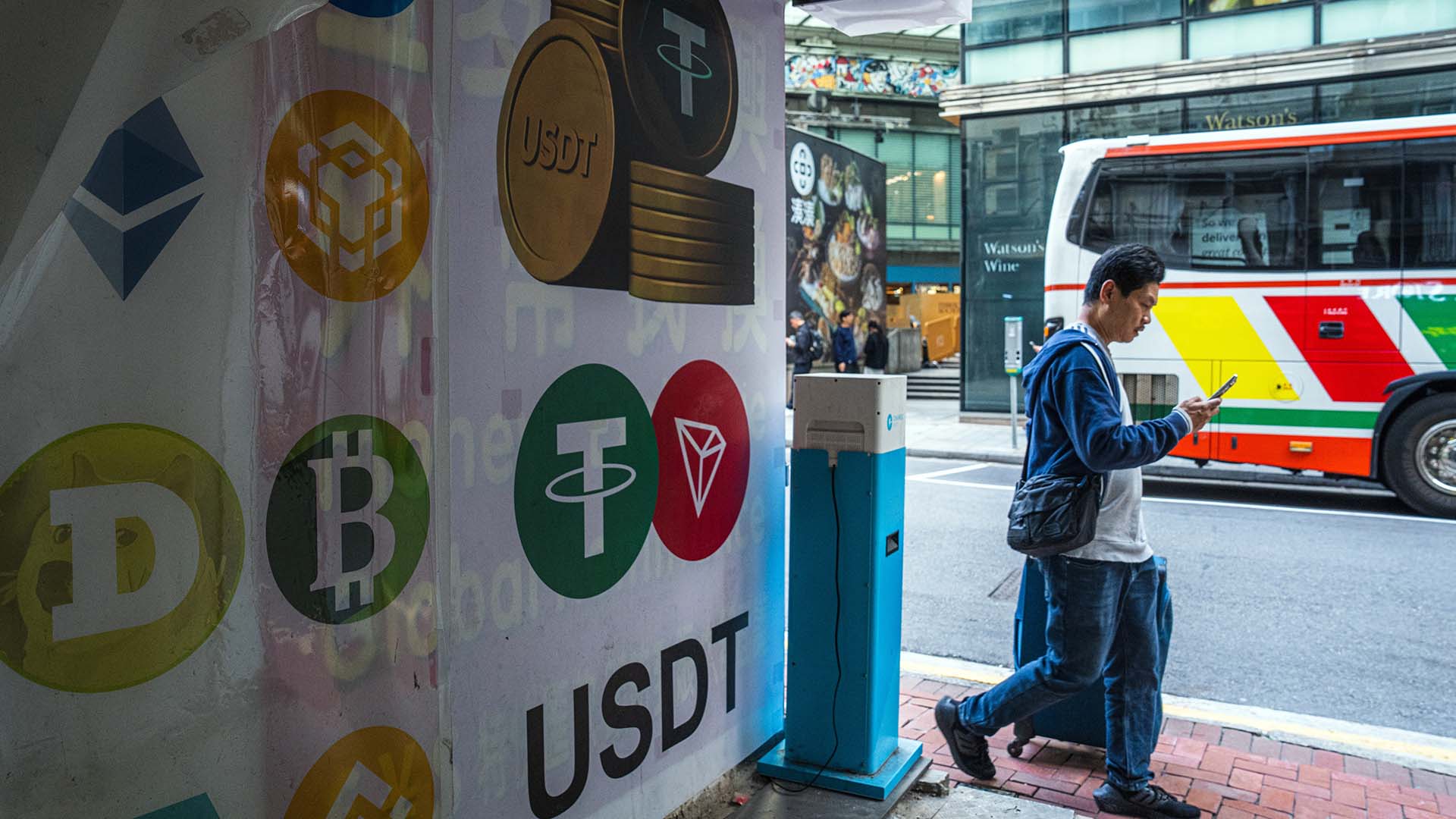
Tether, which mints the world’s most widely used crypto token, is likely one of the most valuable private companies on earth, with an estimated value of $200 billion, exceeding the total share value of McDonald’s.
The company’s token, known as USDT, is a stablecoin pegged to the U.S. dollar that has become the backbone of a parallel banking system pervading parts of the world. The token has also become a key tool for money launderers for industrial-scale scam centers, which operate out of grim office complexes across Southeast Asia. Tether’s assistance in law enforcement investigations has become highly sought-after by agencies around the world struggling to address surging crypto crime.
Because of Tether’s barebones workforce — it employs just a few hundred people — the stablecoin giant’s low overhead helps to produce astonishing profits. These riches have made Tether a rainmaker in global finance, becoming a bigger buyer of U.S. government debt than Saudi Arabia or South Korea.
But who owns this powerful and controversial firm? The company has never given a full picture publicly. Estimates of who owns how much of Tether are at odds with each other. Because most firms worth many billions are publicly traded — a distinction that generally comes with disclosures of a firm’s major owners — Tether may also place among the most opaque companies of its size.
Questions around Tether’s ownership are of growing urgency, as U.S. Commerce Secretary Howard Lutnick’s firm Cantor Fitzgerald acquired rights to 5 percent of Tether in 2024, according to The Wall Street Journal. Such a stake could now be worth an estimated $10 billion. Like many of Tether’s ownership details, this remains unconfirmed by the company itself.
It’s a concern to have that much wealth and power built up within a small group of people with so little disclosure. — law professor Renée Jones
These unknowns epitomize a trend in which massive companies are increasingly opting to stay private instead of listing their stocks on public markets — a step that requires them to open up their books to the public. This means that regular people, investors and government officials are left with less information about companies even as they surge in size and importance. In Tether’s case, the private firm is pioneering a new global financial system while having never released results of a full audit of its reserves.
“It’s a concern to have that much wealth and power built up within a small group of people with so little disclosure,” says Renée Jones, a law professor at Boston College who has written extensively about problems posed by the opacity of large private companies. “It makes the jobs of regulators and government investigators harder when massive companies are not subject to a public disclosure regime in any country.”
In lieu of formal public disclosure of Tether’s major owners, the International Consortium of Investigative Journalists examined a mix of public records and internal company files to trace clues of who owns how much of the firm. In our reporting we found that, in its early days, Tether underwent large changes to its ownership that experts say appeared unusual and we found indications that one Tether executive, Giancarlo Devasini, may have recently increased his control over the firm.
Cryptocurrency’s original mission was in part to build a financial system free from government oversight. As it pushes the bounds of corporate privacy, Tether may hint at a future in which people can engage in anonymous financial transactions using private money minted by multinational behemoths that answer to few government authorities. That world might already be here today.
A call for big changes – and fast
The project that led to Tether was hatched around 2014 by a trio of tech entrepreneurs, including former child actor Brock Pierce, who had decades earlier starred in the first two “The Mighty Ducks” movies. Originally called Realcoin, the firm started small but soon partnered with Bitfinex, a Hong Kong-based crypto exchange that offered the startup’s tokens a readily available distribution channel. Still, Tether struggled to get investment early on, with one founder later saying: “You can’t even imagine how stupid of an idea everyone thought it was.” Tether’s original founders ended up transferring their shares in the company to Bitfinex executives, according to “Number Go Up,” a 2023 book by Zeke Faux about crypto. These executives included Giancarlo Devasini and Jean-Louis van der Velde.

In the years to come, they would turn Tether into a powerhouse. A former plastic surgeon, Devasini was hawking DVDs on a bitcoin forum just a decade before entering the ranks of the world’s wealthiest, according to Faux. Van der Velde, a Dutch entrepreneur, had previously dealt in electronics.
In Tether’s first few years, the two men moved company shares between themselves as if they were monopoly money. In early 2016, Devasini owned 100 percent of Tether Holdings, the British Virgin Islands firm identified as Tether’s parent company, according to shareholding records from ICIJ’s Paradise Papers trove that have not been previously reported.
In January of that year, Tether executives asked for a big change to the company’s ownership, and they wanted it quickly. In emails to their corporate administrator, Tether representatives arranged for documents to be sent to Hong Kong that would transfer at least 55% of Devasini’s shares in Tether Holdings to van der Velde, according to the records. In the transfer, another chunk of Devasini’s shares went to a firm called DigFinex Inc.
This arrangement didn’t last long. Tether ownership documents from around 2018 that ICIJ reviewed shows that, roughly two years later, van der Velde’s share of Tether had fallen to just around 15% while Devasini had risen to again become the firm’s largest single shareholder at roughly 43% ownership.
Several experts told ICIJ that such a dramatic transfer of ownership between partners is unusual, even in an early-stage startup, though not necessarily a red flag. The Tether records from around 2018 showed that Paolo Ardoino, now Tether’s CEO, owned about 3.5% of the firm at that time. Forbes estimates Ardoino now owns 20% of Tether.
The same ownership records listed a person named Kristian Hansen as owning 6.6% of Tether at the time. ICIJ was unable to reach Hansen. If retained, the stake would now be worth more than $13 billion, going by Forbes’ valuation of Tether.
The Wall Street Journal previously reported the 2018 ownership numbers for Devasini, van der Velde and two other businessmen who also held large stakes: Christopher Harborne and Stuart Hoegner. ICIJ was unable to determine their current ownership stakes. Tether did not respond to ICIJ’s questions about the ownership numbers.
Forbes ranks Devasini as the 22nd richest person on earth with an estimated net worth of $89.3 billion.
A new location, more questions
Early last year, Tether completed its move from one territory known for requiring little disclosure — the British Virgin Islands — to El Salvador, a country requiring even less in some regards. Long a favored place to register shell companies engaged in financial crime and tax evasion, the British Virgin Islands has recently made a series of reforms. This included signing onto key global pledges to share ownership information of companies with tax authorities in different countries around the world, upon request.
Meanwhile, El Salvador has not signed those pledges, according to Jason Sharman, a professor of international relations at Cambridge University. “If you’re looking for old-style secrecy it’s one of the few places left,” Sharman said.
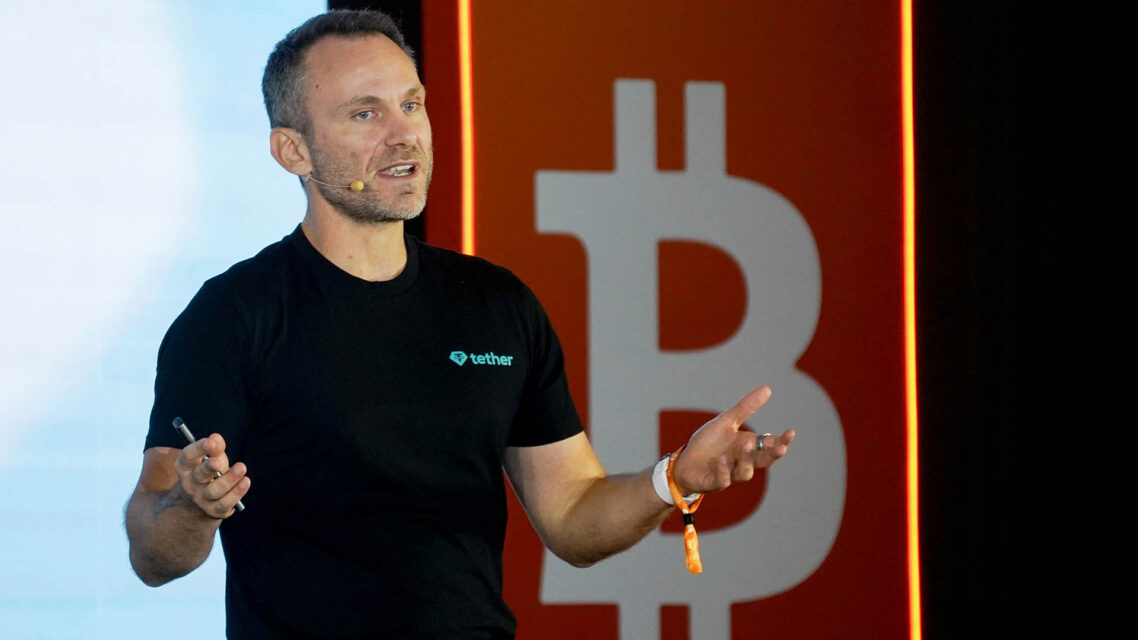
Around the time that Tether moved to El Salvador, the company appears to have undergone a big change in its control, according to a review of the firm’s public filings in the United States that Tether is required to file when it invests in publicly traded companies. In mid-2024, Devasini and van der Velde commonly appeared on these forms together. But early last year, van der Velde disappeared from these filings. This change came shortly after a new line started appearing in filings stating that “Devasini has a greater than 50% voting interest in” Tether, indicating a possible consolidation of power over the firm by Devasini. Such a line usually means that someone controls a firm, according to Ann Lipton, a professor of law at the University of Colorado Boulder. Tether did not respond to questions about this.
ICIJ reviewed a swath of Tether’s filings in El Salvador. The Salvadoran filings ICIJ reviewed give no indication of Tether’s current ownership.
The Lutnick connection
For years, regulators and commentators have questioned whether Tether keeps appropriate reserves on hand to back up its 1:1 exchange rate the U.S. dollar. In 2021, Tether paid a $41 million fine to U.S. authorities who said the firm misrepresented dollar reserves behind its digital tokens. Even so, the firm has never released results of a full financial audit, although it reported commissioning one earlier this year.
Tether has recently begun backing up its tokens in part with awe-inspiring reserves of gold, becoming one of the world’s largest buyers of gold and likening its role in that market to that of a central bank. It has even repurposed a nuclear bunker in Switzerland to hold billions in gold bars. “It’s a James Bond kind of place,” Ardoino recently told Bloomberg News.
Although an official at the European Central bank recently raised concerns about Tether’s reserves, the Trump administration has taken a friendlier approach toward the firm.
Before he became Donald Trump’s Commerce Secretary, Howard Lutnick headed the financial firm Cantor Fitzgerald, which is Tether’s U.S. banker. A primary Tether booster in the U.S., Lutnick has given assurances that the firm has the assets on hand to back-up its digital currency.
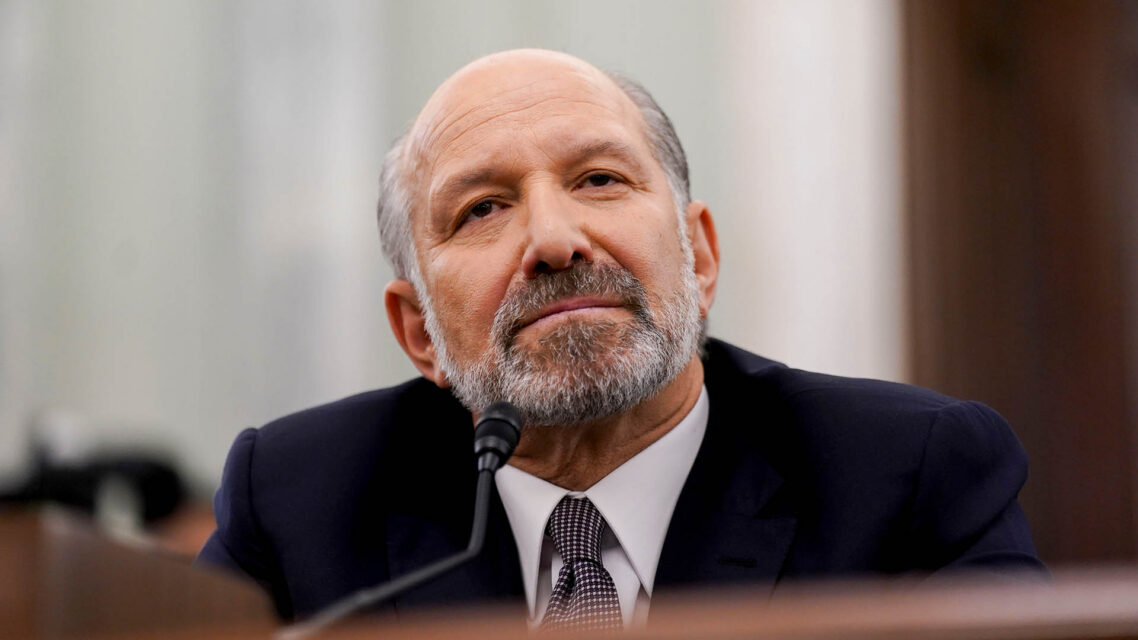
With Lutnick in office, more public information about Tether’s ownership could help answer questions from lawmakers and activists concerned about the firm’s growing influence in Washington.
In late 2024, the Wall Street Journal reported that Cantor Fitzgerald had obtained rights to a 5% stake in Tether that could now be worth roughly $10 billion. A subsequent Bloomberg report detailed how, with Lutnick in office, Tether could benefit from favorable language in the Genius Act legislation, a new law governing stablecoins in the U.S. A few months after the bill passed, Tether loaned money to trust funds benefitting Lutnick’s four children, according to Bloomberg.
Representatives of Cantor Fitzgerald and the Commerce Department told Bloomberg that Lutnick has complied with ethics obligations. Last year, Lutnick passed ownership of the investment bank to his sons.
“We want to ensure that Tether has not sought to bribe or otherwise exert control or influence over Secretary Lutnick,” Senators Elizabeth Warren and Ron Wyden, both Democrats, said in an April letter to Tether. The senators’ letter then listed a series of questions about the company’s dealings with the Lutnick family.
According to a person with knowledge of the communications, Tether has not responded to the senators’ questions. The nonresponse, after all, might be unsurprising for a company minting its own booming currency, counting friendly faces in Washington and regularly piling new tons of gold into a Swiss bunker.
Contributors: Jacob Silverman, Isabella Cota, Agustin Armendariz, Gloria Riva and Angelo Mincuzzi